
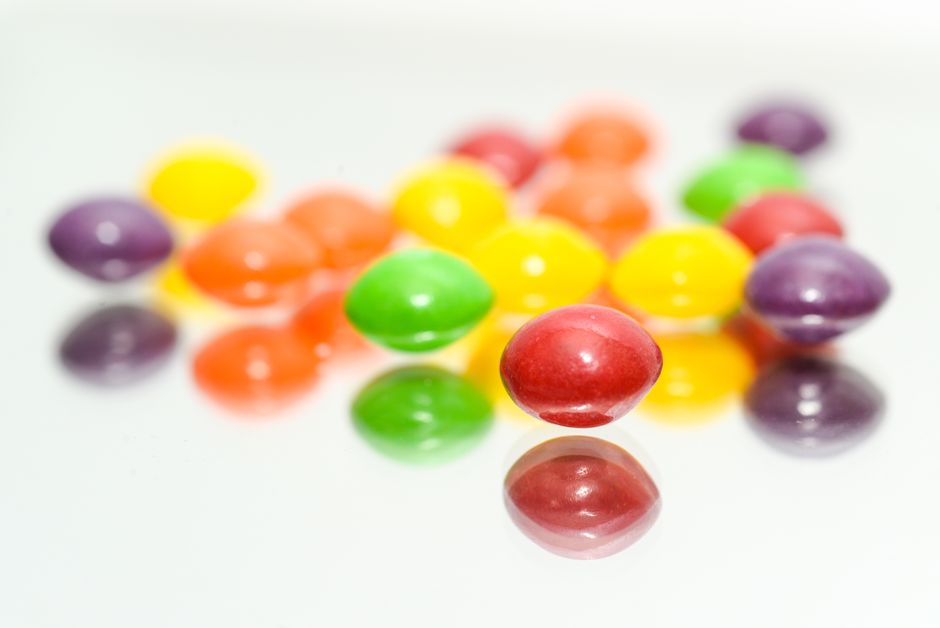
If you avoid gelatin for dietary, religious, or personal reasons, you have likely wondered about Skittles. The short answer is no, Skittles do not contain gelatin. The standard Skittles recipe has been gelatin-free for many years. This makes them suitable for most vegetarians and many people who follow halal or kosher diets. However, the full picture involves more than just a yes or no answer. Ingredients can vary by country and by specific product line. This article breaks down exactly what is in Skittles, where gelatin might still appear, and what the labels really mean.
What Ingredients Are in Standard Skittles?
The standard Skittles ingredients list is straightforward and consistent across most markets. The primary ingredients include sugar, corn syrup, and hydrogenated palm kernel oil. They also contain citric acid for tartness, tapioca dextrin as a binder, and modified corn starch. The specific ingredient that replaces gelatin is modified corn starch. This starch gives Skittles their chewy texture without using animal products.
According to the ingredient list published by Mars Wrigley, the company that makes Skittles, the product contains no gelatin. The label lists “modified corn starch” as a texturizing agent. This is a plant-based ingredient derived from corn. It provides the same chewy feel that gelatin would in other candies. For anyone checking labels for gelatin, modified corn starch is a clear sign the candy is likely gelatin-free.
It is worth noting that Skittles do contain other ingredients that some people avoid. They include artificial colors and hydrogenated oil. The hydrogenated palm kernel oil is a source of saturated fat. The artificial colors, such as Yellow 5 and Red 40, have been the subject of some health debates. But from a gelatin standpoint, the standard product is safe for those avoiding animal-derived ingredients.
Do Skittles Have Gelatin in Any Varieties?
While the original fruit-flavored Skittles are gelatin-free, not every product under the Skittles brand is the same. Some limited-edition and seasonal varieties have different ingredient lists. For example, certain sour or dessert-inspired Skittles have occasionally included gelatin. The “Skittles Desserts” line, which included flavors like Key Lime Pie, contained gelatin in some batches. This is not common, but it has happened.
Another area of concern is Skittles “Gummies.” These products are not the same as the classic hard-shelled Skittles. Gummy-style candies almost always contain gelatin because it is the standard ingredient for that texture. If you see “Skittles Gummies” on a package, assume they contain gelatin unless the label specifically states otherwise. The same caution applies to “Skittles Chewies” or any product with a soft, gummy consistency.
For international readers, the rules change. Skittles sold in the United Kingdom and Europe often use different ingredients than those sold in the United States. Some European versions have been known to include gelatin in the past. As of 2026, the standard UK Skittles are also gelatin-free, but always check the label. Ingredients can change without notice. The safest habit is to read the ingredient list on the package you are holding, not rely on what you read online last year.
Are Skittles Suitable for Vegetarians and Vegans?
Since standard Skittles contain no gelatin, they are suitable for most vegetarians. Vegetarians avoid meat and fish but often consume dairy and eggs. Skittles contain no dairy or egg ingredients, so they fit a lacto-ovo vegetarian diet. However, the question becomes more complicated for vegans. Vegans avoid all animal products, including those that may appear in processing aids or additives.
Skittles contain sugar. Some sugar is processed using bone char, which is derived from animal bones. This is a refinement process, not an ingredient. The sugar itself is chemically identical, but the processing method matters to strict vegans. Mars Wrigley has not confirmed that their sugar is bone-char free. Therefore, some vegans choose to avoid Skittles for this reason alone.
Additionally, Skittles contain artificial colors that are sometimes tested on animals. This is a separate ethical concern that goes beyond ingredients. If you follow a strict vegan lifestyle, you may want to research Mars Wrigley’s animal testing policies. For those who avoid only direct animal ingredients like gelatin, Skittles are fully acceptable. The key is knowing your personal definition of vegetarian or vegan.
| Dietary Category | Standard Skittles Suitable? | Reason |
|---|---|---|
| Vegetarian (lacto-ovo) | Yes | No gelatin, dairy, or eggs |
| Vegan (strict) | Debated | Sugar may use bone char; artificial colors tested on animals |
| Halal | Generally yes | No pork-derived gelatin; check for halal certification |
| Kosher | Yes (certified) | Kosher certification exists on many packages |





What Does the Research on Gelatin in Candy Show?
Research published in food science journals confirms that gelatin is the most common gelling agent in chewy candies. It is derived from animal collagen, usually from pork or beef skin and bones. The Journal of Food Science and Technology has documented that gelatin provides a unique texture that is difficult to replicate with plant-based alternatives. This is why so many gummy candies contain it.
Studies have also examined consumer demand for gelatin-free products. A 2022 survey in the journal Food Quality and Preference found that nearly 30% of consumers actively check labels for gelatin. Religious dietary laws, such as halal and kosher, prohibit pork-derived gelatin. Vegetarian and vegan diets also exclude it. The candy industry has responded by developing alternatives like modified corn starch, pectin, and agar-agar.
Skittles use modified corn starch, which research shows is an effective gelatin substitute for certain textures. Unlike gelatin, modified corn starch is plant-based and does not require animal processing. It produces a firmer, less elastic chew than gelatin. That is why Skittles have a different mouthfeel than gummy bears. The texture is less bouncy and more dense. This difference is directly due to the choice of starch over gelatin.
How Can You Check If Your Skittles Contain Gelatin?
The most reliable method is reading the ingredient list on the package. Look for the word “gelatin” specifically. In the United States, the FDA requires that gelatin be listed by name in the ingredients. If you do not see it, the product is gelatin-free. However, do not rely on “may contain” statements. Those are allergen warnings and do not confirm the presence of gelatin as an intentional ingredient.
Look for kosher or halal certification symbols on the package. The Orthodox Union (OU) symbol, for example, indicates that the product meets kosher standards. Kosher certification typically means no pork-derived gelatin is present. Halal certification from recognized bodies like the Islamic Food and Nutrition Council of America (IFANCA) also confirms no haram ingredients. These certifications add an extra layer of assurance beyond just reading the ingredient list.
If you are shopping internationally, be aware that ingredient regulations vary. In the European Union, gelatin must be listed on the label. In some countries, the ingredient may be listed under a different name or code. If you are unsure, contact the manufacturer directly. Mars Wrigley has customer service lines that can provide specific ingredient information for any product and market. This direct approach is the only way to be 100% certain for any given package.
Common Misconceptions About Skittles and Gelatin
One common myth is that all chewy candies contain gelatin. This is not true. Many candies, including Skittles, Starbursts, and some varieties of jelly beans, use plant-based starches or pectin instead. The assumption that “chewy equals gelatin” leads people to avoid candies they could safely eat. Always check the label rather than relying on the candy’s texture.
Another misconception is that “natural flavors” in Skittles might contain gelatin. Natural flavors are complex mixtures, but they are rarely derived from animal sources. The FDA defines natural flavors as extracts from plants or animals. In practice, the vast majority of natural flavors in candies come from plant sources. There is no evidence that Skittles’ natural flavors contain any animal-derived components. This claim appears on some vegan forums without supporting evidence.
A third myth is that Skittles changed their recipe to include gelatin at some point and then changed it back. This is false. Skittles have been gelatin-free since their introduction in the United States in 1979. The recipe has been modified over the years, but gelatin has never been a standard ingredient. Any rumors about gelatin being added and removed are likely confusion with other Mars products, such as certain varieties of M&M’s or Starbursts that have had ingredient changes.
Frequently Asked Questions
Do Skittles contain gelatin in the United States?
No, standard Skittles sold in the United States do not contain gelatin. They use modified corn starch instead.
Are Skittles halal certified?
Some Skittles packages carry halal certification from recognized bodies. Check the package for a halal symbol to be certain.
Do Skittles Gummies have gelatin?
Yes, Skittles Gummies typically contain gelatin. They are a different product from the classic hard-shelled Skittles.
Can vegans eat Skittles?
Strict vegans may avoid Skittles because the sugar may be processed with bone char. Vegetarians who avoid gelatin can eat them.
