
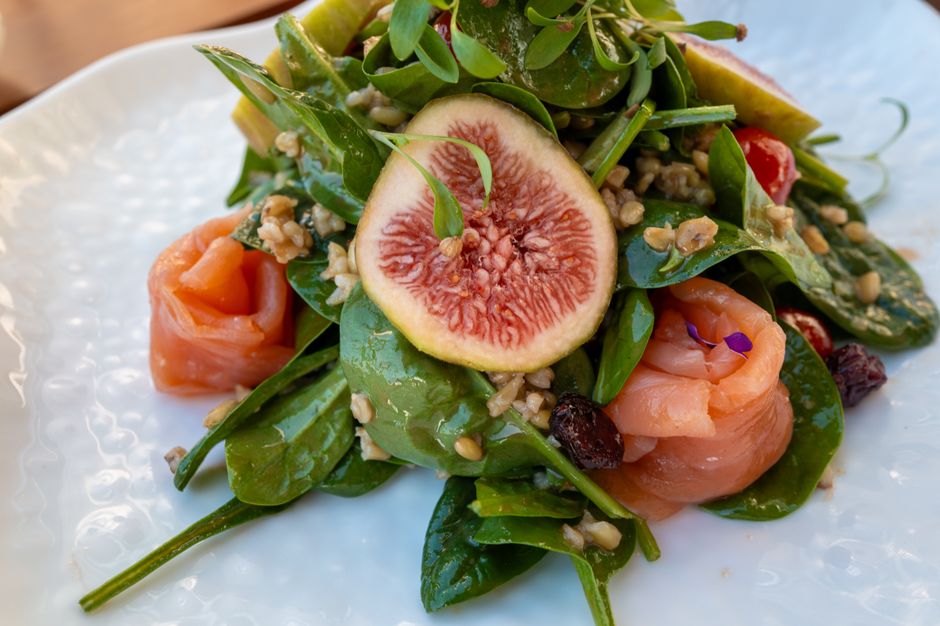
Yes, salmon contains iron. A 3-ounce cooked serving of wild Atlantic salmon provides roughly 0.3 to 0.4 milligrams of iron, while the same portion of farmed Atlantic salmon supplies a similar amount. That is a modest contribution, not a major one. Salmon is far better known as a source of omega-3 fatty acids and high-quality protein than as an iron source, and that reputation is accurate.
If you are looking for iron, salmon will not carry you very far on its own. But the type of iron it does contain matters, and so does the way your body handles iron from fish compared with iron from plants. Understanding both helps you decide how much salmon deserves a place in your diet for this particular nutrient.
Do Salmon Have Iron?
Salmon does contain iron, but the amount is small compared with the best dietary sources. The iron in salmon is heme iron, the form found in animal tissues. Heme iron is absorbed more efficiently than the non-heme iron found in plants, beans, and fortified grains.
That absorption advantage is the interesting part. A small amount of heme iron can contribute more usable iron than a larger amount of plant iron, because your body takes up a higher percentage of it. So while the total milligrams in salmon are low, the iron it does provide is in a form your body uses relatively well.
The catch is volume. To get meaningful iron from salmon alone, you would need to eat a lot of it. Salmon is a supporting player in iron intake, not a lead.
How Much Iron Is in Salmon Compared With Other Foods?
Context matters more than the raw number. A 3-ounce serving of salmon delivers under half a milligram of iron. Compare that with foods known specifically for their iron content, and the gap becomes clear.
| Food (approximate cooked portion) | Iron content | Iron type |
|---|---|---|
| Salmon, 3 oz | About 0.3–0.4 mg | Heme |
| Beef, 3 oz | About 2–3 mg | Heme |
| Chicken, 3 oz (dark meat) | About 1 mg | Heme |
| Lentils, 1 cup cooked | About 6–7 mg | Non-heme |
| Fortified cereal, 1 serving | Varies widely by product | Non-heme |
These figures come from standard nutrient databases and are approximate. Actual values vary with species, farming conditions, and how the fish is cooked. The takeaway is stable: salmon is not a high-iron food. Lentils, red meat, and fortified cereals carry far more iron per serving.
What salmon offers instead is a package. You get omega-3 fatty acids, vitamin D, vitamin B12, selenium, and protein alongside a small amount of well-absorbed iron. Judging salmon only by its iron content misses why most people eat it.
Why Is the Type of Iron in Salmon Important?
Your body treats heme and non-heme iron differently, and this is one of the most practical facts in nutrition. Heme iron, found in meat, fish, and poultry, is absorbed at a much higher rate than non-heme iron from plants.
This is why a person eating a mixed diet may meet their iron needs with less total iron than someone eating only plant foods. It also explains why vegetarians and vegans often need to pay closer attention to iron intake, and why some clinicians recommend they eat iron-rich plant foods alongside vitamin C, which improves non-heme iron absorption.
Salmon’s heme iron also comes with a bonus that few foods offer. The omega-3 fats in salmon are not related to iron absorption, but the protein and B12 in the same bite support red blood cell production in other ways. Iron builds hemoglobin, and B12 and folate are needed for healthy red blood cells too. Salmon contributes to that broader picture even though its iron number is small.




Does Salmon Help Prevent or Treat Iron Deficiency?
Salmon alone will not prevent or correct iron deficiency anemia. That is an honest limit worth stating plainly. Iron deficiency anemia typically requires either substantially more dietary iron than salmon can provide or iron supplementation guided by a clinician.
That said, salmon can be part of an iron-supporting diet. If you eat salmon alongside other iron sources, it adds to the total. And because its iron is heme, the small amount it contributes is used efficiently.
If you suspect iron deficiency, the right move is a blood test, not a dietary guess. Symptoms like persistent fatigue, pale skin, shortness of breath, or unusual coldness can have many causes, and only testing can confirm low iron stores. Treatment depends on the cause and severity, and iron supplements carry real risks if taken without medical guidance, including digestive side effects and, in excess, organ damage. Do not self-treat suspected iron deficiency with high-dose supplements.
Who Should Pay Attention to Iron From Salmon?
Some groups need more iron than others, and for them the small amount in salmon matters more as part of a pattern than on its own.
- People who menstruate. Regular menstrual blood loss raises iron needs, and iron deficiency is common in this group.
- Pregnant women. Iron needs rise substantially during pregnancy. Salmon can contribute, but it will not meet the increased requirement by itself.
- Vegetarians and vegans. If you eat salmon, you are not strictly vegetarian, but pescatarians rely on fish for heme iron and should still include other iron-rich foods.
- People with certain digestive conditions. Conditions that reduce iron absorption, such as celiac disease or inflammatory bowel disease, can increase the risk of deficiency.
- Regular blood donors. Frequent donation can deplete iron stores over time.
For these groups, salmon is one piece of a larger strategy. It is not a solution on its own.
Does Cooking or Preparing Salmon Change Its Iron?
Cooking does not meaningfully destroy the iron in salmon. Iron is a mineral, and minerals are stable under normal cooking temperatures. Baking, grilling, poaching, or pan-searing will leave the iron content essentially unchanged.
What cooking does affect is water content. As salmon cooks, it loses moisture, which concentrates nutrients by weight. A cooked 3-ounce portion therefore contains slightly more iron than a raw 3-ounce portion, simply because the same minerals are packed into less water. This is a measurement effect, not a change in the iron itself.
One practical note: if you pair salmon with a squeeze of lemon or another vitamin C source, you may modestly improve iron absorption from the meal overall, though the effect on heme iron specifically is smaller than it is for plant iron. It is a reasonable habit, not a requirement.
Is Salmon a Good Source of Iron or Not?
Salmon is a poor iron source in absolute terms and a decent one in relative terms. It contains little iron compared with beef, lentils, or fortified cereals. But the iron it does contain is heme iron, which your body absorbs well.
The most accurate way to describe salmon is this: it is not an iron food, but it is an iron-friendly food. It contributes a small, efficiently used amount, and it brings a range of other nutrients that make it worth eating for reasons beyond iron.
If iron is your specific concern, build your diet around the foods that actually deliver it in quantity. If you simply want to eat well and cover your bases, salmon earns its place on the plate for many reasons, iron among the smaller ones.
Frequently Asked Questions
Do salmon have iron?
Yes, salmon contains iron, but only a small amount, roughly 0.3 to 0.4 milligrams per 3-ounce cooked serving. The iron it provides is heme iron, which your body absorbs relatively well.
Is salmon a good source of iron?
No, salmon is not a good iron source compared with beef, lentils, or fortified cereals, which contain far more per serving. It contributes a small amount of well-absorbed iron as part of a broader nutrient package.
Can eating salmon help with iron deficiency?
Salmon alone will not prevent or correct iron deficiency anemia, which usually requires more dietary iron or clinician-guided supplementation. It can be part of an iron-supporting diet but should not be relied on as a treatment.
Does canned salmon have more iron than fresh?
Canned salmon contains a similar amount of iron to fresh salmon by weight, though exact values vary by product and whether bones are included. Canned salmon with bones adds calcium but does not dramatically change the iron content.
