
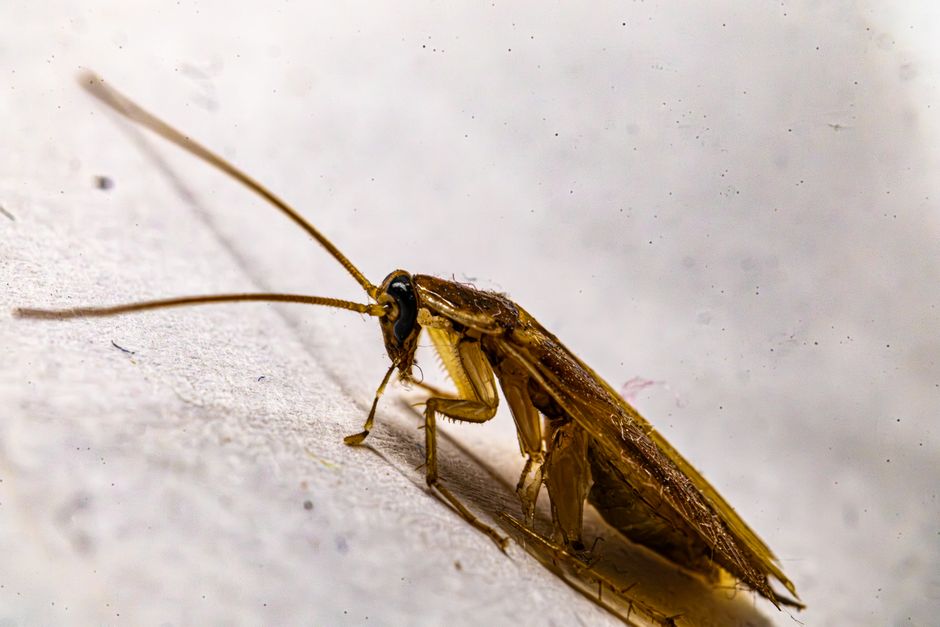
Roaches do not like the cold. They are tropical and subtropical insects by ancestry, and most species that invade homes in the United States slow down, stop reproducing, and eventually die when temperatures drop near or below freezing. Cold is one of the few environmental conditions that works against them without any help from us.
That does not mean a cold climate makes a home roach-proof. The insects are far better at finding warmth than most people expect. Understanding how temperature actually affects them explains both why winter can help and why it rarely solves a roach problem on its own.
Do Roaches Like The Cold?
No. Cold is hostile to roaches, and their bodies are built for warmth.
Roaches are ectotherms, meaning they rely on the surrounding environment to regulate body temperature. Their metabolism, digestion, movement, and reproduction all run on heat. As temperatures fall, every one of those systems slows. At low enough temperatures, the insects lose coordination and eventually die.
This is not a matter of preference. A roach in a cold environment is not uncomfortable the way a person is. It is physically impaired. Its nervous system fires more slowly, its gut stops processing food efficiently, and it cannot move fast enough to escape danger.
The species most likely to be found indoors in the US — the German cockroach and the American cockroach — both originated in warm climates. Neither has any adaptation for surviving winter outdoors in most of the country. What they have instead is an instinct to stay close to heat sources, which is why they end up in kitchens and bathrooms.
What Temperature Kills Roaches?
Sustained cold below freezing is lethal to roaches, but the timeline depends on the species, the life stage, and how gradually the temperature drops.
Some general patterns are well established in entomology:
- At temperatures around freezing, roaches become sluggish and stop feeding.
- Prolonged exposure to temperatures at or below freezing is fatal to most species.
- Egg cases, called oothecae, are often more cold-tolerant than the insects that produced them, which is one reason cold treatment is not always complete.
- Gradual cooling allows some insects to survive conditions that would kill them if the temperature dropped suddenly.
Heat works faster and more reliably than cold for killing roaches. Temperatures well above what a roach can tolerate will kill adults, nymphs, and egg cases in a much shorter window. This is why professional heat treatments are used in some situations while cold-based approaches are less common as a primary method.
Exact lethal temperatures and exposure times vary enough between species and life stages that no single number applies to every situation. Anyone relying on cold to treat an infestation should treat it as a supporting measure, not a guaranteed solution.
Why Do Roaches Come Inside During Winter?
Roaches come inside in cold weather for the same reason people do: warmth, food, and water. The outdoor environment becomes lethal or close to it, and a heated building is the nearest safe option.
German cockroaches rarely live outdoors in temperate climates at all. They have adapted so thoroughly to human structures that they are essentially an indoor species in most of the US. They do not migrate in from the yard each fall. They move between rooms and between units in apartment buildings, following warmth and moisture.
American cockroaches and some other species can live outdoors in warm conditions and move inside when the weather turns. They are more likely to enter through gaps around doors, plumbing penetrations, and vents. Once inside, they head for the same places they always do: near water heaters, under sinks, behind appliances, and in wall voids near plumbing.
A detail many people miss is that heating systems create a stable indoor climate that partly cancels out winter’s benefit. A house kept warm all season gives roaches a comfortable environment regardless of what is happening outside. Winter reduces outdoor populations. It does not necessarily reduce indoor ones.
Does Cold Weather Get Rid Of Roaches?
Cold weather reduces outdoor roach populations, but it rarely eliminates an indoor infestation.
The insects that live outdoors in warm climates take a real hit when temperatures fall. Populations drop, and some species retreat to protected microhabitats like sewers, drains, and leaf litter where temperatures stay above freezing. But the roaches living in your walls and cabinets are not exposed to outdoor temperatures. They are living in a climate-controlled space.
There is a common belief that a hard freeze will wipe out roaches for the season. It does reduce the outdoor population. It does not reach the ones already inside. And egg cases that survive can repopulate an area once conditions improve.
For apartment buildings and multi-unit housing, winter can create a different problem. Roaches that would otherwise spread out may concentrate in the warmest units, moving through shared walls and plumbing. A cold snap outside does not interrupt that movement.
Do Roaches Survive In Cold Climates?
Roaches survive in cold climates by living where people live, not by adapting to the cold itself.
Species like the German cockroach are found in cities across the northern US and Canada, including places with long, severe winters. They persist because buildings provide a year-round tropical environment. The species has not evolved cold tolerance. It has evolved to depend on human structures.
Some outdoor species are more cold-hardy than the common indoor pests, and a few can survive winters in protected spots. But the roaches most people encounter indoors are not among them. If a building loses heat for an extended period in freezing weather, indoor roach populations can be severely affected. That is a real effect, and it is one of the few situations where cold does meaningful damage to an established indoor population.
This also explains why roach problems are often worse in warm, humid climates. The outdoor environment supports them year-round, and the indoor environment always did.
How Can You Use Cold Against Roaches?
Cold can be a useful tool in specific, limited situations. It is not a practical primary treatment for most infestations.
Where cold has a legitimate role:
- Freezing infested items. Small objects, books, and some fabrics can be sealed in a freezer to kill roaches and egg cases on or inside them. The items need to stay frozen long enough for the cold to penetrate completely, and thick or insulated items take much longer than thin ones.
- Cold weather as an ally. In unheated spaces like garages, sheds, and crawl spaces, winter cold can reduce populations and make inspection easier.
- Preventing entry during cold snaps. Sealing gaps around pipes, doors, and vents before temperatures drop keeps roaches from moving in as the outdoor environment becomes hostile.
Where cold is not reliable:
Cooling a room or a house to kill roaches is not a realistic approach. Buildings are large, cold air stratifies, and roaches retreat into wall voids and insulated spaces that stay warm. Professional heat treatment, by contrast, is an established method because heat penetrates and kills at every life stage within a predictable window.
If roaches are already established indoors, the effective approach is standard pest control: eliminate food and water sources, seal entry points, and use baits or other control methods appropriate to the species. Cold weather can support those efforts by reducing outdoor pressure. It does not replace them.
What Attracts Roaches More Than Temperature?
Food, water, and shelter attract roaches more reliably than temperature does. Cold determines where they can live. Those three things determine whether they thrive once they are there.
A few drops of water under a sink or a film of grease behind a stove matters more to a roach than a few degrees of temperature difference. German cockroaches in particular can complete their life cycle in a small area as long as moisture and food are available. Removing those resources does more to control them than any seasonal change.
This is why winter often does not produce the relief people expect. The outdoor population shrinks, but the indoor population is living exactly where it wants to be. The conditions that support it — warmth, moisture, and food — are the same in January as they are in July.
Frequently Asked Questions
Do roaches like cold weather?
No. Roaches are cold-blooded insects that slow down and eventually die when temperatures drop near or below freezing. They seek warmth rather than tolerate cold.
At what temperature do roaches die?
Most roaches cannot survive prolonged exposure to temperatures at or below freezing, though exact lethal temperatures and times vary by species and life stage. Egg cases are often more cold-tolerant than adult roaches.
Can roaches survive winter indoors?
Yes. Indoor roaches live in heated buildings that stay warm all winter, so outdoor cold does not reach them. German cockroaches in particular are essentially indoor insects in most of the US.
Does freezing kill roach eggs?
Freezing can kill roach eggs, but the cold must penetrate the egg case completely and be sustained long enough to do so. Egg cases are generally more cold-tolerant than adult roaches, so freezing is less reliable than heat treatment.
