
No. Red blood cells do not have mitochondria. They lose them on purpose during their development, and that loss is central to how they work. A mature human red blood cell is essentially a flexible bag of hemoglobin with no nucleus and no mitochondria, built to carry oxygen and almost nothing else.
That single fact explains a lot about red blood cells that otherwise seems strange. They do not burn oxygen to make energy. They do not repair themselves. They do not divide. And they have a built-in expiration date that is short compared to most cells in your body.
Do Red Blood Cells Have Mitochondria?
Mature red blood cells in humans have no mitochondria. This is not a defect or a disease state. It is the normal, final form of the cell.
Red blood cells begin life in the bone marrow as immature cells called erythroblasts. These early cells do have a nucleus and mitochondria, like most cells in the body. As they mature, they go through a process called enucleation, where they eject their nucleus. They also shed their other internal organelles, including mitochondria, ribosomes, and the Golgi apparatus.
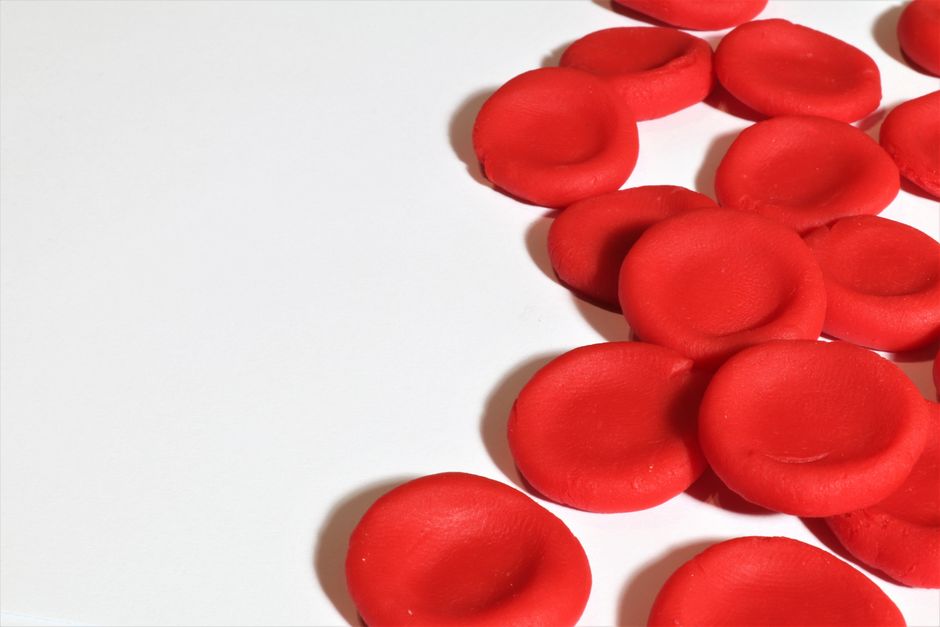
What remains is a biconcave disc — a shape like a donut with a filled-in center. It is packed with hemoglobin, the iron-containing protein that binds oxygen. The cell has no internal machinery to maintain, which frees up space for more hemoglobin.
It is worth being precise here, because the wording matters. Red blood cells do not “lose” mitochondria the way a cell might lose them in injury. The loss is programmed and part of normal development. By the time a red blood cell enters the bloodstream, the mitochondria are gone.
Why Do Red Blood Cells Get Rid of Their Mitochondria?
The loss of mitochondria serves two clear purposes. One is space. The other is chemistry.
First, space. A red blood cell’s only job is to transport oxygen and, to a lesser degree, carbon dioxide. Every internal structure it keeps is space not used for hemoglobin. By clearing out the nucleus and organelles, the cell can pack in far more oxygen-carrying protein. It also becomes more flexible, which lets it squeeze through the narrowest capillaries in the body.
Second, and more interesting, is the chemistry. Mitochondria are the parts of a cell that consume oxygen to make energy. If a red blood cell kept its mitochondria, those mitochondria would compete with hemoglobin for the same oxygen molecules. The cell would burn some of the oxygen it is supposed to be delivering.
Without mitochondria, the red blood cell does not consume the oxygen it carries. That means more oxygen arrives at your tissues instead of being used up in transit. This is one of the clearest examples in human biology of a cell’s structure being perfectly matched to its function.
How Do Red Blood Cells Make Energy Without Mitochondria?
Red blood cells still need energy. They just make it differently.
Most cells in your body generate energy through aerobic respiration, which happens in the mitochondria and uses oxygen. Red blood cells cannot do this. Instead, they rely on glycolysis — a process that breaks down glucose into energy without using oxygen and without mitochondria.
Glycolysis happens in the fluid part of the cell, called the cytoplasm. It produces a small amount of energy compared to mitochondrial respiration, but it is enough for a cell with no repair work and no division to do.
This reliance on glycolysis has a practical consequence. Because red blood cells depend on a steady supply of glucose, they are sensitive to conditions that affect blood sugar and to storage conditions in blood banks. It is also why stored blood has a limited shelf life — the cells slowly run down their energy supply and lose flexibility over time.
What Else Is Missing From a Mature Red Blood Cell?
Mitochondria are not the only thing absent. A mature human red blood cell also has no nucleus, no ribosomes, and no other membrane-bound organelles.
The missing nucleus means the cell cannot divide and cannot make new proteins. The missing ribosomes reinforce that — ribosomes are the cell’s protein factories, and without them, no new protein can be built. The cell is essentially a finished product with no ability to remake itself.
- No nucleus — cannot divide or replace damaged DNA
- No mitochondria — does not consume the oxygen it carries
- No ribosomes — cannot synthesize new proteins
- No Golgi apparatus or endoplasmic reticulum — no internal processing or packaging
This is why red blood cells have a fixed lifespan. In humans, a circulating red blood cell typically survives around 120 days. Because it cannot repair itself, wear and tear accumulates. At the end of its life, it is removed from circulation by the spleen and liver, and its components are recycled.
The spleen and liver break down old red blood cells and salvage the iron from hemoglobin. That iron is sent back to the bone marrow to help build new red blood cells. Your body replaces red blood cells continuously to keep the supply steady.
Is This True for All Animals?
No. The absence of mitochondria in mature red blood cells is a feature of mammals, and even among mammals there are exceptions.
In most mammals, including humans, mature red blood cells are enucleated and lack mitochondria. But some mammals retain a nucleus in their red blood cells. The two-toed sloth and the three-toed sloth are well-known examples — their red blood cells keep a nucleus. Some other mammals, such as camels and llamas, have red blood cells that are oval rather than the classic disc shape, though they still lack a nucleus.
Birds, reptiles, amphibians, and fish generally have red blood cells that keep their nucleus throughout their lives. So the “no nucleus, no mitochondria” design is not a universal rule of blood. It is a mammalian specialization, and even within mammals it is not absolute.
This matters for a simple reason. If you read a general statement that “red blood cells have no mitochondria,” it is accurate for humans and most mammals, but it is not a law of biology that applies to every organism with red blood.
Why Does This Matter for Your Health?
The structure of red blood cells connects directly to several real medical topics.
Because red blood cells rely on glycolysis and have no mitochondria, they are vulnerable in ways other cells are not. In a condition called glucose-6-phosphate dehydrogenase deficiency, or G6PD deficiency, the red blood cell lacks a key enzyme that protects it from oxidative stress. Without that protection, red blood cells can break apart prematurely, a process called hemolysis. G6PD deficiency is one of the more common enzyme disorders worldwide and is more frequent in certain populations, including people of African, Mediterranean, and Southeast Asian descent.
The lack of mitochondria also explains why red blood cells do not use oxygen the way other cells do. This is why a pulse oximeter, which measures oxygen saturation in the blood, can read the oxygen carried by hemoglobin without interference from the red blood cells themselves consuming it.
And the fixed lifespan of roughly 120 days is why blood transfusions have a shelf life and why conditions that destroy red blood cells faster than the body can replace them — hemolytic anemias — can cause real problems. The body can usually keep up with normal turnover, but not always with accelerated loss.
There is one more point worth being honest about. Because red blood cells have no mitochondria and no nucleus, they also cannot mount many of the defenses other cells use against damage. This is part of why they are relatively simple and short-lived, and why the body constantly makes new ones to replace the ones it retires.
Do Red Blood Cells Ever Have Mitochondria Again?
No. Once a mature red blood cell has shed its mitochondria, it never regains them. The cell has no way to build new ones because it has no DNA and no ribosomes to make the proteins that mitochondria require.
The only red blood cells with mitochondria are the immature forms still developing in the bone marrow. Once they mature and enter circulation, the mitochondria are gone for good.
That is the full picture. A red blood cell is a highly specialized cell that traded nearly everything — its nucleus, its mitochondria, its ability to repair and divide — for one job: carrying oxygen. The trade-off is real, and it is one of the clearest examples of form following function in the human body.
Frequently Asked Questions
Do red blood cells have mitochondria?
No, mature human red blood cells do not have mitochondria. They shed their mitochondria, along with their nucleus and other organelles, during development in the bone marrow.
Why do red blood cells not have mitochondria?
Losing mitochondria lets red blood cells carry more hemoglobin and prevents them from consuming the oxygen they are meant to deliver. Without mitochondria, they also cannot use aerobic respiration, so they rely on glycolysis for energy.
How long do red blood cells live without a nucleus or mitochondria?
A circulating human red blood cell typically lives about 120 days. Because it cannot repair itself or make new proteins, it is eventually removed from circulation by the spleen and liver.
Do all animals have red blood cells without mitochondria?
No. The absence of mitochondria in mature red blood cells is typical of most mammals, including humans, but not all animals. Birds, reptiles, amphibians, and fish generally keep a nucleus in their red blood cells.
