
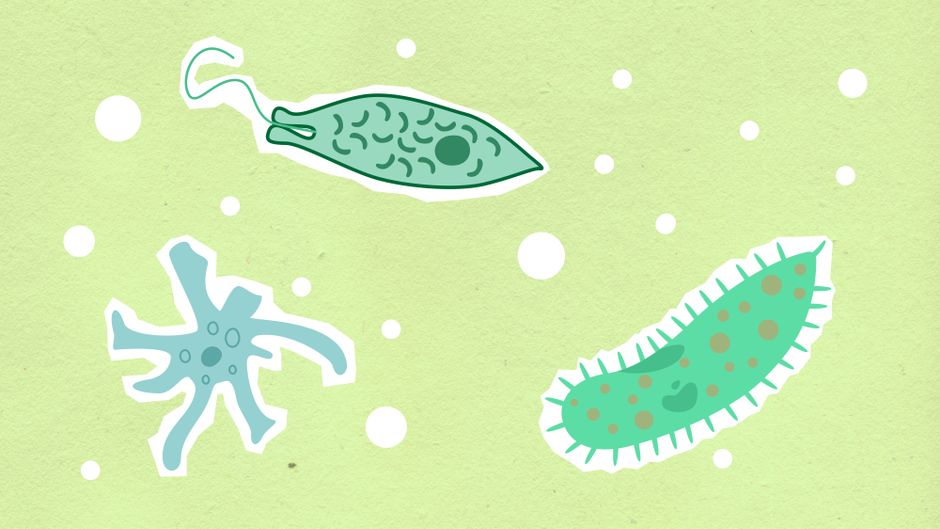
Protozoa are single-celled organisms, and yes — they have a true nucleus. That nucleus is not a simple sac of DNA. It is a highly organized structure with its own membrane, its own internal skeleton, and in some species, a level of genetic rearrangement that is genuinely strange.
The word “protozoa” itself is a bit of a moving target. It is not a formal scientific category anymore. It is a convenient, old-fashioned label for single-celled eukaryotes that are not algae, not fungi, and not animals in the usual sense. What ties them together is that they are eukaryotic — meaning their cells contain a membrane-bound nucleus and other internal compartments. That single fact separates them from bacteria, which have no nucleus at all.
So the short answer is yes. The longer answer is that protozoan nuclei come in several distinct designs, and some of them break the usual rules of how a cell is supposed to work.
What Makes a Nucleus a True Nucleus?
A true nucleus is defined by a double membrane called the nuclear envelope. This envelope separates the cell’s genetic material from the rest of the cell. It is studded with protein channels called nuclear pores that control what moves in and out.
Inside the envelope sits the DNA, wrapped around proteins called histones. This DNA-protein package is called chromatin. During cell division, the chromatin condenses into visible chromosomes. A region called the nucleolus sits inside the nucleus and builds ribosomes, the cell’s protein factories.
Bacteria and archaea have none of this. Their DNA floats freely in the cell. This is the single biggest structural divide in biology — prokaryotes versus eukaryotes — and protozoa sit firmly on the eukaryotic side.
That distinction matters for medicine. Many drugs that target protozoan infections work by attacking structures that human cells share, which is one reason these infections can be hard to treat without side effects.
How Does the Protozoan Nucleus Differ From a Human Cell Nucleus?
Structurally, a protozoan nucleus looks a lot like yours. Both have a nuclear envelope, nuclear pores, chromatin, and a nucleolus. The basic machinery of storing and reading DNA is deeply conserved across eukaryotes.
The differences show up in the details. Protozoa often carry far more DNA than their size would suggest. Some have genomes packed with repetitive sequences whose function is not fully understood. Others carry extra DNA structures outside the main nucleus.
One well-documented example is Trypanosoma brucei, the parasite that causes African sleeping sickness. In addition to its main nucleus, it has a separate structure called a kinetoplast. The kinetoplast is a dense mass of mitochondrial DNA. It is not a second nucleus, and it does not hold the cell’s main genetic instructions. But it is essential for the parasite’s energy production, and it is unusual enough that researchers have studied it as a possible drug target.
Protozoa also tend to divide differently. Many use forms of mitosis that look unfamiliar compared to human cell division. In some species, the nuclear envelope stays largely intact during division rather than breaking down.
Which Protozoa Have Two Nuclei — And Why?
Some protozoa carry two nuclei, and this is one of the more interesting quirks of the group. The best-known example is Giardia lamblia, a common cause of intestinal illness worldwide.
Giardia has two nuclei that appear structurally identical. They divide at the same time. Both carry a full set of genes. Researchers have debated for years why the organism maintains two apparently redundant nuclei. Some evidence suggests the two nuclei may not be perfectly identical in what genes they express, but the reason for the duplication is still not settled.
Another group, the ciliates, takes nuclear division of labor much further. Ciliates such as Paramecium have two functionally different nuclei:
- A micronucleus, which holds the full genome and is used for sexual exchange of genetic material.
- A macronucleus, which is a working copy. It is polyploid, meaning it contains many copies of each gene, and it runs the cell’s day-to-day operations.
During sexual reproduction, the macronucleus is discarded and rebuilt from the micronucleus. The process involves extensive cutting and rearranging of DNA. This is not a small edit. It is a large-scale reorganization that removes chunks of the genome and stitches the rest back together in a new order.
That kind of genome remodeling is rare among eukaryotes. It is one of the clearest examples of how far protozoa can diverge from the standard cellular playbook.
What Does the Nucleus Do in a Single-Celled Organism?
The nucleus does the same core job it does in any eukaryotic cell: it stores DNA and controls which genes are turned on and when. For a single-celled organism, that control is a survival tool.
Protozoa live in environments that shift constantly. A parasite may move from a warm host to cool water to a new host. It may face immune attack, changes in pH, or sudden shifts in available nutrients. The nucleus coordinates the response by switching genes on and off.
It also manages reproduction. Protozoa reproduce mainly by binary fission, a simple splitting into two cells. Some also exchange genetic material through processes that resemble sex. In ciliates, this exchange happens through the micronucleus. In other groups, the mechanism differs.
One non-obvious point: having a nucleus does not mean the cell is complex in the way a human cell is. Protozoa are eukaryotic, but they are still single cells. They have no tissues, no organs, and no immune system of their own.
Why Does the Nucleus Matter for Treating Protozoan Infections?
Because protozoa are eukaryotes, they share a great deal of basic biology with humans. That makes them harder to target with drugs than bacteria, which are structurally very different from our cells.
A drug that shuts down a bacterial ribosome, for example, may leave human ribosomes untouched because the two are built differently. A drug aimed at a protozoan ribosome has a narrower margin, because protozoan and human ribosomes are more similar.
This is why some antiprotozoal drugs carry significant side effects. It is also why researchers look for features that are unique to protozoa — such as the kinetoplast, the unusual nuclear division machinery, or the genome rearrangements in ciliates — as potential targets.
That said, identifying a promising target in the lab is not the same as producing a safe, effective treatment. Many candidate drugs fail in later testing. The evidence for any specific new antiprotozoal therapy should be judged on clinical trial results, not on how elegant the biological rationale sounds.
Are Protozoa Animals, Bacteria, or Something Else?
Protozoa are neither animals nor bacteria. They are single-celled eukaryotes, which places them in a different category entirely.
The confusion is understandable. The name “protozoa” means “first animals,” and it was coined when scientists grouped them with animals because many move and eat other organisms. Modern classification has moved away from that. Genetic analysis has shown that the organisms once lumped together as protozoa do not all share a single recent ancestor. Some are more closely related to algae. Some are closer to animals. Some sit on branches of the eukaryotic tree that are far from both.
So “protozoa” survives as a practical term, not a precise evolutionary one. It describes a lifestyle and a cell type more than a family tree.
What all of them share is the nucleus. That is the one feature that reliably holds across the group, even as the rest of their biology varies widely.
Frequently Asked Questions
Do protozoa have a nucleus?
Yes. All protozoa are eukaryotes, meaning their cells contain a true membrane-bound nucleus. This is the defining feature that separates them from bacteria.
Which protozoan has two nuclei?
Giardia lamblia has two nuclei that appear identical and divide together. Ciliates such as Paramecium also have two nuclei, but theirs differ in function — a micronucleus for genetic exchange and a macronucleus for daily operations.
Is a protozoan nucleus the same as a human cell nucleus?
Structurally they are similar, both having a nuclear envelope, pores, chromatin, and a nucleolus. The differences lie in genome size, organization, and the unusual ways some protozoa divide and rearrange their DNA.
Why are protozoa harder to treat than bacteria?
Because protozoa are eukaryotes, they share more basic cell machinery with human cells than bacteria do. That leaves fewer structural differences for drugs to target selectively, which can limit treatment options.
