
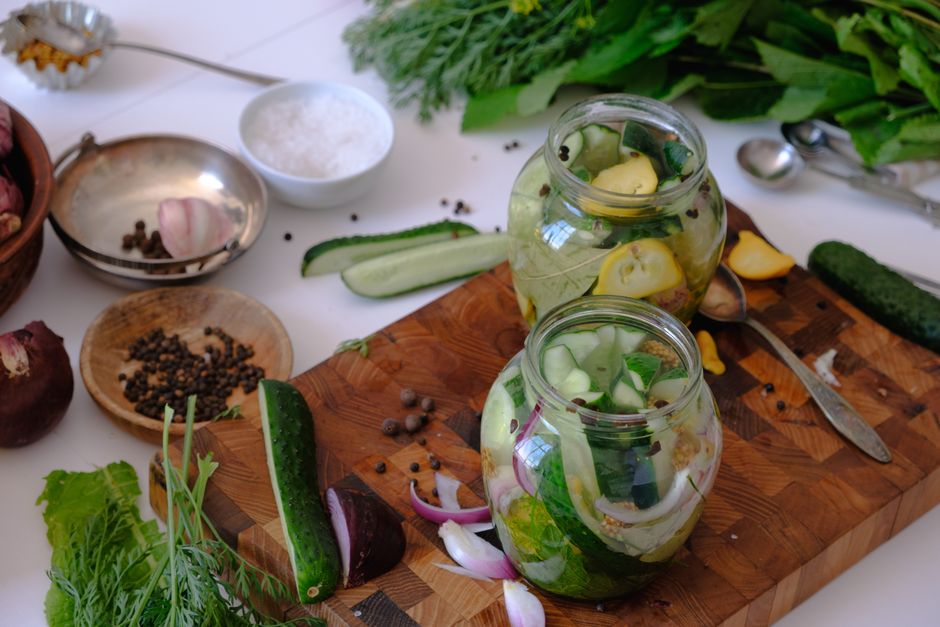
Pickles are fermented cucumbers, and fermentation creates beneficial bacteria that can support gut health. But the pickles most people buy at the grocery store are not fermented at all. They are preserved in vinegar and brine, which means they offer little to no probiotic benefit. Whether pickles help with digestion depends almost entirely on how they were made.
What Makes a Pickle Fermented vs. Vinegar-Preserved?
True fermented pickles go through a natural process. Cucumbers sit in saltwater with spices for weeks. Naturally occurring bacteria on the cucumber surface eat the sugars and produce lactic acid. That acid preserves the pickle and gives it that tangy, sour taste.
This process creates live microorganisms. Those microorganisms are probiotics — living bacteria that can benefit your digestive system when consumed in adequate amounts.
Vinegar pickles are different. The cucumber is packed in a heated mixture of vinegar, water, and salt. The heat kills any bacteria present. Vinegar itself is acidic enough to preserve the cucumber without any fermentation. Most commercial pickles — the ones on supermarket shelves — are this type. They may say “kosher dill” or “sour” on the label, but they are not fermented.
Some brands do sell fermented pickles, often refrigerated in the produce section or sold as “raw” or “live” pickles. The label usually says “fermented” or “contains live cultures.” If the label does not say fermented, assume it is vinegar-preserved.
How Fermented Foods Support Digestion
Your large intestine houses trillions of bacteria. This community, called the gut microbiome, helps break down certain foods, produces vitamins, and supports the immune system. The balance of these bacteria influences digestion, bowel regularity, and overall gut function.
Probiotics from fermented foods add living bacteria to this community. Research consistently shows that consuming probiotics can help maintain a healthy balance of gut bacteria, particularly after antibiotic use or during digestive upset.
Fermented pickles also contain organic acids produced during fermentation. These acids can help lower the pH of the gut environment, which supports the growth of beneficial bacteria while making conditions less favorable for harmful ones.
One important note: the scientific evidence on probiotics focuses heavily on specific strains studied in clinical trials. The bacteria in homemade or small-batch fermented pickles are not the same strains found in commercial probiotic supplements. They may still be beneficial, but the exact effects are less well-documented.
Do Pickles Help with Digestion Directly?
Fermented pickles can help digestion in two ways. First, they introduce live bacteria that may support the gut microbiome. Second, the fermentation process creates enzymes that help break down food components, making them easier to digest.
Vinegar pickles do not provide either of these benefits. The vinegar itself may have minor effects on blood sugar response, but it does not introduce probiotics or enzymes.
There is a common claim that pickle juice relieves muscle cramps or helps with acid reflux. The evidence for these uses is limited. Some athletes drink pickle juice for cramping, and small studies suggest it may help, but the mechanism is not well understood. For acid reflux, the acidity of pickle juice may actually worsen symptoms in some people.
The honest position: if you want digestive benefits from pickles, choose fermented ones. Vinegar pickles are a low-calorie snack but they are not a digestive aid.
Salt Content and Digestive Health
Pickles are high in sodium. A single medium dill pickle contains roughly 300 to 400 milligrams of sodium. For reference, the American Heart Association recommends limiting sodium to no more than 2,300 milligrams per day, with an ideal limit of 1,500 milligrams for most adults.
High sodium intake can contribute to high blood pressure over time. For people with existing hypertension, kidney disease, or heart failure, the sodium in pickles matters.
Salt also draws water into the digestive tract. This can have a mild laxative effect for some people. If you eat several pickles at once, you may notice looser stools. This is not a health benefit — it is simply a physiological response to excess salt.
If you have digestive conditions like irritable bowel syndrome (IBS), the high salt content may trigger bloating or fluid retention. Pay attention to how your body responds.
Acidity and Heartburn
Pickles are acidic foods. Fermented pickles contain lactic acid. Vinegar pickles contain acetic acid from the vinegar. Both can trigger heartburn in people who are prone to acid reflux.
If you have gastroesophageal reflux disease (GERD), eating pickles may worsen symptoms. The acidic nature of the pickle can irritate the esophagus, especially if you eat them on an empty stomach or close to bedtime.
This does not mean everyone with reflux must avoid pickles. Some people tolerate them fine. But if you notice heartburn after eating pickles, they are likely a trigger for you.
The idea that pickle juice cures reflux is not supported by evidence. In fact, for many people it would make symptoms worse.
How to Choose Pickles for Gut Health
If your goal is digestive support, look for the following on the label:
- “Fermented” or “naturally fermented” on the packaging
- “Contains live cultures” or “probiotic”
- Refrigerated section — fermented pickles typically require refrigeration
- Short ingredient list — cucumbers, water, salt, and spices
Avoid pickles that list calcium chloride as a main ingredient. Calcium chloride is a firming agent used in vinegar pickles. Its presence usually means the product is not fermented.
Be cautious with the term “probiotic” on labels. Some manufacturers add probiotic cultures after processing, which may or may not survive in meaningful amounts. The most reliable way to get fermented pickles is to make them at home or buy from a brand that clearly describes its fermentation process.
Homemade fermented pickles are simple to make. Cucumbers, water, salt, and dill in a jar. Leave them at room temperature for one to four weeks. The fermentation time depends on temperature and your taste preference. This gives you full control over the process and guarantees live cultures.
How Much Pickle Is Enough?
There is no established clinical guideline for how many fermented pickles you should eat for digestive benefit. Unlike probiotic supplements, which have studied doses, fermented foods do not have standardized serving recommendations.
A reasonable approach is to treat fermented pickles as one part of a varied diet that includes other fermented foods like yogurt, kefir, sauerkraut, and kimchi. Eating a serving or two per day of fermented foods in total is a common pattern in research on fermented food consumption, but this is not a formal recommendation.
Start with a small amount — one pickle or a few spears — and see how your digestive system responds. Some people experience temporary bloating or gas when they first increase their intake of fermented foods. This usually settles within a few days as the gut adjusts.
If you have a compromised immune system, are pregnant, or have a condition that affects your gut lining, talk to your doctor before adding fermented foods to your diet. Live bacteria are generally safe for healthy people, but there are rare cases where they cause infection in vulnerable individuals.
What About Pickle Juice?
Pickle juice has become popular as a sports drink alternative. Some research suggests it may relieve muscle cramps faster than water, possibly due to a reflex triggered in the mouth and throat rather than hydration effects.
For digestion specifically, pickle juice has no established benefit. It does not contain meaningful amounts of probiotics because the beneficial bacteria are mostly in the pickle itself, not the brine. The juice may help with mild dehydration-related issues, but water is a better choice for hydration.
Pickle juice is high in sodium and vinegar. Drinking large amounts can irritate the stomach lining and may cause nausea or heartburn. There is no evidence that pickle juice improves digestion, speeds up metabolism, or detoxifies the body. Those claims are marketing noise.
Other Digestive Benefits Worth Knowing
Pickles are low in calories and contain some fiber, though not a significant amount. A whole dill pickle provides about 1 gram of fiber. For comparison, an apple provides about 4 grams.
The cucumbers themselves are mostly water, which contributes to hydration. Proper hydration is essential for regular bowel movements and overall digestive function. But you can get the same hydration from plain water without the sodium.
Some research on fermented vegetables suggests they may increase the diversity of gut bacteria over time. Diversity is generally considered a marker of a healthy microbiome. However, most of this research has been done on mixed fermented vegetable diets, not pickles alone.
The bottom line is that pickles are not a miracle food for digestion. Fermented pickles offer genuine probiotic benefits. Vinegar pickles are a crunchy, low-calorie snack with no specific digestive advantage. Choose based on what you want, and be honest with yourself about what the evidence supports.
Frequently Asked Questions
Are store-bought pickles fermented?
Most store-bought pickles are preserved in vinegar and are not fermented. Check the label for “fermented” or “contains live cultures” to confirm.
Can pickles cause bloating?
Yes, the high sodium content in pickles can cause fluid retention and bloating in some people. Fermented foods may also cause temporary gas as your gut adjusts.
Is pickle juice good for your stomach?
No solid evidence shows pickle juice benefits digestion. It is highly acidic and salty, which may irritate the stomach lining or trigger heartburn in sensitive individuals.
How many pickles should I eat per day for gut health?
No clinical guidelines exist for pickle consumption. A reasonable starting point is one serving per day, and you can adjust based on how your body responds.
