
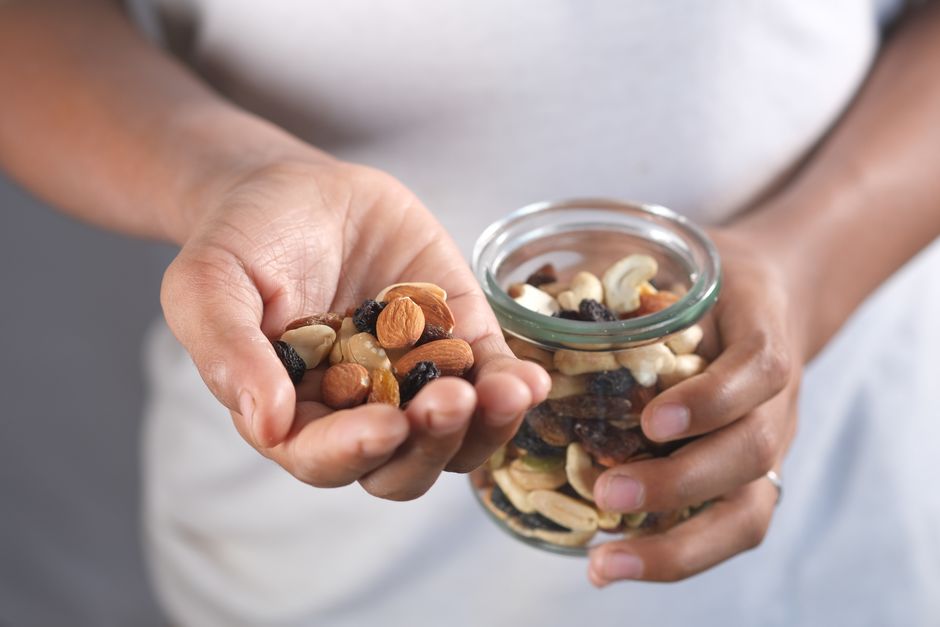
Peanuts are not actually nuts. They are legumes — the same plant family as beans, lentils, and peas. That single fact explains a lot about their nutrition, including their carbohydrate content. A one-ounce serving of raw peanuts (about 28 grams) contains roughly 4 to 5 grams of carbohydrates, of which about 2 grams are fiber. That leaves around 2 to 3 grams of net carbs per ounce. For context, the same weight of almonds has about 6 grams of carbs and cashews have about 9 grams. Peanuts sit on the lower end of the carb spectrum among common snack nuts.
How Many Carbs Are in Peanuts?
The exact carb count depends on how the peanuts are prepared and what else is in the package. Raw, dry-roasted, and oil-roasted peanuts all land in a similar range. Honey-roasted, chocolate-covered, or candy-coated peanuts do not.
Here is a comparison based on USDA nutritional data for a 1-ounce (28-gram) serving:
| Type | Total Carbs | Fiber | Net Carbs |
|---|---|---|---|
| Raw peanuts | ~4-5 g | ~2 g | ~2-3 g |
| Dry-roasted peanuts | ~5-6 g | ~2 g | ~3-4 g |
| Honey-roasted peanuts | ~12-15 g | ~1-2 g | ~10-13 g |
| Peanut butter (2 tbsp, no added sugar) | ~6-7 g | ~2 g | ~4-5 g |
| Peanut butter (2 tbsp, sweetened) | ~8-10 g | ~1-2 g | ~7-9 g |
The jump from plain to honey-roasted is not subtle. Added sugar can triple the carb content. If you are watching carbs, the type of peanut product matters far more than the peanut itself.
Peanuts are roughly 16 percent carbohydrates by weight. Fat makes up about 49 percent and protein about 26 percent. That macronutrient profile is why peanuts feel filling and why they are not a high-carb food in their plain form.
Are Peanuts a Good Choice on a Low-Carb Diet?
Plain peanuts fit comfortably into most low-carb eating patterns. With 2 to 3 grams of net carbs per ounce, they are one of the lower-carb snack options available.
For comparison, here is how peanuts stack up against other common snack foods per 1-ounce serving:
- Peanuts: ~2-3 g net carbs
- Almonds: ~3-4 g net carbs
- Walnuts: ~2 g net carbs
- Cashews: ~7-8 g net carbs
- Potato chips: ~15 g net carbs
- Pretzels: ~22 g net carbs
The catch is portion size. Peanuts are calorie-dense — about 160-170 calories per ounce. Eating them by the handful from a large container can add up quickly. That does not change the carb count per ounce, but it does affect total intake.
Peanut butter deserves separate mention. A plain, unsweetened peanut butter with two ingredients — peanuts and salt — has a carb profile similar to whole peanuts. Many commercial brands add sugar, palm oil, and other ingredients. Reading the label is the only reliable way to know what you are getting.
Why Do Peanuts Have Fewer Carbs Than Other Nuts?
Botany explains it. Peanuts grow underground as seeds inside pods. Tree nuts like almonds, walnuts, and pecans grow on trees. Despite the different plant origins, peanuts and tree nuts ended up with similar nutritional strategies: store energy as fat and protein rather than starch.
Legumes generally are higher in carbohydrates than tree nuts. Think of lentils, chickpeas, and kidney beans — all legumes with substantial starch content. Peanuts are the outlier. They evolved a seed composition much closer to a tree nut than to a bean.
That is why the “peanut is a legume” fact surprises people but does not change the practical nutrition picture. For carb counting, peanuts behave like a nut, not like a bean.





Do Peanuts Have Any Carbs That Affect Blood Sugar?
Peanuts have a low glycemic index, which means they raise blood sugar slowly compared to high-carb foods. The combination of fat, protein, and fiber slows digestion and glucose absorption.
This does not mean peanuts have zero effect on blood sugar. They contain some carbohydrate, and any carbohydrate can raise glucose to some degree. But the effect is modest compared to bread, rice, or potatoes.
Research on peanuts and blood sugar has produced mixed results. Some studies suggest that eating peanuts or peanut butter alongside a high-carb meal may blunt the post-meal glucose rise. Other studies have not found a clear effect. The evidence is not strong enough to present peanuts as a blood sugar management tool. They are simply a low-carb food that is unlikely to cause sharp spikes when eaten in normal amounts.
People with diabetes who count carbohydrates should include peanuts in their total daily carb tally. The count is low, but it is not zero. Individual blood sugar responses vary, and what works for one person may not work for another.
What About Peanut Butter and Carb Counts?
Peanut butter is where carb counts get complicated. The peanuts themselves contribute 4 to 5 grams of carbs per two-tablespoon serving. What gets added during manufacturing can double that number.
Ingredients to look for on a peanut butter label:
- Added sugar (sucrose, dextrose, corn syrup solids)
- Hydrogenated vegetable oils (added for texture, not carbs, but a sign of processing)
- Molasses, honey, or maltodextrin
A “natural” label does not guarantee low carbs. Some natural brands still add sugar or honey. The most reliable approach is to check the Nutrition Facts panel for total carbohydrates and compare across brands. Two tablespoons of one brand might have 5 grams of carbs while another has 9.
Powdered peanut butter is a different product entirely. It has most of the oil pressed out, which concentrates the protein and carbohydrate. A typical two-tablespoon serving of powdered peanut butter has around 5 grams of carbs and much less fat. It is not a direct substitute for regular peanut butter in all recipes, but it can work in smoothies and some baking.
Do Peanuts Fit Into a Keto or Very Low-Carb Diet?
Plain peanuts can fit into a ketogenic diet in small amounts. At 2 to 3 grams of net carbs per ounce, they are within the range that most keto eaters allow for a snack.
The practical challenge is calories, not carbs. Keto diets are typically high in fat, and peanuts are already high in fat. Adding 170 calories per ounce on top of an already calorie-dense eating pattern can make it hard to stay within a calorie target if that is a goal.
Some people on keto find that peanuts trigger cravings or are easy to overeat. That is an individual response, not a universal rule. There is no clinical evidence that peanuts specifically disrupt ketosis in a way other low-carb foods do not.
If you are following a medically supervised ketogenic diet for epilepsy or another condition, talk to your care team about whether peanuts fit your specific plan. Therapeutic ketogenic diets have precise macronutrient ratios that differ from recreational low-carb eating.
Are There Any Downsides to Peanuts?
Peanut allergy is the most serious concern. It affects a small percentage of adults and children in the United States, but reactions can be severe and life-threatening. People with a diagnosed peanut allergy should avoid all peanut products.
For everyone else, peanuts are a nutrient-dense food. They provide protein, monounsaturated and polyunsaturated fats, vitamin E, niacin, folate, magnesium, and potassium. They also contain resveratrol, a compound found in red grapes and red wine, though the amount in peanuts is small and its health effects in humans are not well established.
One practical issue is aflatoxin, a toxin produced by certain molds that can grow on peanuts stored improperly. In the United States, commercial peanut products are tested and regulated for aflatoxin levels. The risk from properly stored commercial products is low. Storing peanuts in a cool, dry place and discarding any that are moldy, discolored, or smell musty reduces risk further.
Peanuts are also a common choking hazard for young children. Whole peanuts and chunks of peanut butter should not be given to children under age 4. The American Academy of Pediatrics recommends that parents introduce peanut-containing foods to infants in an age-appropriate form, starting around 6 months, to reduce allergy risk. This should be done with guidance from a pediatrician, especially if the child has eczema or a family history of food allergy.
Frequently Asked Questions
How many carbs are in a handful of peanuts?
A one-ounce handful of plain peanuts has about 4 to 5 grams of total carbs and 2 to 3 grams of net carbs. If the peanuts are honey-roasted or candy-coated, the count can be two to three times higher.
Are peanuts keto-friendly?
Plain peanuts can fit into a ketogenic diet in small portions because they are low in net carbs. The main concern is their high calorie density, not their carb content.
Do peanuts raise blood sugar?
Peanuts have a low glycemic index and raise blood sugar slowly compared to high-carb foods. They still contain some carbohydrate, so people who count carbs should include them in their daily total.
Is peanut butter lower in carbs than whole peanuts?
Plain peanut butter has a similar carb count to whole peanuts per equivalent serving. Sweetened or flavored peanut butter can have significantly more carbs due to added sugar.
