
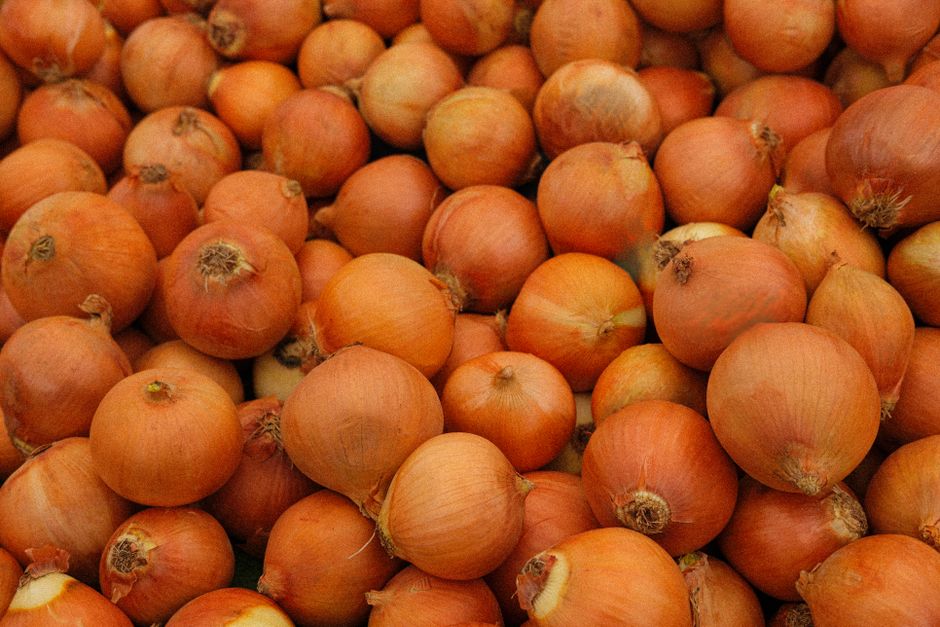
Yes, onions can cause gas in many people. Onions contain fermentable carbohydrates called fructans that the small intestine cannot fully digest. When these carbohydrates reach the colon, gut bacteria ferment them and produce gas as a byproduct.
That does not mean everyone who eats onions will get gas. Some people produce more gas than others, and how onions are cooked can change how much of these compounds remain intact. This article explains the mechanism, who is most affected, and what the evidence actually shows.
Do Onions Cause Gas?
Onions are one of the most commonly reported gas-producing foods. The reason is a type of carbohydrate called fructooligosaccharides, or fructans. These are short chains of fructose molecules that human digestive enzymes cannot break down.
Most carbohydrates get broken into simple sugars in the small intestine and absorbed into the bloodstream. Fructans skip that process entirely. They travel intact to the large intestine, where trillions of bacteria use them as fuel. That fermentation releases hydrogen, carbon dioxide, and in some people methane — the gases that cause bloating, pressure, and flatulence.
This is normal digestive physiology, not a sign of a digestive disorder. Everyone produces gas from fermentable carbohydrates. The difference between people who react to onions and those who do not comes down to how much gas their particular gut bacteria produce and how sensitive their gut is to that gas.
Research on fermentable carbohydrates has consistently identified onions as a significant source of fructans in the typical diet. Studies on low-FODMAP diets — a clinical approach that restricts fermentable carbohydrates — regularly list onions among the foods most likely to trigger symptoms in people with irritable bowel syndrome.
Why Do Onions Affect Some People More Than Others?
Gut bacteria populations differ from person to person. The types and amounts of bacteria in your colon determine how much gas you produce when fructans arrive.
Some people have larger populations of gas-producing bacteria. Others have bacteria that consume hydrogen before it builds up. Two people can eat the same onion and have completely different experiences.
Visceral sensitivity also matters. Some people’s intestines are more sensitive to normal amounts of gas. The gas volume may be identical, but one person feels bloating and discomfort while another notices nothing. This heightened sensitivity is a hallmark of irritable bowel syndrome, which is why onion intolerance is so commonly reported in IBS patients.
There is also a dose effect. A small amount of cooked onion in a soup may cause no symptoms. A large serving of raw onion in a salad might cause significant gas in the same person. The total fructan load matters.
Does Cooking Onions Change Whether They Cause Gas?
Cooking does not remove fructans from onions. Fructans are heat-stable, meaning they survive cooking temperatures. Whether you sauté, roast, or caramelize an onion, the fructans remain.
However, cooking does change the onion’s structure. Heat breaks down cell walls and softens the fiber matrix. This can affect how quickly the fructans are released during digestion, which may influence symptom timing and intensity for some people. Anecdotally, many people report that cooked onions bother them less than raw onions. There is limited clinical research directly comparing gas production from raw versus cooked onions in controlled settings, so this remains an area where individual experience varies.
What is clear is that cooking does not eliminate the problem for people who are sensitive. If raw onion causes significant gas, cooked onion likely will too, though possibly to a lesser degree.




Which Onion Types Contain the Most Fructans?
Fructan content varies by onion variety, growing conditions, and storage time. As a general pattern:
- Yellow and white onions tend to have higher fructan levels
- Red onions are similar but vary widely
- Sweet onions such as Vidalia may have somewhat lower fructan content, though they still contain enough to trigger symptoms in sensitive people
- Green onions (scallions) — the green tops contain far fewer fructans than the white bulb. Many people who react to regular onions tolerate the green parts
- Leeks and shallots are closely related and contain similar fermentable carbohydrates
Storage matters too. Onions stored for longer periods can have different carbohydrate profiles as their internal sugars change. This is one reason the same recipe can affect you differently at different times.
Are Onions Bad for Your Gut?
No. Fructans are actually beneficial for gut health in people who tolerate them. They function as prebiotics — compounds that feed beneficial bacteria in the colon.
Prebiotics like fructans support the growth of Bifidobacteria and other potentially beneficial bacterial groups. Research has linked prebiotic intake to various aspects of digestive and immune health, though the strength of evidence varies by specific outcome.
The gas that fructans produce is a side effect of this fermentation process. It is not a sign that onions are damaging your gut. For people without sensitivity, the prebiotic benefit is generally considered to outweigh the inconvenience of occasional gas.
For people with IBS or significant fructan sensitivity, the calculus is different. The discomfort from gas and bloating may not be worth the prebiotic benefit, especially when other prebiotic foods are better tolerated.
How Can You Reduce Gas From Onions?
Several approaches may help, though the evidence for each varies:
- Use only the green parts of scallions. The green tops contain significantly fewer fructans than the white bulb. This is one of the more reliable strategies for people with sensitivity.
- Cook onions thoroughly. While cooking does not remove fructans, well-cooked onions may release them more gradually, which some people tolerate better.
- Reduce portion size. A smaller amount of onion means a smaller fructan dose. This is straightforward and often effective.
- Try onion-infused oil. Fructans are water-soluble, not fat-soluble. Infusing oil with onion flavor extracts the taste compounds without the fructans. This is a commonly recommended workaround in low-FODMAP cooking.
- Consider a low-FODMAP trial. This is a structured elimination diet developed by researchers at Monash University. It should be done with guidance from a registered dietitian, not as a permanent diet.
Over-the-counter simethicone is widely used for gas, but its effectiveness specifically for fructan-related gas is not well established in clinical trials. Some people find it helpful; others do not.
If onion-related gas causes significant pain, disrupts your daily life, or comes with other symptoms like diarrhea, constipation, or weight loss, that warrants a conversation with a doctor. These can be signs of a condition that needs proper evaluation, not just a dietary adjustment.
Are Onion Powders and Dehydrated Onions Worse?
Onion powder is made from dehydrated onions, and the fructan content is concentrated by the drying process. A small amount of onion powder can deliver a significant fructan dose.
This surprises many people. They avoid raw onions but use onion powder liberally without connecting it to their symptoms. For anyone trying to manage fructan intake, onion powder and dehydrated onion flakes are worth paying attention to.
Onion salt is another concentrated source. It typically contains both dehydrated onion and salt, so the fructan load per teaspoon can be substantial.
Frequently Asked Questions
Do onions always cause gas?
No. Onions contain fructans that often produce gas during fermentation in the colon, but individual responses vary widely based on gut bacteria and intestinal sensitivity. Many people eat onions regularly without noticeable gas.
Are cooked onions easier on digestion than raw?
Many people report better tolerance of cooked onions, possibly because cooking breaks down cell walls and changes how quickly fructans are released. However, cooking does not remove fructans, so sensitive individuals may still react.
What is the difference between onion intolerance and an onion allergy?
Onion intolerance involves difficulty digesting fructans and causes gas, bloating, and discomfort. A true onion allergy is an immune response that can cause hives, swelling, or breathing difficulty and is rare.
Can I eat onions if I have IBS?
Many people with IBS find onions trigger symptoms because fructans are a FODMAP. Some tolerate small amounts or cooked onions, while others need to avoid them. A registered dietitian can help you determine your individual tolerance.
