

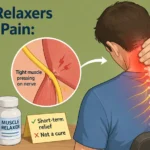
Muscle relaxers are not a treatment for nerve pain itself. They can ease the muscle tightness and spasms that often come with nerve pain, but they do not repair damaged nerves or address the underlying cause. For most people with nerve pain, they are a secondary tool at best, not a primary solution.
Nerve pain, also called neuropathic pain, comes from injury or dysfunction in the nervous system itself. That is different from pain that starts in a muscle, joint, or tissue. Understanding that difference explains why a drug designed to relax muscle does not target the source of nerve pain.
What Are Muscle Relaxers and How Do They Work?
Muscle relaxers are a group of medications that reduce muscle tension and spasm. They are prescribed for conditions like back spasms, neck strain, and muscle injuries. Most of them work in the central nervous system, meaning they act on the brain and spinal cord rather than on the muscle tissue directly.
The term “muscle relaxer” is a broad label. These drugs are not all the same, and they do not all work the same way. They fall into a few general categories:
- Antispasmodics such as cyclobenzaprine, carisoprodol, and methocarbamol. These act on the central nervous system to reduce muscle spasm.
- Antispastics such as baclofen and tizanidine. These are used for spasticity related to conditions like multiple sclerosis or spinal cord injury.
- Other agents such as diazepam, a benzodiazepine that also relaxes muscle but carries its own risks.
Most of these medications cause drowsiness and dizziness. That is partly why they are usually used short term. Long-term use raises concerns about dependence, tolerance, and side effects, particularly in older adults.
Why Nerve Pain Is Different From Muscle Pain
Nerve pain starts in the nervous system. It happens when nerves are damaged, compressed, or misfiring. Common causes include diabetes, shingles, spinal disc problems, and certain injuries. The pain is often described as burning, shooting, tingling, or electric-like.
Muscle pain, by contrast, usually comes from strain, overuse, or injury to muscle tissue. The muscle itself is the source. A muscle relaxer targets that kind of problem.
Here is the key distinction: in nerve pain, the muscle is usually not the source of the pain. The muscle may become tight or spasm as a reaction to the nerve problem, but relaxing the muscle does not fix the nerve. This is why muscle relaxers are not considered a first-line treatment for neuropathic pain.
There is a subtlety worth knowing. Sometimes a compressed nerve, such as from a herniated disc, causes both nerve pain and nearby muscle spasm. In that situation, a muscle relaxer might ease the spasm component. It still does not treat the nerve irritation itself.
Do Muscle Relaxers Help Nerve Pain?
For the nerve pain itself, the evidence does not support muscle relaxers as an effective treatment. The medications most studied and recommended for neuropathic pain are different classes of drugs entirely.
That said, some people with nerve pain also have muscle spasms, and a muscle relaxer may reduce that spasm. The relief is indirect. It addresses a symptom that accompanies the nerve problem, not the nerve problem itself.
This is where honest expectations matter. If your nerve pain comes with real muscle tightness, a muscle relaxer might take the edge off that tightness. It is unlikely to reduce the burning, shooting, or tingling quality of nerve pain. No large body of clinical evidence shows muscle relaxers relieving neuropathic pain directly.
Some clinicians do prescribe them short term for people whose nerve pain is accompanied by significant muscle spasm. That is common practice, not a strong evidence-based recommendation. The distinction is worth holding onto.




What Medications Actually Treat Nerve Pain?
The medications with the strongest evidence for nerve pain are not muscle relaxers. They fall into a few categories that act on the nervous system in ways that calm abnormal nerve signaling.
- Certain antidepressants, particularly a class called SNRIs and some tricyclics, are widely used for neuropathic pain. They affect chemicals in the brain and spinal cord that influence how pain signals are processed.
- Certain anti-seizure medications, such as gabapentin and pregabalin, are also commonly prescribed. They calm overactive nerve signaling.
- Topical treatments like lidocaine patches are used for some types of localized nerve pain.
These drugs do not work for everyone, and they can have side effects. Response varies from person to person. Finding the right option often involves trial and adjustment with a clinician. This is a normal part of managing nerve pain, not a sign of failure.
Physical therapy, nerve blocks, and other approaches may also play a role depending on the cause. The right combination depends on the specific diagnosis and the person.
What Are the Risks and Side Effects of Muscle Relaxers?
Muscle relaxers carry real risks, especially when used for more than a short period. Drowsiness and dizziness are the most common. These can affect driving, work, and daily function.
Other concerns include:
- Dependence and tolerance, particularly with drugs like carisoprodol and benzodiazepines.
- Interaction with alcohol and other depressants, which can compound sedation.
- Heightened risk in older adults, including confusion and falls.
- Withdrawal if certain muscle relaxers are stopped abruptly after long use.
These risks mean muscle relaxers are generally used short term and with caution. Anyone considering them should discuss their full medication list and health history with a clinician. This is not a drug class to use casually or long term without medical supervision.
What Else Can Help With Nerve Pain?
Managing nerve pain usually takes more than one approach. The most effective plans tend to combine medication with other strategies, tailored to the cause.
Physical therapy can help maintain strength and movement, and it may reduce the muscle tightness that accompanies some nerve conditions. For nerve pain caused by compression, addressing the compression matters. For nerve pain from diabetes, blood sugar control is central. These are general directions, and the specifics depend on the individual case.
Some people find relief from complementary approaches, though the evidence varies widely. It is fair to say that no single approach works for everyone, and what helps one person may not help another. A clinician familiar with neuropathic pain can help build a plan that fits.
It also helps to be clear with your clinician about what you are feeling. Nerve pain is often under-recognized and under-treated. Describing the quality of the pain, where it is, and what makes it worse gives your clinician better information to work with.
Should You Ask Your Doctor About Muscle Relaxers?
It is reasonable to ask, especially if muscle spasm is part of your experience. But go in with realistic expectations. A muscle relaxer is unlikely to be the answer to nerve pain on its own.
A better conversation might focus on whether your nerve pain has been properly diagnosed and whether you are on a treatment with evidence behind it. If muscle spasm is a significant part of your symptoms, that is worth raising. Your clinician can weigh whether a short course of a muscle relaxer makes sense alongside other treatment.
Nerve pain is real, and it is frustrating. It often takes time and adjustment to find what works. That process is worth having with a clinician who takes the pain seriously and builds a plan around the evidence.
Frequently Asked Questions
Do muscle relaxers help nerve pain?
They are not a treatment for nerve pain itself. They may ease muscle spasm that comes with nerve pain, but they do not address the damaged or misfiring nerves that cause it.
What is the best medication for nerve pain?
Certain antidepressants and anti-seizure medications have the strongest evidence for neuropathic pain. The best choice depends on the cause, your health history, and how you respond, so it is a decision to make with a clinician.
Can I take muscle relaxers long term for nerve pain?
Long-term use is generally not recommended because of risks like dependence, tolerance, and side effects. Muscle relaxers are usually used short term and with medical supervision.
Why do muscle relaxers not fix nerve pain?
Nerve pain comes from the nervous system, not from muscle tissue. Muscle relaxers calm muscle tension, so they do not target the nerve signaling that causes neuropathic pain.
