
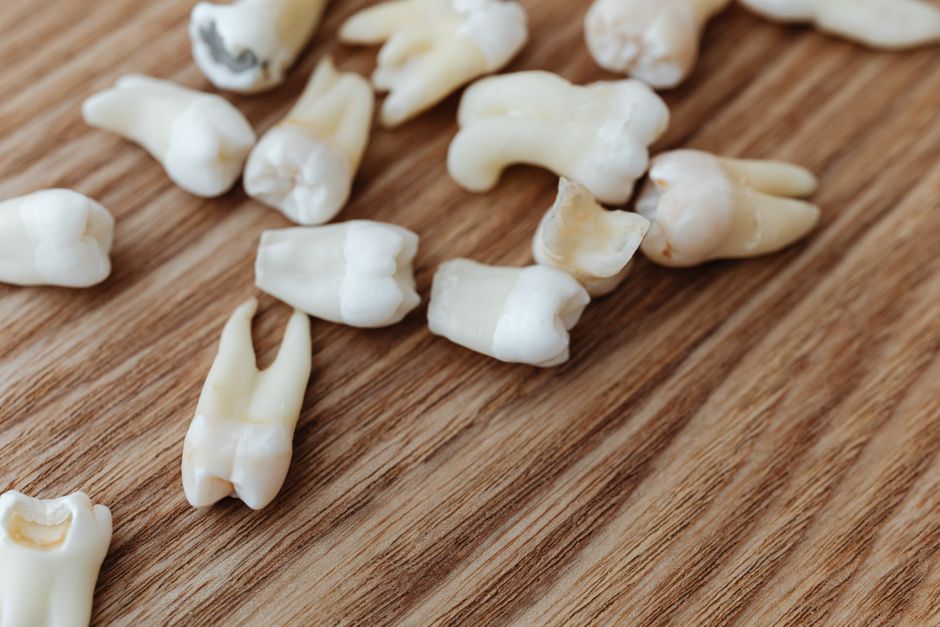
Molars are the large, flat teeth in the back of your mouth. Whether they fall out depends entirely on your age and which set of molars you mean. For children, the first set of molars (baby teeth) falls out naturally. For adults, permanent molars do not fall out on their own — if one is lost, it is due to decay, gum disease, or injury, not a natural process.
Do Baby Molars Fall Out?
Yes. Children have 20 baby teeth, and eight of them are molars. These are the first teeth at the back of the mouth, and they do fall out, but later than you might expect.
Baby molars typically fall out between ages 9 and 12. The first molars usually go around age 9 to 11, and the second molars follow at age 10 to 12. This timing is later than the front teeth, which often fall out at age 6 or 7.
Parents sometimes worry when a child still has molars at age 10 or 11. That is normal. The roots of baby molars are long, and they hold on longer than other baby teeth. The permanent teeth beneath them are not ready to come in until the jaw grows enough to make room.
Baby molars fall out in a specific sequence. The lower ones usually go first, then the upper ones. This is not a strict rule, but it is the common pattern. If a child loses a molar much earlier than age 9, or much later than age 12, a dentist should check that the permanent tooth is developing normally underneath.
Do Adult Molars Fall Out Naturally?
No. Adult molars are permanent teeth. Once they come in, they are meant to last for life. They do not fall out on their own at any age.
If an adult molar falls out, something caused it. The two most common causes are severe tooth decay and advanced gum disease. Both conditions destroy the supporting structures that hold the tooth in place — the bone, the ligaments, and the gum tissue.
Injury is another cause. A hard blow to the face can loosen or knock out a molar, though this is less common than decay or gum disease.
Bruxism, or chronic teeth grinding, can also contribute. Grinding wears down the tooth and can loosen it over time, but it rarely causes a molar to fall out on its own. It usually worsens the damage already done by decay or gum disease.
The loss of an adult molar is never normal. It is always a sign that a dental problem went untreated for a long time.
When Do Wisdom Teeth Come In and Fall Out?
Wisdom teeth are the third molars. They are the last teeth to develop, and they usually come in between ages 17 and 25. Some people never develop wisdom teeth at all, and that is a normal variation.
Wisdom teeth do not fall out on their own. They are permanent teeth like any other molar. If a wisdom tooth falls out, it is due to the same causes as any other adult tooth loss — decay, gum disease, or trauma.
Many people have wisdom teeth removed surgically. This is a deliberate procedure, not a natural loss. Dentists often recommend removal when wisdom teeth are impacted, meaning they are trapped beneath the gum and cannot come in properly. Impacted wisdom teeth can cause pain, infection, and damage to neighboring teeth.
Not everyone needs their wisdom teeth removed. Some people have wisdom teeth that come in straight, function normally, and cause no problems. The decision to remove them is made on an individual basis, not as a routine matter.





What Happens When a Molar Falls Out?
When a baby molar falls out, the permanent tooth beneath it usually appears within a few months. The permanent tooth has been developing in the jawbone, and its eruption pushes the baby tooth out. This is a coordinated process that works well in most children.
When an adult molar is lost, there is no replacement tooth waiting. The gap left behind causes real problems.
The teeth next to the gap begin to shift. Over time, they tilt into the empty space. The tooth above the gap may drift downward. This movement changes the bite and can make chewing uneven.
The jawbone beneath the missing tooth begins to shrink. This is called bone resorption. The bone no longer has a tooth root to support, so it gradually loses density. This process can affect the shape of the face over time.
Chewing becomes harder. Molars do most of the heavy work of grinding food. Losing one puts extra pressure on the remaining teeth. This can lead to further wear and even cracks in other teeth.
These changes happen slowly, over months and years. Many people do not notice them right away, but they are happening from the moment the tooth is lost.
Can You Prevent Molar Loss?
Yes, in most cases. Molar loss in adults is almost always preventable with consistent care.
Brushing twice a day with fluoride toothpaste removes plaque from the chewing surfaces and the gumline. Flossing once a day cleans the spaces between molars, where a toothbrush cannot reach. These two habits address the root causes of decay and gum disease.
Regular dental checkups matter. A dentist can spot early decay or gum disease before it destroys the tooth. Professional cleanings remove tartar, which cannot be removed by brushing alone.
Sealants are another option. These are thin protective coatings applied to the chewing surfaces of molars. They are most common in children, but adults can benefit from them too if they have deep grooves in their molars that trap food.
Fluoride treatments at the dentist strengthen enamel and make it more resistant to decay. This is especially useful for people who have had cavities in the past.
Mouthguards help if you grind your teeth at night. A custom-fitted guard from a dentist protects the molars from the excessive force of grinding.
What Are Your Options If a Molar Is Lost?
If an adult molar is lost, the options depend on how much healthy bone remains and the condition of the surrounding teeth.
A dental implant is the most common replacement option. An implant is a titanium post placed into the jawbone. It acts as an artificial root, and a crown is attached to it. Implants preserve the bone and function like natural teeth.
A bridge is another option. A bridge uses the teeth on either side of the gap as anchors. A false tooth is attached to crowns on those anchoring teeth. Bridges do not preserve the bone beneath the gap the way implants do.
A partial denture is a removable option. It clips onto nearby teeth and fills the gap. It is less stable than an implant or bridge and does not preserve bone.
Doing nothing is also an option, but it carries the consequences described earlier — shifting teeth, bone loss, and chewing problems. Some people choose this route for financial reasons, but the long-term effects are well documented.
The best choice depends on your specific situation. A dentist can evaluate the bone quality, the health of neighboring teeth, and your overall oral health before recommending one option over another.
When Should You See a Dentist?
See a dentist if a child loses a molar before age 9, or if an adult molar becomes loose at any age. A loose molar in an adult is never normal and always requires professional evaluation.
See a dentist if you feel a sharp edge on a molar, if chewing hurts, or if you notice a dark spot on a molar. These can be early signs of decay that is progressing.
See a dentist if your gums bleed when you brush or floss. Bleeding gums are an early sign of gum disease. Catching it early can prevent the bone loss that leads to tooth loss.
If a molar is knocked out completely by injury, see a dentist immediately. In some cases, the tooth can be reimplanted if you get care quickly. The sooner you go, the better the chance of saving the tooth.
Regular dental visits every six months are the standard recommendation for most people. People with a history of gum disease or frequent cavities may need to go more often.
Frequently Asked Questions
Do all molars fall out?
Baby molars fall out in childhood, between ages 9 and 12. Adult molars never fall out naturally — if one is lost, it is due to decay, gum disease, or injury.
At what age do molars fall out?
Baby molars typically fall out between ages 9 and 12. The first molars go first, around age 9 to 11, and the second molars follow at age 10 to 12.
Can a loose molar tighten back up?
In adults, a loose molar will not tighten back up on its own. It is a sign of advanced gum disease or bone loss and requires professional dental treatment.
What happens if you don’t replace a missing molar?
The surrounding teeth shift into the gap, the jawbone loses density, and chewing becomes less efficient. These changes happen gradually over months and years.
