
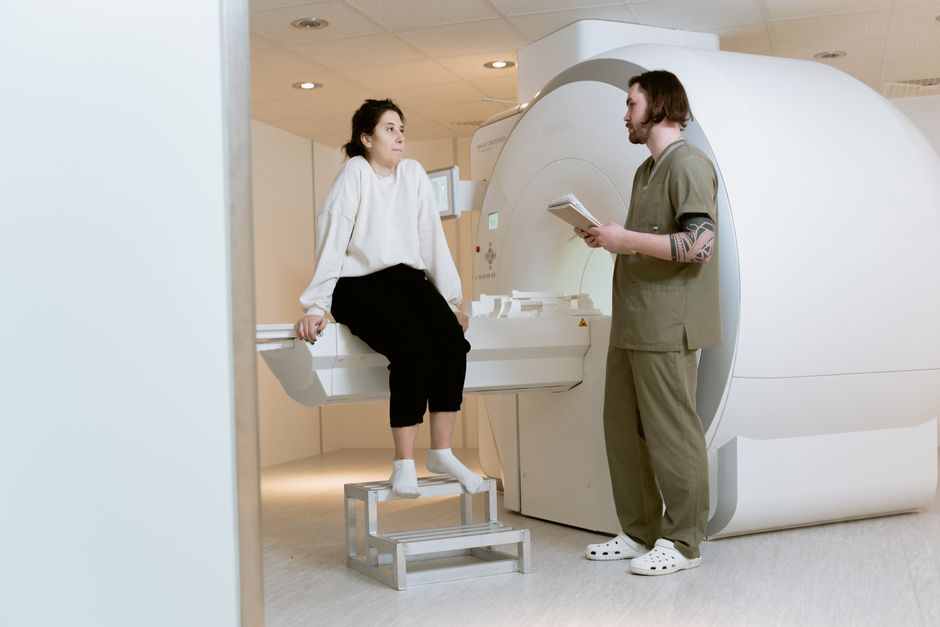
Yes, men get DEXA scans, and they are actually the standard test for measuring bone density in both sexes. DEXA stands for dual-energy X-ray absorptiometry. It uses two low-dose X-ray beams to measure how much mineral is packed into your bones and, in some setups, how much fat and lean tissue you carry. Most people picture a woman in her sixties when they hear the word osteoporosis. That picture is incomplete. Men make up a meaningful share of osteoporosis cases, and they are more likely than women to break a bone after a fall without ever being tested first.
Whether a man should get one depends on his risk factors, not his gender alone. The scan is quick, painless, and uses a small amount of radiation. The harder question is who actually needs it, and the honest answer is that many men who would benefit never get referred.
Do Men Get DEXA Scans When And Why They Should
Men get DEXA scans for the same core reason women do: to find out whether their bones are losing density faster than normal. The test produces a number called a T-score. That score compares your bone mineral density to the peak bone mass of a healthy young adult of the same sex.
The World Health Organization defines osteoporosis as a T-score of −2.5 or lower. A T-score between −1.0 and −2.5 is called osteopenia, or low bone mass. These cutoffs apply to men as well as women, though the diagnosis in men is made using male reference data.
So the scan itself is not gender-specific. What differs is how often men get sent for one. Clinical guidance has historically focused screening on women after menopause, and that focus has shaped practice. A man with the same bone density as a woman his age may be less likely to be tested, even though his fracture risk is real.
Why Would a Man Need a Bone Density Scan?
Bones are living tissue. They are constantly being broken down and rebuilt by two cell types: osteoclasts, which dissolve old bone, and osteoblasts, which lay down new bone. Through most of adult life these two processes stay roughly balanced. When breakdown outpaces rebuilding, bone mass falls.
In women, bone loss accelerates sharply after menopause because estrogen drops. Estrogen matters for men too, but at lower levels. Men convert some testosterone into estrogen, and that estrogen helps protect the male skeleton. When testosterone falls — from age, medication, or a medical condition — bone protection weakens along with it.
That is the mechanism behind male bone loss. It is slower and steadier than the postmenopausal pattern in women, which is one reason it gets missed. There is no obvious event that flags it. A man can lose bone for years without a single symptom until something breaks.
Fractures are the outcome that matters. A hip fracture in an older man carries a higher risk of death in the year that follows than a hip fracture in an older woman, according to research on fracture outcomes. That statistic is sobering, and it is part of why finding low bone density early has value.
What Risk Factors Should Prompt a Man to Ask About Testing?
Certain conditions and medications raise the odds of low bone density enough that testing is worth discussing. These include:
- Long-term use of glucocorticoid steroids such as prednisone, which is one of the strongest medication-related risks for bone loss
- Low testosterone, whether from aging, surgery, or a pituitary condition
- Heavy alcohol use
- Current or past smoking
- Low body weight or significant unintentional weight loss
- Previous fracture from a minor fall or low-impact injury
- Conditions that affect nutrient absorption, such as celiac disease or inflammatory bowel disease
- Chronic kidney disease, liver disease, or type 1 diabetes
- A family history of hip fracture
Age matters too. Bone density testing is generally considered in men around age 70 and older, or earlier when risk factors are present. Some clinical bodies suggest starting earlier for men with strong risk factors, though recommendations vary and no single screening age is universally agreed upon for men.
If you recognize yourself in two or more of the items above, that is a reasonable point to raise the topic with a clinician rather than wait for a fracture to start the conversation.




What About Body Composition Scans?
DEXA does two jobs. The bone density measurement is the medical one. The body composition measurement — body fat percentage, lean mass, and regional fat distribution — is the one that gets marketed heavily to men in fitness and longevity circles.
The body composition side is accurate and reproducible, which is why researchers use it. It can track muscle mass over time, which matters for men concerned about age-related muscle loss. But the clinical value of routine body composition scanning in healthy men is not established. No major guideline recommends it as a screening tool for the general male population.
There is a practical difference worth knowing. A scan done for research or fitness tracking may use different software and reference data than a scan done for clinical bone assessment. If your goal is bone health, make sure the report includes a T-score and that a clinician interprets it. A body fat percentage alone will not tell you whether your bones are thinning.
How Is a DEXA Scan Done and What Does It Feel Like?
The scan is about as low-tech as medical imaging gets. You lie on a padded table, fully clothed in most cases as long as there are no metal zippers or buttons in the scan area. A mechanical arm passes over your body. The whole thing usually takes 10 to 20 minutes.
There is no injection, no contrast dye, and no enclosed tube like an MRI. The radiation dose is very small — lower than a standard chest X-ray in most cases. That low dose is one reason DEXA is preferred over other imaging for routine bone assessment.
Results come as a report with your bone mineral density, your T-score, and often a Z-score. The Z-score compares you to others your own age and size. A low Z-score can point to a secondary cause of bone loss that deserves its own investigation, which is a distinction that matters more in men than in women.
What Happens If the Scan Shows Low Bone Density?
A low T-score is information, not a sentence. It tells you and your clinician that your fracture risk is higher than average and that steps are worth taking.
The foundation of bone care in men is the same as in women: adequate calcium and vitamin D, weight-bearing and resistance exercise, limiting alcohol, and stopping smoking. These are well established as supportive measures. Their effect on fracture risk specifically in men is less thoroughly studied than in women, which is an honest limitation of the evidence base.
Medication is a separate decision. Several drugs are approved to treat osteoporosis, and some are approved for use in men. Whether any particular drug is right for you depends on your fracture risk, your other health conditions, and your kidney function, among other factors. That is a conversation with a clinician, not a decision to make from a scan report alone.
Repeat scanning is usually done on a schedule measured in years, not months, because bone density changes slowly. Testing too often adds cost and radiation exposure without adding useful information.
Why Do So Many Men Never Get Tested?
The gap is partly cultural and partly structural. Osteoporosis has been framed for decades as a women’s disease, so both patients and some clinicians underweight it in men. Screening guidelines for men have been less consistent than for women, which leaves the decision more to individual judgment.
There is also the symptom problem. Bone loss causes no pain, no fatigue, no visible change. A man has no internal signal telling him to get checked. The first sign is often a fracture that should not have happened from such a small fall.
That is the case for asking about testing before a fracture, not after. A broken hip at 75 is a very different situation than a T-score found at 65.
Frequently Asked Questions
At what age should men get a DEXA scan?
Bone density testing is generally considered for men around age 70 and older, or earlier if risk factors like long-term steroid use or low testosterone are present. Recommendations vary, so the decision is best made with a clinician who knows your history.
Is a DEXA scan safe for men?
Yes. DEXA uses a very small dose of radiation, lower than a standard chest X-ray in most cases, and requires no dye or injection. The main caution is against unnecessary repeat scans, since the information changes slowly over time.
Can a man have osteoporosis with a normal testosterone level?
Yes. Bone loss in men can result from many causes beyond testosterone, including steroid medications, alcohol use, smoking, poor absorption of nutrients, and kidney or liver disease. A normal testosterone level does not rule out low bone density.
Does DEXA also measure body fat in men?
Yes, DEXA reports body fat and lean mass in addition to bone density. However, routine body composition scanning in healthy men is not recommended by major clinical guidelines, and the body fat number alone will not tell you about your bone health.
