
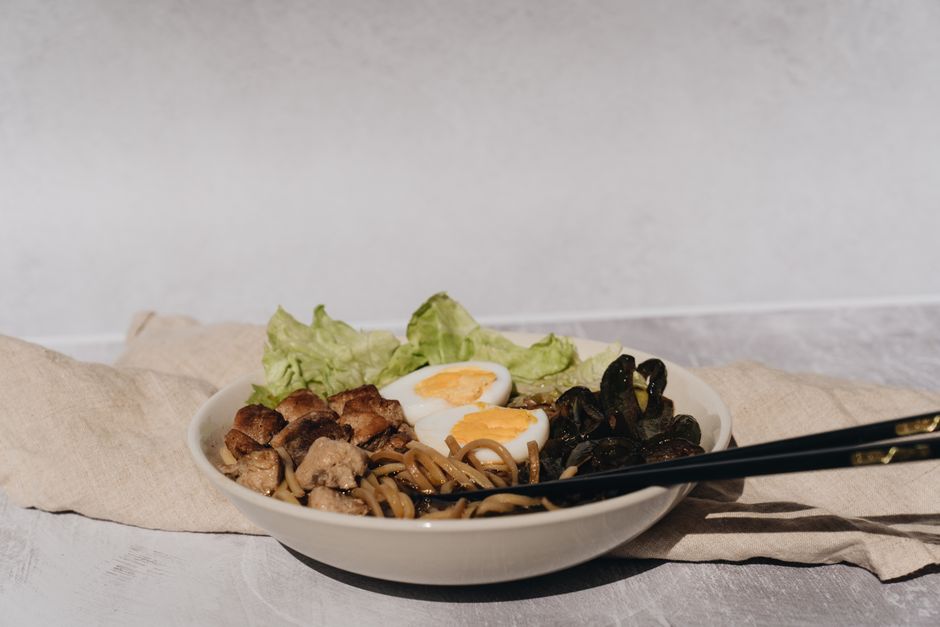
No, konjac noodles do not taste like rice noodles. Konjac noodles have almost no flavor of their own and a gelatinous, springy, slightly slippery texture. Rice noodles taste mildly of rice and feel soft and tender. The two are used in similar dishes, but they are not interchangeable in taste or texture.
If you have seen konjac noodles sold as “shirataki” or “miracle noodles,” you may have wondered what you are actually eating. The short answer is mostly water and a fiber called glucomannan. Knowing that explains almost everything about how they taste.
What Are Konjac Noodles Made Of?
Konjac noodles are made from the root of the konjac plant, also called elephant yam. The root is processed into a flour rich in glucomannan, a water-soluble fiber. That flour is mixed with water and an alkaline setting agent, usually calcium hydroxide, which turns the mixture into a firm gel. The noodles are then cut and packed in liquid.
The result is a noodle that is roughly 97% water. What little solid matter remains is mostly glucomannan fiber, with very little starch and almost no protein or fat. That composition is why the noodles behave so differently from rice noodles in your mouth and in a pan.
Do Konjac Noodles Taste Like Rice Noodles?
No. The difference comes down to starch. Rice noodles are made from rice flour, which is mostly starch. When cooked, that starch absorbs water and softens into a tender, slightly sticky noodle with a mild grain flavor.
Konjac noodles contain almost no starch. Instead, the glucomannan forms a gel. That gel gives the noodles a rubbery, springy bite and a slippery surface. Some people describe an earthy or faintly fishy smell when the package is first opened. That smell comes from the alkaline setting agent and the liquid the noodles are packed in, not from fish. Rinsing and briefly boiling the noodles usually reduces it.
So the honest comparison is this: rice noodles taste like rice and feel tender. Konjac noodles taste like almost nothing and feel bouncy and slick. If you are expecting a rice noodle experience, konjac will disappoint you. If you are expecting a neutral, low-calorie noodle that takes on the flavor of your sauce, it can work.
Why Do Konjac Noodles Have So Few Calories?
Konjac noodles are low in calories because they are mostly water and fiber. The glucomannan fiber is not digested in the small intestine. It passes into the colon, where some of it is fermented by gut bacteria. Because your body does not break it down for energy, it contributes very little in the way of calories.
This is also why konjac noodles are sometimes marketed as a weight-loss food. Be careful with that framing. A low-calorie noodle can fit into a weight-loss eating pattern, but no single food causes weight loss on its own. The evidence on glucomannan supplements for weight loss is mixed, and studies on the noodles themselves as a weight-loss tool are limited. The noodles are a low-calorie ingredient, not a treatment.
How Does the Texture of Konjac Noodles Compare to Rice Noodles?
The texture gap is bigger than the taste gap. Konjac noodles are springy and slightly gelatinous. They resist your teeth more than rice noodles do. Rice noodles, by contrast, are soft, tender, and can turn mushy if overcooked.
Konjac noodles also behave differently when heated. They do not absorb sauce the way starchy noodles do. The sauce tends to sit on the surface rather than soak in. Many people find that dry-frying the noodles in a hot pan for a few minutes before adding sauce improves the texture and helps them take on flavor better.
One practical point worth knowing: konjac noodles can be surprisingly filling for something so low in calories. The fiber absorbs water and expands in your gut, which some people find satisfying and others find uncomfortable.
Can You Use Konjac Noodles in Place of Rice Noodles?
You can, but the swap changes the dish. Konjac noodles work best in dishes with a strong sauce or broth, where the neutral noodle can carry flavor. Think stir-fries, soups, and dishes with bold seasonings. They are a poor match for delicate preparations where the mild taste and tender texture of rice noodles matter, such as light rice noodle soups or fresh spring rolls.
If you do swap them in, treat konjac noodles as their own ingredient rather than a direct substitute. Rinse them well, boil them briefly, and dry them before cooking. Then season generously. The noodle will not add flavor, so the sauce has to do the work.
Are Konjac Noodles Healthy?
Konjac noodles are a reasonable low-calorie, high-fiber food for most people. The glucomannan fiber they contain is a soluble fiber, and soluble fiber is generally associated with good digestive health and modest effects on cholesterol and blood sugar when eaten as part of an overall diet. That said, the health benefits of the noodles specifically have not been studied in large human trials. The general fiber evidence is stronger than the noodle-specific evidence.
There are real cautions. Eating a large amount of glucomannan fiber at once can cause bloating, gas, and cramping, especially if you are not used to it. Konjac noodles should always be eaten with plenty of water. Glucomannan expands when it absorbs liquid, and there are documented cases of serious esophageal blockage when glucomannan products were swallowed with too little water or in large dry doses. The noodles themselves are already hydrated, which lowers that risk compared with dry supplements, but drinking water with them is still sensible.
Anyone with a history of swallowing difficulties, narrowing of the esophagus, or certain digestive conditions should talk to a doctor before eating konjac products regularly. And because konjac noodles are mostly water and fiber, they are not a meal. They provide almost no protein, vitamins, or minerals. If you eat them, build the rest of the meal around protein and vegetables.
How Do Konjac Noodles Compare to Rice Noodles Nutritionally?
The nutritional differences are large and worth seeing side by side. The figures below are approximate and vary by brand and preparation.
| Nutrient (per cooked cup) | Konjac Noodles | Cooked Rice Noodles |
|---|---|---|
| Calories | Very low (roughly 10 or less) | Roughly 190 |
| Carbohydrate | Nearly none | Roughly 40 grams |
| Fiber | Several grams (glucomannan) | Low (around 1 gram) |
| Protein | Negligible | Around 3 grams |
| Main component | Water and fiber | Starch |
The low carbohydrate content is why konjac noodles appeal to people following low-carb or keto-style eating patterns. Rice noodles are a carbohydrate food and will raise blood sugar, though how much depends on the person and the meal. Konjac noodles have minimal effect on blood sugar because they contain so little digestible carbohydrate.
Neither noodle is “better” in a vacuum. Rice noodles provide energy and fit into many traditional cuisines. Konjac noodles provide fiber and few calories. Which one suits you depends on your goals and your digestion.
The Bottom Line
Konjac noodles and rice noodles are different foods that happen to look somewhat alike. Konjac noodles taste nearly neutral and feel springy and slippery. Rice noodles taste mildly of rice and feel soft and tender. Konjac noodles are low in calories and high in fiber, but they are not a nutritional meal on their own, and eating large amounts can cause digestive discomfort. If you try them, go in expecting a neutral, bouncy noodle, not a rice noodle.
Frequently Asked Questions
Do konjac noodles taste like anything at all?
They have almost no flavor of their own, though the packing liquid can leave a faint earthy or alkaline smell that rinsing and boiling reduces. Any taste you notice in a finished dish comes from the sauce or broth.
Are konjac noodles a good substitute for rice noodles?
They work in dishes with strong sauces or broths, but the texture and taste are different enough that they are not a true substitute. Expect a springy, slippery noodle rather than a soft, tender one.
Are konjac noodles safe to eat every day?
For most people they are fine in normal amounts, but they provide almost no protein, vitamins, or minerals, so they should not replace balanced meals. Anyone with swallowing difficulties or digestive conditions should check with a doctor first.
Why do konjac noodles smell strange when I open the package?
The smell comes from the alkaline setting agent and the liquid the noodles are packed in, not from spoilage. Rinsing well and boiling briefly before cooking usually removes it.
