
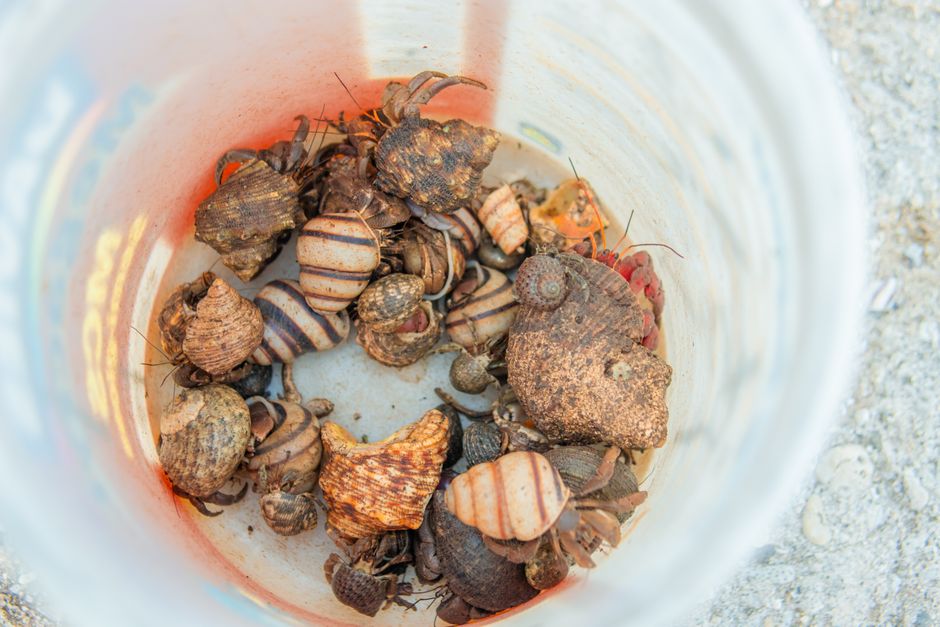
Hermit crabs do not usually fight to the death, but they can kill each other under specific circumstances. The most common cause of death in hermit crab conflicts is not a deliberate attack, but a competition for shells. When a crab finds a shell it wants, it may try to pull the current occupant out, and that struggle can turn deadly.
Why Do Hermit Crabs Fight?
Hermit crabs fight over one main resource: shells. A crab’s shell is not just a home. It protects the crab from predators, prevents drying out, and must fit properly for the crab to grow and move.
Shells are often scarce in the wild. Crabs need to upgrade to larger shells as they grow, and the supply of perfectly sized empty shells is limited. This scarcity drives most aggressive behavior.
When a crab finds a shell that fits better, it may try to evict the current owner. This is not random aggression. It is a survival-driven takeover attempt. The attacking crab grips the shell opening and tries to drag the occupant out by its legs or body.
The hermit crab being attacked will pull deep into its shell and use its larger claw to block the entrance. This tug-of-war can last for hours. Most of the time, the defender eventually gives up and the attacker takes the shell. Sometimes, the defender is injured in the process.
Can Hermit Crab Fights Be Fatal?
Yes, fights can be fatal, but death is not the usual outcome. Most shell fights end with one crab retreating and finding another shell or hiding spot.
Deaths happen when a fight becomes physically damaging. A crab’s soft abdomen is vulnerable if it is pulled out of its shell. During a violent eviction attempt, the attacker can tear the defender’s legs, claws, or antennae. In severe cases, the abdomen itself can be injured.
Another cause of death is stress. Hermit crabs are sensitive animals. A prolonged fight, especially in captivity, can cause extreme stress that leads to illness or death days later. This is not a direct kill, but the result is the same.
There is also a behavior called “shell raiding” that can turn deadly. A group of crabs may gather around a crab with a desirable shell. They work together to pull the crab out. In this chaotic process, the target crab is more likely to be seriously injured or killed.
Do Hermit Crabs Eat Each Other?
Hermit crabs are scavengers, not hunters. They eat dead animals, plant matter, and almost anything organic they find. If a hermit crab dies, other crabs in the area will eat the remains.
This is important to understand. A hermit crab that dies from a fight will be consumed by other crabs. This makes it look like the crabs killed and ate each other, but the eating usually happens after death, not as the cause.
In captivity, this scavenging behavior creates a serious problem. If a crab dies of natural causes, illness, or stress, the other crabs will eat the body within hours. Owners often mistake this for murder when it is actually cleanup behavior.
However, there is a darker side. A weak or molting crab is vulnerable. Molting is when a crab sheds its exoskeleton to grow. During and after molting, the crab is soft, defenseless, and hidden. If another crab finds a molting crab, it may attack and eat it. This is not a fight. It is predation on a helpless animal.





What Happens During a Normal Shell Exchange?
Not all shell changes involve fighting. In many cases, crabs exchange shells peacefully through a process called a shell exchange chain.
This works like a line of dominoes. A crab finds an empty shell that is too large for it. It waits next to the shell. Another crab arrives and tries on the large shell. If it does not fit, that crab moves to the next shell in the line. Each crab moves up one size, and the original crab finally gets the shell it wanted.
This cooperative behavior happens in the wild and in well-maintained captive environments. It shows that hermit crabs are not inherently violent. They prefer to find empty shells when possible.
Aggression increases when shells are scarce or when crabs are overcrowded. In a tank with too many crabs and not enough shells, fights become more frequent and more dangerous.
Are Some Hermit Crab Species More Aggressive?
Yes, species differences matter. The most commonly kept pet hermit crabs are the Caribbean hermit crab and the Ecuadorian hermit crab. These two species have different temperaments.
Caribbean hermit crabs are generally more docile. They are larger and tend to be less aggressive toward tank mates. Ecuadorian hermit crabs are smaller, more active, and more likely to initiate shell fights.
In the wild, some species are known to be more predatory. Certain marine hermit crabs actively hunt snails and other small animals. These crabs do not just wait for empty shells. They kill the snail, eat it, and take the shell.
This behavior is well documented in marine species. Land hermit crabs, including pet species, do not hunt snails in this way. They rely on finding empty shells or evicting other crabs.
How Can Owners Prevent Deadly Fights?
Pet owners can reduce the risk of fatal fights by managing the environment carefully. The most important step is providing enough shells.
A good rule is to offer at least one extra shell per crab, and preferably two or three. The shells should be slightly larger than the crab’s current shell. Crabs cannot use shells that are too large or too small.
Different species prefer different shell shapes. Caribbean hermit crabs usually prefer round openings. Ecuadorian hermit crabs often prefer oval or D-shaped openings. Offering a variety of shapes and sizes helps prevent competition.
Space is also critical. Overcrowding increases stress and aggression. A general guideline is to provide at least 10 gallons of tank space for two small crabs, with more space for larger crabs or additional animals.
Protein is another factor. Hermit crabs need protein in their diet. When protein is lacking, they may become more aggressive and more likely to attack weak tank mates. A diet with adequate protein reduces this risk.
Finally, watch for molting crabs. A molting crab needs to be left alone. If possible, keep molting crabs in a separate isolation tank until their new exoskeleton hardens. This protects them from being attacked while they are defenseless.
Is It True That Hermit Crabs Kill Each Other for Their Shells?
Yes, this is true, but it is not the whole story. Hermit crabs will kill to get a shell, but this is not their first choice. They prefer empty shells and peaceful exchanges.
Fatal shell fights happen most often in environments where shells are extremely scarce. In the wild, this can happen after storms or when shell-producing snail populations decline. In captivity, it happens when owners do not provide enough shells.
The crab doing the killing is not acting out of malice. It is acting on a strong biological drive. Without a properly fitting shell, a hermit crab will die. The shell is essential for survival, and a crab will risk injury or death to secure one.
Understanding this drive helps owners prevent problems. When crabs have enough shells, enough space, and enough food, deadly fights are rare. Most hermit crabs live peacefully together for years.
Frequently Asked Questions
Can hermit crabs kill each other?
Yes, hermit crabs can kill each other, but it is not common. Most fights end with one crab retreating, and deaths usually happen during shell disputes or when a molting crab is attacked.
Why do hermit crabs fight over shells?
Hermit crabs need shells to survive because the shell protects their soft abdomen from predators and prevents dehydration. When shells are scarce, crabs will fight to get a properly fitting shell.
Do hermit crabs eat other hermit crabs?
Hermit crabs are scavengers and will eat a dead crab, but they do not usually hunt live crabs. The exception is a molting crab, which is soft and defenseless and may be attacked and eaten.
How do I stop my hermit crabs from fighting?
Provide extra shells in various sizes and shapes, give them enough space, and make sure they get enough protein in their diet. Isolate molting crabs to protect them from attack.
