
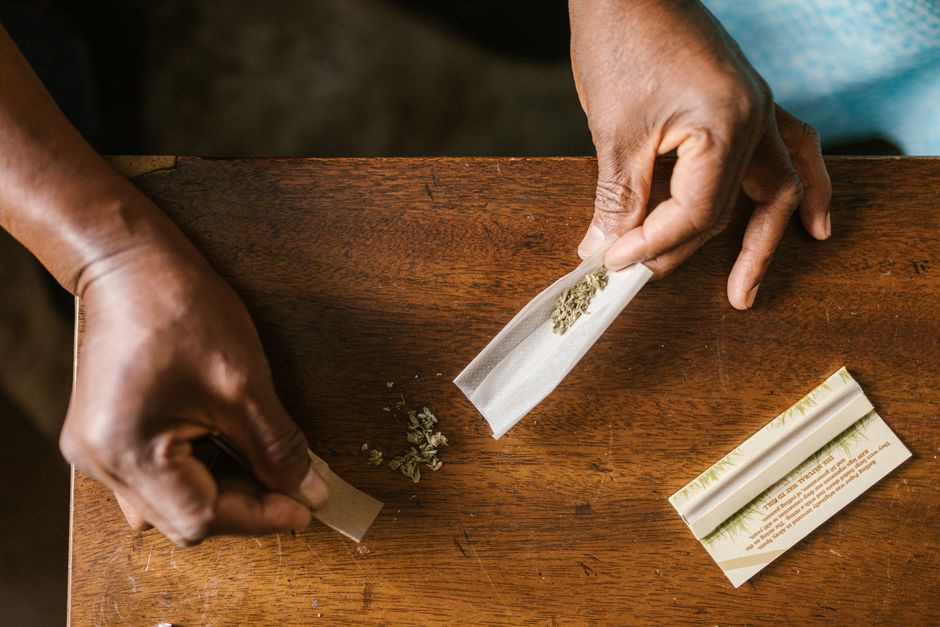
Hemp wraps do not get you high. That is the short answer. They are made from industrial hemp, which contains only trace amounts of THC — the compound in cannabis responsible for the psychoactive “high.” Smoking or vaping a hemp wrap delivers nowhere near enough THC to produce intoxication, even if you inhale deeply or use several in one sitting.
But the story does not end there. The real question people should be asking is whether hemp wraps carry any other risks worth knowing about. Those risks are real, and they have nothing to do with getting high.
What Are Hemp Wraps Actually Made Of?
Hemp wraps are thin sheets of paper-like material made from the fibers of the Cannabis sativa plant. That is the same plant species that produces marijuana, but hemp and marijuana are different varieties with very different chemical profiles.
Hemp is defined in US law as cannabis containing no more than 0.3% THC by dry weight. Marijuana typically contains far more — often in the range of 10% to 30% THC in modern cultivated strains. That gap is enormous, and it is the reason hemp wraps cannot get you high.
The manufacturing process matters too. Hemp wraps are made from processed plant fibers, not from the resin-rich flowers where THC concentrates. The fibers themselves contain almost no THC to begin with. Further processing removes most of what little remains.
Some brands add flavorings, glycerin, or other ingredients to make the wraps pliable and pleasant to smoke. These additives vary by brand and are not always fully disclosed. That is worth keeping in mind.
How Much THC Is in a Hemp Wrap?
The THC content in hemp wraps is typically negligible — often below the level that can even be reliably measured. This is not a marketing claim. It is a consequence of what hemp is and how the wraps are made.
For context, a single hit of marijuana might deliver several milligrams of THC. A hemp wrap might contain a small fraction of a milligram, if any at all. The difference is not subtle. It is the difference between drinking a glass of water and drinking a glass of vodka.
Even if you smoked an entire pack of hemp wraps in one sitting, the cumulative THC exposure would still fall far short of what is needed to produce psychoactive effects in most people. The dose simply is not there.
Do Hemp Wraps Get You High? The Real Answer
No. Hemp wraps do not get you high. The THC content is too low to produce intoxication, and the method of use — smoking the wrap itself — does not change that.
This is true whether you smoke the wrap alone or use it to roll something else. If you roll tobacco in a hemp wrap, you get the effects of tobacco. If you roll marijuana in a hemp wrap, you get the effects of marijuana. The wrap itself contributes essentially nothing to the psychoactive experience.
Some people report a mild relaxation or lightheadedness after smoking hemp wraps. That is almost certainly from the act of smoking itself — the deep breathing, the brief oxygen change, the ritual — not from THC. The same thing happens to some people when they smoke a cigarette or even just take slow, deep breaths.
It is also possible to feel a placebo effect. If you expect to feel something, you might. That does not mean the wrap contains active THC.





Can Hemp Wraps Cause a Positive Drug Test?
This is where things get more complicated. Standard drug tests look for THC metabolites in urine, blood, or saliva. The cutoff levels are set to detect marijuana use, not trace exposure.
In theory, a hemp wrap contains so little THC that it should not trigger a positive result. In practice, the situation is less clear. Some hemp products have been found to contain more THC than their labels claim. Testing standards for hemp products are not uniformly enforced, and mislabeling does occur.
There is also the question of cumulative exposure. If you smoke hemp wraps daily and also use other hemp products, trace amounts could theoretically build up. Whether that would be enough to cross a testing threshold is not well established.
If you are subject to drug testing for employment, legal, or medical reasons, the cautious approach is to avoid hemp wraps entirely. The risk may be low, but it is not zero, and the consequences of a positive test can be significant.
Are Hemp Wraps Safer Than Tobacco Wraps?
Hemp wraps are often marketed as a healthier alternative to tobacco-based wraps or blunt wraps. That framing deserves scrutiny.
It is true that hemp wraps do not contain nicotine, the addictive compound in tobacco. That is a meaningful difference. Nicotine addiction is a serious health issue, and avoiding it is a legitimate reason some people choose hemp wraps.
But “nicotine-free” does not mean “safe.” Anything you burn and inhale produces smoke, and smoke contains irritants and carcinogens regardless of what plant material it came from. The act of combustion — not the specific plant — is responsible for many of the respiratory risks associated with smoking.
Research on cannabis smoke has found many of the same toxic compounds found in tobacco smoke, though often at different concentrations. The long-term health effects of regularly smoking any plant material are not fully understood, but the general direction of the evidence is not reassuring.
No clinical studies have established that hemp wraps are safe for long-term use. The absence of evidence is not evidence of safety.
What About Hemp Wraps and CBD?
Some hemp wraps are marketed as containing CBD, another compound found in cannabis. CBD does not get you high. That is well established.
But smoking CBD is a different matter from taking it orally. When you smoke CBD, it enters your bloodstream quickly. The effects may feel different from edible or tincture forms. Whether those effects are meaningful for any health purpose is not established by strong clinical evidence.
More importantly, the amount of CBD in a hemp wrap is usually small and not standardized. You cannot reliably know how much you are getting. Products marketed with CBD claims are not held to the same testing and labeling standards as medications.
What Are the Real Risks of Hemp Wraps?
The risks of hemp wraps are not about getting high. They are about what else you are inhaling.
- Smoke exposure: Burning any plant material produces carbon monoxide, tar, and particulate matter that can irritate the lungs and airways.
- Additives: Flavorings and humectants used in some wraps may produce harmful compounds when burned, though research on this specific question is limited.
- Unknown ingredients: Labeling requirements for hemp wraps are not as strict as for food or drugs. What is on the package may not match what is in the product.
- Drug test risk: As discussed, the risk of a positive test is low but not zero, especially with heavy use or products that exceed labeled THC limits.
None of these risks are unique to hemp wraps. They apply to any smoked product. The point is simply that “hemp” does not mean “harmless.”
Do Hemp Wraps Have Any Legitimate Uses?
Hemp wraps are used primarily as a rolling paper alternative. Some people prefer them because they burn more slowly than thin paper, or because they want to avoid tobacco products.
That is a personal choice. There is no medical reason to use hemp wraps, and no clinical guidelines recommend them for any health purpose. They are a consumer product, not a therapeutic one.
If you are looking to reduce or eliminate tobacco use, there are evidence-based methods that have been studied and shown to help. Nicotine replacement therapy, prescription medications, and behavioral support all have research behind them. Hemp wraps do not.
Frequently Asked Questions
Can you get high from smoking a hemp wrap alone?
No. Hemp wraps contain only trace amounts of THC, far too little to produce intoxication. Smoking the wrap by itself will not get you high.
Will hemp wraps show up on a drug test?
Probably not, but the risk is not zero. Some hemp products have been found to contain more THC than labeled, and heavy use could theoretically lead to detectable levels.
Are hemp wraps safer than tobacco wraps?
They do not contain nicotine, which is a real difference. But burning and inhaling any plant material produces smoke that can harm the lungs, and no studies have confirmed hemp wraps are safe for long-term use.
Do hemp wraps have any health benefits?
No established health benefits have been confirmed by clinical research. They are a consumer product, not a treatment for any condition.
