
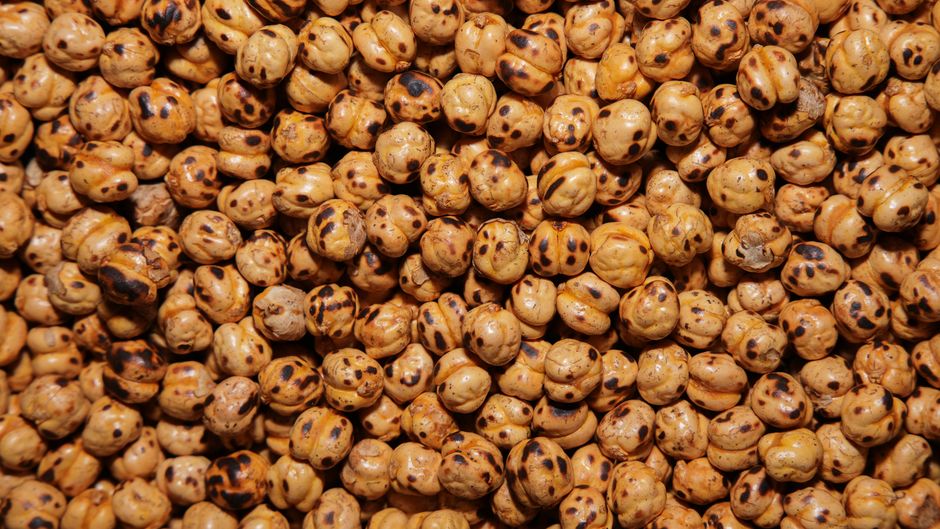
Yes, garbanzo beans can cause bloating. They contain a group of carbohydrates called galacto-oligosaccharides, or GOS, that human digestive enzymes cannot break down. When these carbohydrates reach the large intestine, gut bacteria ferment them and produce gas. That gas is the direct cause of the bloating many people notice after eating chickpeas.
This is normal physiology, not a sign that something is wrong with you or with the food. How much bloating a person experiences varies widely, and there are well-understood reasons for that variation. There are also practical ways to reduce it.
Why do garbanzo beans cause bloating?
The short answer is fermentation. Garbanzo beans are legumes, and like all legumes they store energy in the form of oligosaccharides that survive the small intestine intact.
Your small intestine absorbs most carbohydrates. It cannot absorb GOS because humans do not produce the enzyme alpha-galactosidase, which is needed to break the bonds in these sugars. So the GOS travels undigested into the colon, where the trillions of bacteria that live there ferment it. Fermentation produces gas — mainly hydrogen, carbon dioxide, and in some people methane.
Gas has to go somewhere. Some is absorbed into the bloodstream and exhaled. The rest accumulates in the bowel, which stretches the intestinal wall. That stretching is what you feel as bloating — a sensation of fullness, pressure, or visible abdominal distension.
Garbanzo beans also contain raffinose and stachyose, two other oligosaccharides in the same family. Beans differ in how much of these they contain, but chickpeas are a meaningful source of all three.
One clarification worth making: bloating and gas are related but not identical. Gas production happens in almost everyone who eats beans. Bloating — the subjective feeling of abdominal fullness — depends on how sensitive your gut is to that gas, how quickly it moves through, and your individual gut bacteria. Two people can eat the same bowl of chickpeas and have very different experiences.
Does everyone get bloated from garbanzo beans?
No. The response varies a lot between people, and some of that variation is measurable.
Research on legume digestion has consistently found that regular bean eaters report fewer symptoms than people who rarely eat them. The likely reason is adaptation: the gut microbiome shifts with repeated exposure, and the digestive system becomes more efficient at handling the gas load. Some studies suggest this adaptation happens over a period of weeks rather than days, though the exact timeline varies by person and has not been pinned down precisely.
Other factors that influence whether you bloat include:
- Portion size. A small serving produces less gas than a large one. This is simple arithmetic, not a special rule.
- How the beans are prepared. Canned chickpeas that have been drained and rinsed contain less of the fermentable carbohydrates than dry beans cooked from scratch, because some leach into the canning liquid.
- Your baseline gut bacteria. The composition of your microbiome affects how much gas is produced and which gases.
- How fast you eat. Eating quickly means swallowing more air, which adds to the total gas volume regardless of what you ate.
- Underlying digestive conditions. People with irritable bowel syndrome often have heightened gut sensitivity, meaning normal amounts of gas feel uncomfortable.
If you have never eaten beans regularly and you start with a large serving, some bloating is a predictable result. That is not a reason to avoid garbanzo beans permanently.
How can you reduce bloating from garbanzo beans?
Several approaches have reasonable support. None eliminates gas entirely, because gas production is the mechanism by which your body handles these carbohydrates.
Start with smaller portions and increase gradually. This is the most commonly recommended approach and the one with the most consistent observational support. A few tablespoons of chickpeas at a time, increased over several weeks, gives your gut time to adapt.
Drain and rinse canned chickpeas. The liquid in a can of chickpeas contains dissolved oligosaccharides. Rinsing removes some of them. This will not eliminate the GOS inside the beans, but it reduces the total load.
Soak and discard the soaking water if you cook dry beans. Soaking overnight and then discarding that water removes a portion of the water-soluble oligosaccharides before cooking. The effect is partial, not complete.
Cook beans thoroughly. Undercooked beans are harder to digest. Fully cooked beans are easier on the gut.
Chew well and eat slowly. This reduces swallowed air, which contributes to the total gas volume.
Some people use over-the-counter alpha-galactosidase enzyme supplements (sold under brand names like Beano) before eating beans. The enzyme breaks down GOS in the small intestine before it reaches the colon. Some studies suggest it reduces gas symptoms in some people; results vary, and it does not work for everyone. It is not a treatment for a medical condition and should not be used as a substitute for managing an underlying digestive disorder.




Are garbanzo beans still worth eating if they cause bloating?
For most people, yes. The bloating is temporary and manageable, and the nutritional profile of garbanzo beans is strong.
Chickpeas are a good source of plant protein and fiber. According to USDA nutritional data, one cup of cooked chickpeas provides roughly 15 grams of protein and about 12 to 13 grams of fiber, depending on the specific preparation. They also supply folate, iron, and magnesium.
The fiber itself is part of why they cause gas — but fiber is also one of the reasons beans are associated with heart health and stable blood sugar in large population studies. The same property that produces gas also feeds beneficial gut bacteria. Butyrate, a short-chain fatty acid produced when gut bacteria ferment fiber, is the main energy source for the cells lining the colon. That is not a marketing claim; it is established physiology.
People who avoid beans entirely because of gas are often avoiding one of the most nutrient-dense foods available at low cost. The adaptation period is real but usually temporary.
When is bloating from garbanzo beans a sign of something else?
Bloating after eating beans is normal. Bloating that is persistent, severe, or accompanied by other symptoms is worth investigating.
Seek medical evaluation if bloating comes with any of the following:
- Abdominal pain that is severe or does not resolve
- Changes in bowel habits that last more than a few weeks
- Unintentional weight loss
- Blood in the stool
- Bloating that occurs without eating beans or other gas-producing foods
- Nausea or vomiting alongside bloating
These symptoms do not mean beans caused a problem. They mean something else may be going on and deserves a proper assessment. Irritable bowel syndrome, small intestinal bacterial overgrowth, celiac disease, and other conditions can produce bloating that has nothing to do with garbanzo beans specifically.
People with IBS may find that high-FODMAP foods, including legumes, trigger symptoms more reliably than they do in the general population. GOS is classified as a FODMAP. If you have been diagnosed with IBS, a clinician or registered dietitian can help you determine whether garbanzo beans fit your diet.
For everyone else, bloating after a bowl of chickpeas is not a warning sign. It is digestion doing its job.
Frequently Asked Questions
Do garbanzo beans cause bloating in everyone?
No. Gas production happens in most people after eating them, but bloating — the uncomfortable feeling — varies widely depending on gut bacteria, portion size, and individual sensitivity. Regular bean eaters often report fewer symptoms over time.
How long does garbanzo bean bloating last?
Gas and bloating typically peak within a few hours of eating and resolve within a day. If symptoms last longer or occur without eating beans, that is worth discussing with a doctor.
Does rinsing canned chickpeas reduce bloating?
Rinsing removes some of the liquid containing dissolved oligosaccharides, which can modestly reduce the gas load. It does not eliminate the carbohydrates inside the beans, so it is a partial measure, not a solution.
Are chickpeas and garbanzo beans the same thing?
Yes. Garbanzo bean and chickpea are two names for the same legume, Cicer arietinum. The bloating mechanism is identical regardless of what you call them.
