
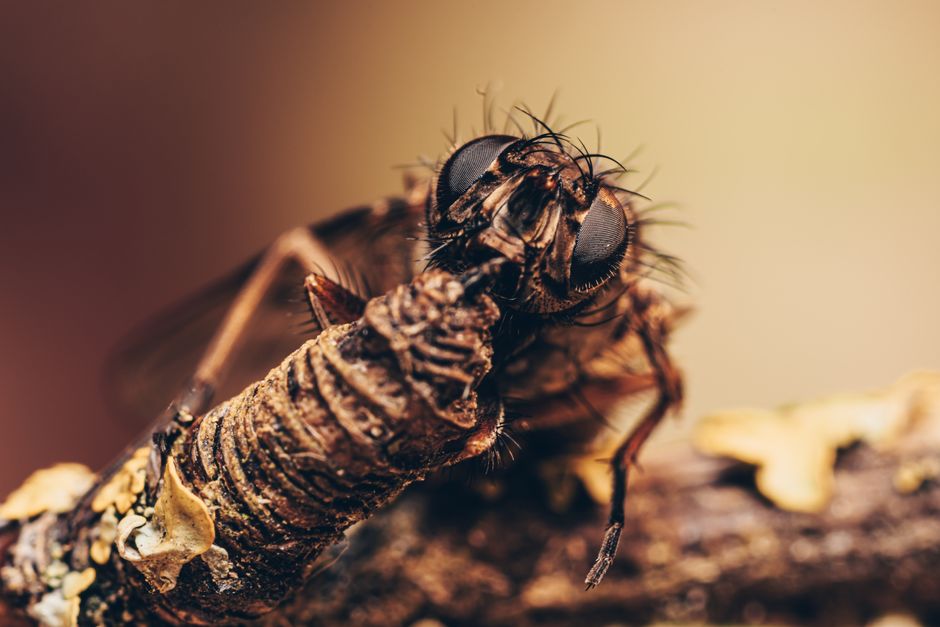
Yes, flies often vomit when they land on food. A fly’s mouthparts are built for sponging up liquids, not chewing solids, so many species bring up digestive fluid onto the surface to dissolve a meal and then suck it back up. That same regurgitation can carry bacteria and other microbes from the fly’s gut onto your food.
The behavior is real, it is common, and it is one of the reasons public health agencies treat flies as mechanical carriers of disease. What follows is what the science actually shows about how and why this happens, and what it means for the food on your table.
Why Do Flies Vomit On Food?
Flies cannot chew. Their mouthparts form a sponging pad, and they feed by liquefying food and drawing it up through a tube. Solid or semi-solid foods like a piece of fruit, a smear of sauce, or a crumb of cake have to be broken down before a fly can eat them.
The fly’s solution is to release saliva and crop fluid onto the surface. The crop is a storage sac in the digestive tract, and the fluid pushed out of it contains digestive enzymes that start breaking food down. The fly then sponges the resulting liquid back up. This is called regurgitation, and it is normal feeding behavior, not a sign of a sick insect.
Flies also defecate frequently, often in the same spots where they feed. Both behaviors happen on a scale that is easy to miss. A fly landing on a sandwich for a few seconds may leave behind material you cannot see.
Do All Flies Do This?
Not every fly species feeds the same way, but the common household flies are the ones that matter most for food safety. House flies and blow flies are the classic examples of flies that regurgitate and defecate while feeding.
Fruit flies behave somewhat differently. They are attracted to overripe fruit and fermenting liquids, and they feed mainly on liquids and microbes growing on the surface. They can still contaminate food, but the regurgitation-and-sponging pattern that defines house fly feeding is most associated with the larger filth flies.
Some flies bite and feed on blood, like mosquitoes and horse flies. Those are a separate category and feed through piercing mouthparts rather than sponging. The flies most people picture landing on a picnic plate are the sponging type.
What Can A Fly Transfer To Your Food?
A fly’s body and gut can carry a wide range of microorganisms. House flies move between waste, rotting material, and human food, and they pick up microbes on their legs and body hairs and inside their digestive tract.
Public health and food safety sources consistently describe flies as mechanical vectors. That means they carry pathogens on or in their bodies and deposit them onto food, rather than the pathogen multiplying inside the fly as part of its life cycle. Research has documented that flies can carry bacteria associated with the human gut, including species in the Enterobacteriaceae family, along with other organisms picked up from their environment.
The organisms most often discussed in this context include:
- Bacteria such as E. coli, Salmonella, and Campylobacter
- Organisms that can cause diarrheal illness, including Shigella
- Parasites and their eggs in some settings
- Viruses, though the evidence for fly transmission of most human viruses is less developed than for bacteria
Carrying a pathogen is not the same as causing illness. The dose matters, and a brief landing on a dry surface transfers less than prolonged feeding on moist food. But the risk is not zero, and it rises when flies have access to both waste and food in the same area.
Does A Quick Landing Actually Make You Sick?
The honest answer is that the risk is real but hard to quantify for any single landing. Most people who eat food a fly touched do not become ill. That is not a reason to ignore the problem, but it is a reason not to panic.
Several factors shape the risk:
- How long the fly stayed. Longer feeding means more regurgitation and defecation.
- What the food is. Moist foods like sauces, cut fruit, and dairy give flies a better surface to feed on and can support microbial growth afterward.
- Where the fly has been. A fly moving between garbage or animal waste and your kitchen is a bigger concern than one that has only been outdoors.
- Who is eating. People with weakened immune systems, young children, older adults, and pregnant women face higher risk from foodborne illness in general.
There is no established threshold for how many fly landings make food unsafe. Food safety guidance does not offer a number, and it would be misleading to invent one. The practical approach is to reduce exposure rather than to measure it.
How Do You Protect Food From Flies?
Keeping flies off food is the most reliable protection. Covering food is simple and effective, and it removes the opportunity for regurgitation and defecation entirely.
Practical steps that food safety guidance supports:
- Keep food covered when eating outdoors or when windows are open.
- Store food in sealed containers rather than leaving it out.
- Take out garbage frequently and keep bins closed.
- Clean up spills and food residue promptly.
- Use window screens and keep doors closed where possible.
- Wash fresh produce before eating it.
Fly traps and insecticides can reduce fly numbers, but they do not replace covering food. If a fly has landed on food, the cautious choice is to discard the portion it touched, especially for moist foods and for anyone at higher risk of foodborne illness. Wiping or rinsing a dry surface may reduce contamination but does not guarantee removal of what was deposited.
Are Flies More Than A Nuisance?
Flies matter to public health beyond the annoyance of a buzzing kitchen. Their habit of moving between waste and food makes them efficient at moving microbes from places you would never want near a meal.
This is why food service regulations in many places treat fly presence as a sanitation problem. Restaurants are expected to control flies not because a single fly is dangerous, but because fly activity signals that waste and food are not being kept separate.
For households, the takeaway is straightforward. A fly on your food is not a medical emergency, but it is a genuine contamination event. Covering food and managing waste removes most of the risk with very little effort.
Frequently Asked Questions
Do flies really vomit every time they land on food?
Not every landing involves vomiting, but regurgitation is a normal part of how many flies feed on solid or semi-solid food. A fly that stays and feeds is more likely to release digestive fluid than one that lands briefly and leaves.
Is food safe to eat after a fly lands on it?
There is no established rule, and the risk depends on how long the fly stayed, what the food is, and where the fly has been. The cautious choice is to discard moist food a fly has fed on, especially for people at higher risk of foodborne illness.
Can you get sick from a fly landing on your food?
Illness is possible because flies can carry bacteria like Salmonella and E. coli, but most single landings do not cause illness. The risk rises with longer feeding, moist food, and flies that have had access to waste.
Do fruit flies vomit on food too?
Fruit flies feed mainly on liquids and microbes on the surface of overripe produce, and their feeding behavior differs from house flies. They can still contaminate food, but the classic regurgitation-and-sponging pattern is most associated with house flies and blow flies.
