
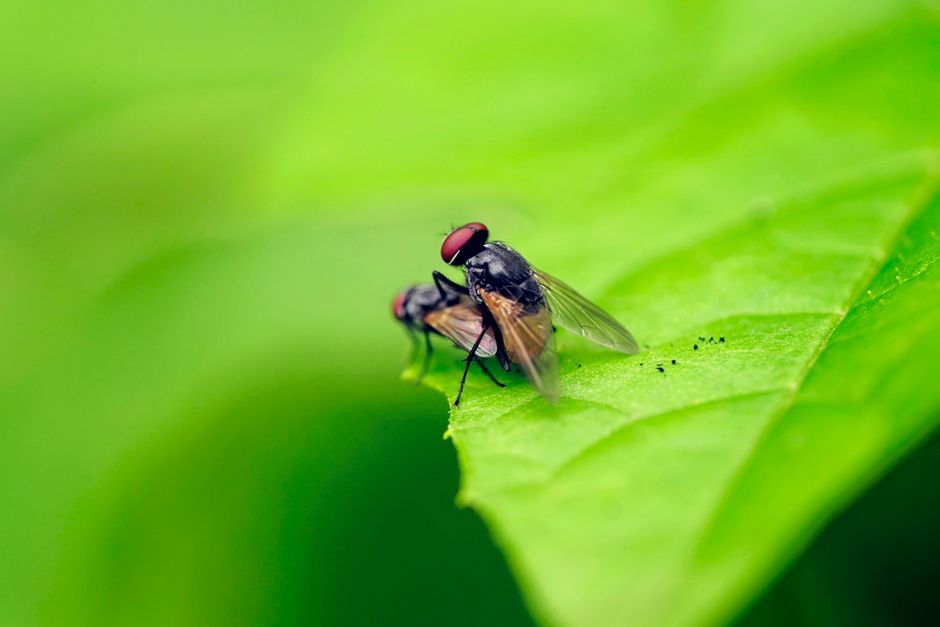
Flies do not attack humans in the way a predator attacks prey. They land on us, probe our skin, and sometimes bite, but their goal is food, moisture, or a place to lay eggs — not a fight. The behavior that feels like an attack is a fly doing what flies evolved to do: finding a warm, salty, protein-rich surface. Understanding that distinction explains almost everything about how flies interact with people.
That said, some flies do bite humans, and a few can transmit disease in the process. The science separates harmless nuisance behavior from genuine health risks, and the line between them matters.
Do Flies Attack Humans The Science Behind Their Behavior?
Most flies that land on people are not biting at all. They are feeding on sweat, skin oils, tears, saliva, or dead skin cells, or they are simply resting. House flies and their relatives have sponging mouthparts — they cannot pierce skin. They spit digestive fluid onto a surface and lap up the liquid result. When a house fly lands on your arm, it is tasting and sampling, not attacking.
Biting flies are a different group entirely. Stable flies, horse flies, deer flies, black flies, and sandflies have cutting or piercing mouthparts and feed on blood. Their approach is what most people describe as an attack. A horse fly can inflict a sharp, painful bite and leave a swollen, itchy welt. Black flies often bite around the head and neck and can leave lasting irritation.
The key insight is that the fly’s intent is nutritional, not aggressive. Flies do not defend territory against humans or seek confrontation. They respond to cues: body heat, carbon dioxide in your breath, moisture, and certain skin chemicals. A fly that keeps returning to your face is following a signal, not holding a grudge.
Why Do Flies Keep Landing on Me and Not Others?
Flies are not evenly distributed across people. Some individuals genuinely attract more flies, and the reasons are physiological rather than cosmetic.
Body heat and carbon dioxide are the two strongest cues. Flies detect warmth and follow the carbon dioxide plume that every person exhales. People who breathe more heavily or run warmer — during exercise, in hot weather, or simply by individual variation — may draw more attention.
Skin chemistry also matters. Sweat contains salts, sugars, and organic compounds that flies find attractive. Lactic acid, a byproduct of muscle activity, is a known attractant for several fly species. Skin oils and the natural microbes living on your skin produce volatile compounds that differ from person to person, which helps explain why a fly may favor one family member over another.
There is a persistent claim that certain blood types attract mosquitoes more than others. Some studies have found differences in landing rates among blood types, but the effect is modest and the research is not fully settled. For flies specifically, the evidence for blood type as a major factor is weak. Heat, moisture, carbon dioxide, and skin chemistry are the well-established drivers.
Clothing color plays a smaller role. Dark colors absorb heat and may be slightly more attractive to some biting flies, but this is a minor effect compared with body signals.
Which Flies Actually Bite Humans?
Only a minority of the flies you encounter will bite. Knowing which ones do helps you judge whether a fly on your arm is a nuisance or a reason to move.
- House flies do not bite. They have sponging mouthparts and feed on liquids. They can still spread germs mechanically by landing on waste and then on food or skin.
- Stable flies bite, usually on the legs and ankles. Their bite is painful and can cause itchy welts.
- Horse flies and deer flies inflict deep, painful bites. They slash skin rather than pierce it cleanly, and the wounds can bleed and swell.
- Black flies bite and can cause significant swelling and itching. In parts of the world they transmit river blindness, a parasitic disease; in the United States this is not a routine concern.
- Sandflies bite and transmit leishmaniasis in some regions. In the U.S. this is uncommon and geographically limited.
- Fruit flies and drain flies do not bite humans. They are attracted to food and moisture, not blood.
The distinction matters because the vast majority of flies people swat at indoors are non-biting species. The bite you feel is usually from a fly that found you outdoors near water, animals, or vegetation.
Can Flies Transmit Disease to Humans?
Flies can carry and spread pathogens, but the risk depends heavily on the species and the setting. This is one area where the science is clear about the mechanism but variable about real-world risk.
House flies are mechanical carriers. They land on garbage, feces, or decaying matter and pick up bacteria on their body hairs and mouthparts. When they land on food or an open wound, some of that material can transfer. Research has consistently found that house flies can carry organisms including E. coli, Salmonella, and other enteric bacteria. Whether that transfer causes illness depends on the dose and the organism, and the evidence that house flies cause outbreaks in ordinary household settings is limited but real.
Biting flies can transmit disease more directly by injecting pathogens through the skin. The clearest examples are regional: sandflies transmitting leishmaniasis in parts of the Mediterranean, Middle East, and Latin America, and black flies transmitting river blindness in parts of Africa and Latin America. In the United States, biting flies rarely transmit serious human disease, though they cause painful bites and secondary skin infections from scratching.
The practical takeaway is not fear of every fly. It is basic hygiene: cover food, keep garbage contained, and clean wounds. The evidence supports these steps as reasonable precautions rather than emergency measures.
What Should You Do If a Fly Bites You?
A fly bite is usually a minor skin injury, but the response can be uncomfortable. Most bites cause redness, swelling, and itching that resolve on their own within a few days.
Wash the area with soap and water. Apply a cold compress to reduce swelling. Avoid scratching, because broken skin can become infected. Over-the-counter anti-itch creams or antihistamines may help with discomfort; these are standard symptomatic measures, not treatments that shorten the bite’s course.
Seek medical attention if you notice spreading redness, increasing pain, pus, fever, or swelling that worsens after a few days. These signs can indicate a secondary bacterial infection, which is the most common complication of fly bites in everyday settings.
People with known allergies to insect bites, or anyone who develops hives, difficulty breathing, or swelling of the face or throat, should treat it as a medical emergency. This is rare with fly bites but possible with any insect sting or bite.
How Do You Reduce Fly Encounters Without Overreacting?
Prevention is mostly about removing the cues that attract flies and blocking access to skin. None of these steps is a guarantee, and no single method works for every species.
Keep screens in good repair and use them on windows and doors. Cover food and store garbage in sealed containers. Clean up pet waste and standing water, which serve as breeding sites for some species. Outdoors, loose long sleeves and pants reduce exposed skin, and insect repellents registered with the EPA can reduce biting fly landings, though their effectiveness varies by species and formulation.
For biting flies, physical barriers and repellents are the main tools. Fans can help indoors because flies are weak fliers and avoid strong airflow. Traps may reduce local populations but rarely eliminate them.
One point worth stating plainly: there is no evidence that a person can become “immune” to fly bites through repeated exposure in a way that prevents bites. Some people do develop less skin reaction over time, but that is a change in immune response, not a change in how attractive they are to flies.
When Is a Fly Problem a Real Health Concern?
A single fly in the kitchen is a nuisance. A sustained fly problem near food preparation, a wound, or a healthcare setting is a different matter. In those contexts, fly control becomes a public health issue rather than a personal annoyance.
Hospitals and food service operations treat fly presence as a contamination risk because of the mechanical transfer of bacteria. For households, the practical threshold is simple: if flies are regularly landing on food, open wounds, or an infant’s face, the environment needs attention. That is not alarmism; it is the same logic that guides food safety and infection control.
For most people, the honest summary is that flies are a minor, manageable part of daily life. They are not hunting you. They are following signals, and reducing those signals reduces the encounters.
Frequently Asked Questions
Do house flies bite humans?
No, house flies do not bite. They have sponging mouthparts and cannot pierce skin, though they can spread germs by landing on contaminated surfaces and then on food or skin.
Why do flies keep landing on my face?
Flies are drawn to moisture, warmth, and carbon dioxide from your breath. Your face offers all three, which is why it attracts more landings than other body areas.
Are fly bites dangerous?
Most fly bites are minor and heal on their own within a few days. The main risk is a secondary skin infection from scratching, so keep the area clean and watch for spreading redness or pus.
What attracts flies to some people more than others?
Body heat, sweat, skin oils, and carbon dioxide output vary between people and influence how many flies land. Blood type may play a small role, but the evidence for flies is weak compared with these other factors.
