
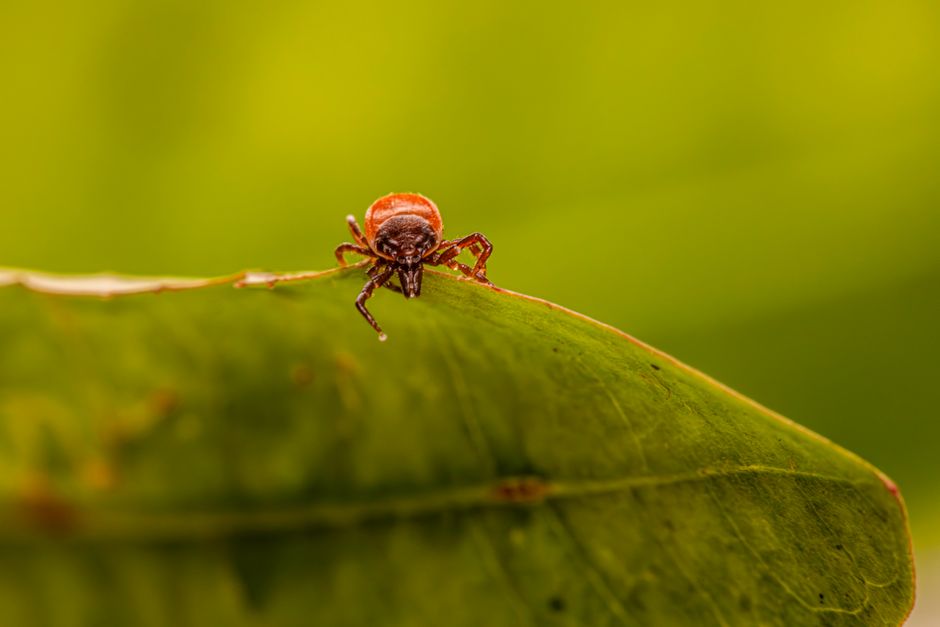
Fleas do not live on clothes. Adult fleas live on animal hosts — cats, dogs, and other warm-blooded animals — and they only hop onto fabric briefly while searching for a meal. Clothes, bedding, and carpets can hold flea eggs, larvae, and pupae, though, which is why washing and vacuuming matter more than most people realize when they are trying to clear an infestation.
Do Fleas Live On Clothes?
No. Adult fleas are parasites of warm-blooded animals, not fabric. They need blood to survive and reproduce, and they cannot get that from cotton, polyester, or wool.
What can happen is that a flea jumps onto your clothing while you are near an infested pet or a contaminated area. It stays there temporarily, usually looking for a way back onto a host. It is not setting up a home in your shirt.
The confusion comes from the fact that flea eggs, larvae, and pupae really do end up in fabrics. Those life stages are not blood feeders. They develop in the environment — carpet fibers, pet bedding, sofa cushions, and yes, sometimes clothing that has been sitting on the floor near a sleeping pet.
What Are Fleas Actually Attracted To?
Fleas are attracted to body heat, movement, and the carbon dioxide that warm-blooded animals exhale. They are not drawn to fabric itself.
This is why a flea on your sock is not interested in the sock. It is interested in you. Once it finds skin, it feeds. If it cannot reach skin, it keeps moving.
Some people notice they get bitten more than others in the same household. That is usually about proximity to the source — the infested pet, the favorite sleeping spot, the rug where the dog naps — not about blood type or personal “sweetness.”
Can Fleas Lay Eggs On Clothing?
Yes, but with an important caveat. Adult fleas almost always lay eggs on the host, not in the environment. The eggs are not sticky, so they fall off the animal within a few hours and land wherever the pet happens to be — carpet, couch, bed, or a pile of laundry on the floor.
Once an egg lands on fabric, it can hatch into a larva within a few days under the right conditions. Larvae avoid light and burrow down into carpet fibers and fabric folds. They feed on organic debris — shed skin cells, hair, and dried blood in adult flea feces — not on blood directly.
This is the part people miss. The clothing is not hosting adult fleas. It is potentially hosting the next generation, quietly, out of sight.




How Long Can Fleas Survive Without a Host?
Adult fleas can survive without a blood meal for a limited time. The commonly cited range is about one to two weeks, though survival depends heavily on temperature and humidity. In cool, humid conditions, adults can live longer without feeding. In hot, dry conditions, they die faster.
The pupal stage is the real problem. Flea pupae — the cocoon stage — can remain dormant for months, waiting for vibrations, warmth, and carbon dioxide to signal that a host is nearby. This is why people sometimes move into an empty apartment and get bitten days later, or why an infestation seems to “come back” after a vacation.
No clinical guidelines give an exact survival time for every situation because it varies so much. What matters practically is that the environment — not the host — is where fleas persist longest.
How Do You Get Fleas Out Of Clothes And Fabric?
Heat and mechanical action do the work. Washing contaminated clothing and bedding in hot water and drying on a high-heat cycle kills eggs, larvae, and adult fleas. The exact temperature and duration that guarantee complete kill depend on the life stage and the fabric, so treat washing as one part of a broader strategy rather than a single fix.
For items that cannot be washed, sealing them in a plastic bag and leaving them for an extended period can work, but the timeline varies and is not standardized. Vacuuming is the more reliable everyday tool.
- Vacuum carpets, rugs, upholstery, and crevices thoroughly — the vibration also triggers pupae to emerge, which makes them vulnerable to later treatment
- Dispose of the vacuum bag or empty the canister outside immediately after vacuuming
- Wash pet bedding regularly in hot water
- Treat the pet with a veterinarian-recommended flea product — this is the anchor of any real solution
- Repeat environmental cleaning over several weeks, because eggs and pupae do not all mature at once
Treating the pet is not optional. If you clean the house but leave the animal untreated, the cycle restarts. If you treat the animal but ignore the environment, newly emerged fleas will find the pet again.
Can Fleas Live On Human Hair Or Skin?
Fleas can bite humans, but they do not live on us the way they live on cats and dogs. Human fleas exist as a species, but in most households the fleas biting people are cat fleas or dog fleas that have run out of preferred hosts.
They will feed on human blood if they have to. They will not establish a breeding population on a person. Human body hair is not dense enough, and our grooming and movement patterns make us a poor long-term host.
That said, flea bites on humans are common during an active infestation, typically appearing as small, itchy red bumps — often around the ankles and lower legs. Some people develop an allergic reaction to flea saliva, which can cause larger welts or a rash.
What Actually Ends A Flea Problem?
Flea control works on two fronts at once: the animal and the environment. Neither alone is usually enough.
On the animal side, veterinary flea treatments — topical, oral, or injectable — are the most effective tools available. Which product and how often depends on the pet, its health, and local flea pressure. A veterinarian is the right source for that decision, not a general article.
On the environment side, the goal is to interrupt the life cycle. That means vacuuming frequently, washing fabrics that touch the pet, and being patient. Because pupae can stay dormant for weeks or months, an infestation can seem to disappear and then flare up again. This is normal, and it does not mean treatment failed.
One non-obvious point: foggers and sprays sold for home use vary widely in effectiveness, and many do not penetrate the places where larvae and pupae actually hide. Professional pest control may be warranted in severe cases. Even then, the pet still needs treatment.
When Should You See A Doctor Or Veterinarian?
See a veterinarian if your pet is scratching, losing hair, or has visible fleas or flea dirt — the small dark specks that turn reddish-brown when wet. A vet can confirm the diagnosis and recommend a treatment appropriate for that animal.
See a doctor if flea bites on a person become infected, spread widely, or cause a severe allergic reaction. Fleas can also transmit other organisms, though this is uncommon in typical household infestations in the United States. If bites are not improving or you develop fever or other systemic symptoms, get medical attention.
Children, older adults, and people with weakened immune systems may react more strongly to bites and should be evaluated if symptoms are significant.
Frequently Asked Questions
Do fleas live on clothes?
No. Adult fleas live on warm-blooded animals, not fabric, and only land on clothing briefly while searching for a host. Eggs, larvae, and pupae can end up in clothing and other fabrics, which is a different stage of the flea life cycle.
Can fleas survive in a washing machine?
Hot water and a high-heat dryer cycle kill fleas at all life stages, though the exact temperature and time needed depend on the stage and fabric. Cold washing alone is not reliable for killing eggs and larvae.
How long can fleas live without a host?
Adult fleas typically survive about one to two weeks without a blood meal, depending on temperature and humidity. Pupae in cocoons can stay dormant for months, which is why infestations sometimes seem to return after a quiet period.
Can fleas live on human hair?
No. Fleas will bite humans and feed on human blood, but they cannot establish a breeding population on a person. Human hair is not dense enough to support them the way a pet’s coat does.
