
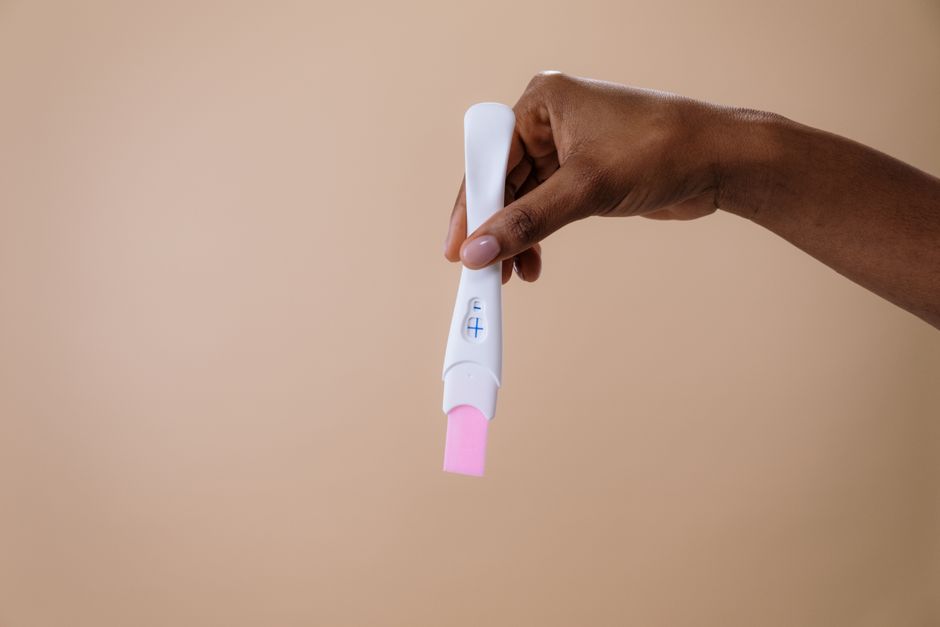
If you found an old pregnancy test in the back of a bathroom cabinet, you might wonder if it is still worth using. The short answer is that most expired pregnancy tests still work, but their reliability drops over time. An expired test can show a false negative, meaning it says you are not pregnant when you actually are. For a result you can fully trust, a fresh test is always the safer choice.
How Do Pregnancy Tests Actually Work?
Pregnancy tests detect a hormone called human chorionic gonadotropin, or hCG. Your body starts making this hormone after a fertilized egg attaches to the lining of the uterus. The levels rise quickly in early pregnancy, usually doubling every 48 to 72 hours.
The test strip contains antibodies that react to hCG. When you pee on the strip or dip it in urine, the liquid travels up the test. If hCG is present, it binds to those antibodies and creates a visible line or a digital “pregnant” reading.
This process is chemical. The antibodies on the test strip can degrade over time. Heat, moisture, and age all break down these delicate proteins. When the antibodies stop working properly, the test may fail to detect hCG even when it is in your urine.
Do Expired Pregnancy Tests Work?
An expired pregnancy test may still work, but you cannot count on it. The expiration date exists because the manufacturer cannot guarantee the test’s accuracy beyond that point. Most tests are stable for about two to three years from the date of manufacture.
The main risk is a false negative. The test might not pick up the low levels of hCG present in early pregnancy. This can delay your ability to confirm a pregnancy and seek prenatal care. False positives are less common with expired tests, but they are not impossible if the test chemicals have degraded in unusual ways.
If the test is only a few months past its expiration date and has been stored in a cool, dry place, it will likely still work. If it is years old or was kept in a hot bathroom cabinet, do not trust the result. When in doubt, get a new test.
What Do Expiration Dates on Pregnancy Tests Mean?
The expiration date is not a suggestion. It is a manufacturer’s guarantee of accuracy. Before that date, the test should perform at the claimed sensitivity level. After that date, the manufacturer no longer stands behind the results.
Most home pregnancy tests have a sensitivity of 20 to 25 milli-international units per milliliter of hCG. That means they can detect very early pregnancies, often before a missed period. As the test ages, its sensitivity may drop. An expired test might only detect higher levels of hCG, which means it will not work in the earliest days of pregnancy.
Think of it like an old smoke detector. It might still work, but you would not rely on it to protect your family. The same logic applies to pregnancy tests.





How Long Do Pregnancy Tests Last Before Expiring?
Most pregnancy tests expire two to three years after they are manufactured. The exact timeline depends on the brand and how the test was stored. You can find the expiration date printed on the foil wrapper or the box.
Storage conditions matter more than most people realize. Tests kept in a cool, dry place last longer. Tests stored in a humid bathroom or a hot car degrade faster. Heat and moisture accelerate the breakdown of the antibodies on the test strip.
If you cannot find an expiration date, check the packaging for a lot number. You can contact the manufacturer with this number to ask about the test’s age. When in doubt, assume the test is unreliable.
What Can Cause a False Result on an Expired Test?
Several factors beyond expiration can affect a pregnancy test result. Understanding these can help you avoid confusion.
- Testing too early: If you test before your body has produced enough hCG, even a fresh test can show a false negative. Wait until the first day of your missed period for the most accurate result.
- Diluted urine: Drinking large amounts of water before testing can dilute your urine and lower hCG concentration. Test with your first morning urine, which has the highest hormone levels.
- Evaporation lines: If you read the test after the recommended waiting time, a faint line can appear as the urine dries. This is not a positive result. Always read the test within the time window printed in the instructions.
- Chemical pregnancy: A very early miscarriage can cause a faint positive line that fades. The test detected hCG, but the pregnancy did not continue.
- Medications: Some fertility medications containing hCG can cause false positives. Most other medications do not affect pregnancy test results.
An expired test adds another layer of uncertainty to all of these scenarios. Even if you do everything right, an old test may still fail you.
What Should You Do If You Only Have an Expired Test?
If an expired test is all you have, you can use it as a preliminary check. Just do not treat the result as final. A positive result on an expired test is likely accurate, especially if the line is strong. A negative result means very little.
The safest approach is to buy a fresh test. They are inexpensive and available at most drugstores, supermarkets, and online retailers. If cost is a concern, dollar stores sell pregnancy tests that are just as accurate as expensive brands when used before their expiration date.
If you get a negative result on an expired test but your period does not come, test again with a fresh test a few days later. If you get a positive result on any test, contact a healthcare provider to confirm the pregnancy with a blood test or clinical evaluation.
Are Digital Pregnancy Tests More Reliable Than Strip Tests?
Digital tests and strip tests both detect the same hormone using the same chemical principles. Neither is inherently more accurate than the other. The difference is in how they display the result.
Digital tests show the words “pregnant” or “not pregnant” on a small screen. This removes the guesswork of interpreting faint lines. Strip tests require you to read two lines, which can be confusing if one line is very light.
Both types expire and both can fail after their expiration date. Digital tests contain batteries and electronic components that can also degrade over time. An expired digital test may show an error message or a blank screen instead of a result.
Frequently Asked Questions
Can an expired pregnancy test give a false positive?
Yes, but it is less common than a false negative. Degraded chemicals on the test strip can sometimes produce a faint line that is not a real positive.
How old can a pregnancy test be before it stops working?
Most tests are reliable for two to three years from the manufacture date, depending on storage conditions. Heat and humidity shorten that window.
Is a faint positive line on an expired test trustworthy?
A faint line is harder to trust on an expired test. Confirm with a fresh test before making any decisions.
Can I use an expired pregnancy test if I am already late?
If you are several days late, your hCG levels are likely high enough for even an expired test to detect. A negative result on an expired test should still be confirmed with a fresh one.
Pregnancy tests are simple tools, but they depend on delicate chemistry. An expired test might give you the answer you want to hear or the one you fear, but it might also give you the wrong one. Spend the few dollars on a fresh test. Your peace of mind is worth more than the cost.
