
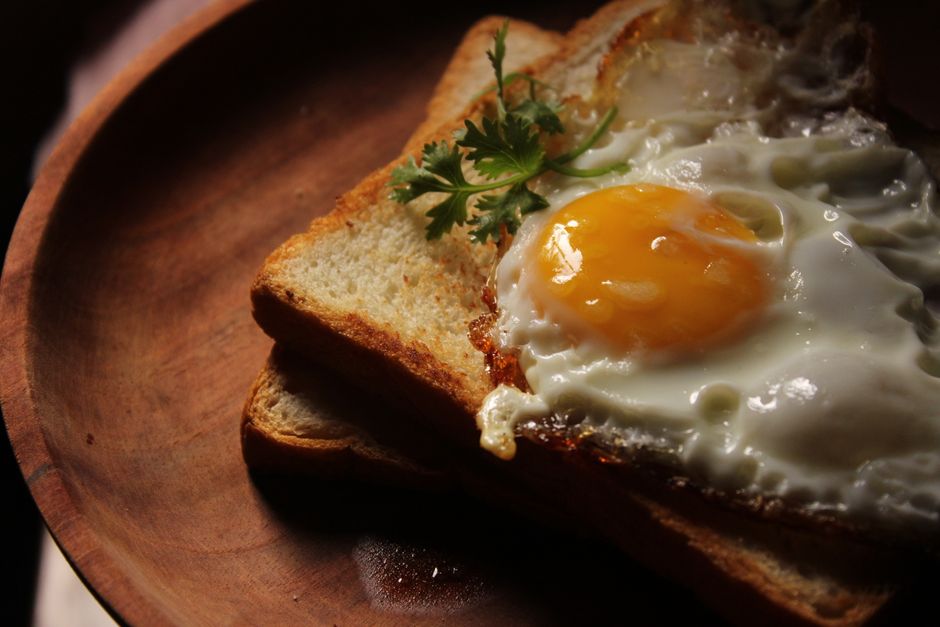
Yes, eggs contain iron. One large egg has about 0.9 milligrams of iron, mostly concentrated in the yolk. That is a modest amount compared with red meat or lentils, but eggs are a regular part of many people’s diets, so the iron they supply adds up over time.
The more useful question is whether your body can actually use that iron. Eggs contain a form of iron that is absorbed less efficiently than the iron in meat, and eggs also contain a compound that can interfere with iron absorption from other foods. Understanding both sides matters more than the milligram count alone.
Do Eggs Have Iron In Them?
Eggs do contain iron, and it is found almost entirely in the yolk. The white contributes very little. A large egg provides roughly 0.9 milligrams of iron, according to USDA nutrient data.
To put that in context, the recommended daily iron intake for adult men and for women past menopause is 8 milligrams. For women of reproductive age it is 18 milligrams. So a single egg supplies a small fraction of what most adults need in a day.
That does not make eggs unimportant. A two-egg breakfast delivers close to 2 milligrams. Combined with other foods across the day, eggs contribute to total intake in a way that is easy to overlook.
What Kind of Iron Is in Eggs?
Eggs contain non-heme iron. This is the same form found in plants, grains, and legumes, and it is distinct from the heme iron in meat, poultry, and fish.
The difference is not cosmetic. Heme iron is absorbed more efficiently. Non-heme iron absorption depends heavily on what else is in your gut at the same time. Some foods enhance it. Others block it.
This is why comparing iron content across foods by milligrams alone can be misleading. A food with less iron but a more absorbable form may contribute more usable iron than the label suggests. Eggs sit on the less absorbable end of that spectrum.
Why Eggs Can Block Iron From Other Foods
Eggs contain a protein called phosvitin, which binds iron. Research has shown that this protein can inhibit iron absorption, and some studies indicate that eating eggs alongside an iron-rich plant food can reduce how much iron you absorb from that food.
This is a real effect, but it is easy to overstate. The interference is not absolute, and it applies mainly to non-heme iron from plant sources eaten in the same meal. It does not mean eggs cancel out the iron in your diet.
The practical takeaway is simple. If you are relying on plant foods for iron, pay attention to meal timing. Pairing iron-rich plants with a source of vitamin C improves absorption. A squeeze of lemon, a handful of berries, or a glass of orange juice with the meal can help offset the inhibitory effect.
One clarification that often gets lost: the phosvitin effect is about absorption from a single meal, not about your overall iron status over weeks. A diet with varied iron sources and good vitamin C intake is more important than avoiding eggs at every meal.
How Much Iron Do Eggs Have Compared With Other Foods?
The table below shows approximate iron content per common serving, based on USDA nutrient data. It is a reference for comparison, not a ranking of how much iron your body will absorb.
| Food | Serving | Approximate Iron | Type of Iron |
|---|---|---|---|
| Egg | 1 large | 0.9 mg | Non-heme |
| Chicken breast | 3 oz cooked | 0.9 mg | Mostly heme |
| Beef | 3 oz cooked | 2.5 mg | Mostly heme |
| Lentils | 1 cup cooked | 6.6 mg | Non-heme |
| Spinach | 1 cup cooked | 6.4 mg | Non-heme |
| Fortified cereal | 1 cup | Varies by brand | Non-heme |
Notice that lentils and spinach carry far more iron by weight than eggs. But they also contain compounds like phytates and oxalates that reduce absorption. Eggs have less iron and a lower absorption rate. The comparison is not straightforward, and no single food solves iron intake on its own.
Who Should Pay Attention to Iron From Eggs?
Some groups have higher iron needs and may find eggs a useful but insufficient source on their own.
- Women of reproductive age need 18 milligrams of iron daily, more than double the requirement for men. Menstrual blood loss is the main reason.
- Pregnant women have increased iron requirements. Clinical guidance generally recommends iron supplementation during pregnancy, and this is a decision to make with a clinician rather than through diet alone.
- Vegetarians and vegans rely on non-heme iron entirely, so absorption strategies matter more. Eggs are a source for vegetarians but not for vegans.
- People with diagnosed iron deficiency or anemia usually need more than dietary changes. Iron deficiency anemia is typically treated with iron supplementation under medical supervision, and eggs alone will not correct it.
If you suspect you are low in iron, a blood test is the only way to know. Fatigue and pallor are common symptoms, but they are nonspecific and overlap with many other conditions. Do not assume iron is the cause without testing.
Does Cooking Affect the Iron in Eggs?
Cooking does not meaningfully destroy the iron in eggs. Iron is a mineral, and minerals are not broken down by heat the way some vitamins are.
What cooking can change is the availability of the iron-binding protein. Some research suggests that cooked eggs may inhibit iron absorption somewhat less than raw eggs, because heating alters phosvitin. The evidence is not strong enough to make cooking a deliberate strategy, but it is a reason not to worry that scrambling your eggs ruins their iron content.
Raw eggs are not recommended regardless. The risk of Salmonella contamination is the reason, and the potential absorption difference is not a reason to take that risk.
Are Eggs a Good Source of Iron?
Eggs are a modest source of iron, not a major one. At about 0.9 milligrams per large egg, they contribute to total intake but cannot carry iron needs on their own.
Their non-heme iron is less well absorbed than the heme iron in meat. And the phosvitin in eggs can reduce absorption of iron from other foods eaten at the same meal. Both facts are true and both matter.
That said, eggs remain a nutrient-dense food with high-quality protein, choline, vitamin B12, and other nutrients. Judging them solely on iron content misses the bigger picture. If iron is your concern, build meals around a variety of iron sources and pair plant-based iron with vitamin C. If you have symptoms of deficiency, get tested rather than guessing.
Frequently Asked Questions
Do eggs have iron in them?
Yes, eggs contain iron, with about 0.9 milligrams in one large egg, almost all of it in the yolk. That is a modest amount compared with many other iron-rich foods.
Is the iron in eggs well absorbed?
Egg iron is non-heme iron, which is absorbed less efficiently than the heme iron in meat. Eggs also contain phosvitin, a protein that can reduce iron absorption from other foods eaten at the same meal.
Can eating eggs cause iron deficiency?
No, eating eggs does not cause iron deficiency on its own. The absorption effect is limited to a single meal, and a varied diet with good vitamin C intake largely offsets it.
How much iron do you need per day?
Adult men and women past menopause need about 8 milligrams of iron daily, while women of reproductive age need about 18 milligrams. Eggs supply only a small portion of either target.
