
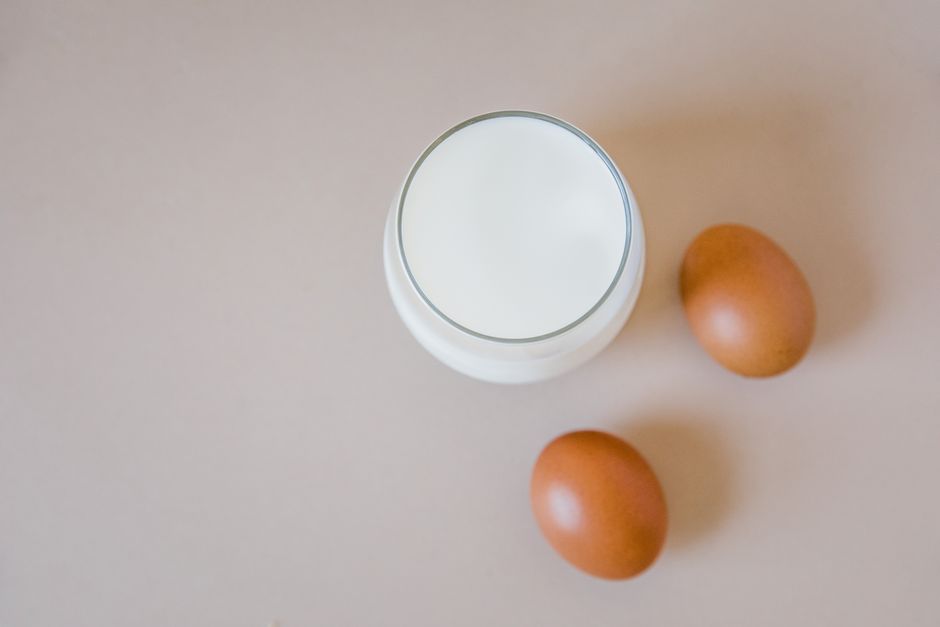
Eggs do contain calcium, but not in amounts that make them a meaningful calcium source. One large whole egg provides roughly 25 to 30 milligrams. For context, an adult needs about 1,000 milligrams of calcium per day. That means you would need to eat more than 30 eggs to approach a full day’s requirement.
If you are counting on eggs to build bone strength, they will not get you there. Eggs earn their reputation for protein, choline, and certain vitamins. Calcium is not their strong suit. This guide breaks down exactly how much calcium is in different parts of the egg, why the number is what it is, and where your calcium should actually come from.
How Much Calcium Is Actually in an Egg?
A large egg contains about 25 to 30 milligrams of calcium, and almost all of it sits in the yolk. The egg white contributes very little.
That figure comes from standard nutrient databases maintained by the US Department of Agriculture. It applies to a large egg, which is the size most recipes and nutrition labels reference. Jumbo eggs will have somewhat more; small eggs somewhat less. The difference is small enough that it rarely matters in practice.
Here is how that number stacks up against your daily needs:
- One large egg: roughly 25 to 30 mg calcium
- Recommended daily intake for most adults: about 1,000 mg
- Recommended daily intake for women over 50 and men over 70: about 1,200 mg
- Share of daily calcium from one egg: roughly 2 to 3 percent
Two to three percent is not nothing. But it is a rounding error compared to what a glass of milk or a serving of fortified plant milk delivers.
The daily intake figures above reflect long-standing recommendations from the Institute of Medicine, now part of the National Academies. They are widely used in US clinical practice.
Why Do Eggs Have So Little Calcium?
Calcium in eggs is bound up in the yolk, and the yolk is a fat-rich structure designed to nourish a developing chick. It is not built as a mineral storehouse.
Compare that to the foods nature actually designed for calcium storage. Milk exists specifically to support the rapid bone growth of a young mammal. A hen’s egg exists to support a chick for a few weeks inside a shell. The shell itself is calcium carbonate, but that shell is not something you eat.
This is why eggs are not classified as a calcium-rich food in any major dietary guideline. They appear on lists for protein, vitamin B12, choline, selenium, and vitamin D. Calcium is not a headline nutrient for eggs.
Choline is worth mentioning here because it is genuinely abundant in eggs and genuinely hard to get elsewhere. One large egg supplies a substantial share of the daily choline requirement. That is the nutrient eggs should be known for. Calcium is not.
Does the Way You Cook Eggs Change the Calcium?
Cooking does not meaningfully change the calcium content of an egg. Boiling, frying, scrambling, or baking leaves the mineral content essentially the same.
What can change is what you add. If you scramble eggs with milk or cheese, the calcium in the finished dish goes up — but that calcium is coming from the dairy, not the egg. A cheese omelet might deliver 150 to 250 milligrams of calcium. Nearly all of it is from the cheese.
This is a common point of confusion. People see a calcium number on a recipe and assume the egg contributed it. In most cases, the egg contributed a small fraction.
One genuine exception: if you cook eggs in a cast iron skillet, trace amounts of iron can leach into the food. That applies to iron, not calcium. There is no comparable well-documented calcium transfer from common cookware.





Are Eggs a Good Source of Calcium or Not?
No. Eggs are a poor calcium source by any reasonable standard. A food needs to deliver a meaningful share of your daily requirement in a normal serving to earn that label. Eggs do not.
Here is a direct comparison of common calcium sources against one large egg:
| Food | Calcium (approximate) |
|---|---|
| 1 large egg | 25–30 mg |
| 1 cup milk | about 300 mg |
| 1 cup fortified plant milk | 300–450 mg (varies by brand) |
| 1 cup plain yogurt | about 400 mg |
| 1 oz hard cheese | about 200 mg |
| 1 cup cooked kale | about 180 mg |
| 1 cup cooked broccoli | about 60 mg |
| 3 oz canned sardines with bones | about 325 mg |
The gap is not close. A single cup of milk delivers roughly ten times the calcium of one egg. A cup of yogurt delivers more than ten times.
This does not make eggs a bad food. It makes them the wrong food to rely on for this particular nutrient.
Where Should Your Calcium Come From Instead?
Dairy products are the most concentrated common source. Milk, yogurt, and hard cheeses all deliver calcium in forms the body absorbs well.
If you avoid dairy, you have solid options:
- Fortified plant milks — soy, almond, oat, and pea milks are often fortified to match or exceed cow’s milk. Check the label, because levels vary by brand and some are not fortified at all.
- Canned fish with soft bones — sardines and canned salmon with bones are excellent sources. The bones are soft enough to eat.
- Certain leafy greens — kale, collard greens, and bok choy are good sources with high absorption. Spinach contains calcium but also oxalates, which block much of it from being absorbed.
- Tofu made with calcium sulfate — the type of coagulant used matters. Check the label.
- Fortified juices and cereals — these can contribute, though they often come with added sugar.
Absorption is a detail worth understanding. Calcium from dairy and from low-oxalate greens is absorbed efficiently. Calcium from spinach and some other high-oxalate foods is not, even when the label number looks good. The number on the label is not the same as the amount your body actually gets.
Vitamin D matters too. Your body needs it to absorb calcium from the gut. Many Americans run low on vitamin D, particularly in winter or with limited sun exposure. Eggs contain a small amount of vitamin D, mostly in the yolk, but not enough to close a real deficiency.
Can You Get Enough Calcium Without Dairy?
Yes, but it takes planning. People who avoid dairy have to actively build calcium into their diet rather than getting it by default.
The strategy that works is stacking several fortified or naturally rich foods across the day. A fortified plant milk with breakfast, a serving of tofu or canned fish at lunch, and a leafy green at dinner can get most adults to their target. Without that kind of structure, dairy-free diets frequently fall short on calcium.
Some clinicians recommend a calcium supplement when dietary intake consistently falls short. That is a reasonable conversation to have with your doctor, especially if you are past menopause, take medications that affect bone, or have a history of fractures. Supplements are not automatically better than food, and high-dose calcium supplements have been associated with some risks. The evidence on ideal dosing and form is mixed. This is a case where individual medical guidance matters more than a general rule.
Do Eggs Affect How Well You Absorb Calcium?
Eggs do not significantly interfere with calcium absorption. There is no well-established mechanism by which eating eggs would reduce the calcium you get from other foods in the same meal.
Eggs do contain some phosphorus, and phosphorus interacts with calcium in the body. But the amount in a normal serving of eggs is not high enough to be a concern for most people with healthy kidneys. The phosphorus issue becomes relevant mainly in the context of processed foods and colas, not eggs.
If you eat eggs alongside a calcium-rich food, you are getting both nutrients. There is no evidence the egg blocks the calcium.
The Bottom Line on Eggs and Calcium
Eggs contain calcium, but at a level too low to matter much. One large egg gives you roughly 25 to 30 milligrams against a daily need of about 1,000 milligrams. That is about 2 to 3 percent.
Eggs are worth eating for protein, choline, vitamin B12, and selenium. They are not worth eating for calcium, and no one should count them toward a calcium target in any meaningful way. If calcium is your goal, look to dairy, fortified plant milks, canned fish with bones, and low-oxalate greens.
Frequently Asked Questions
Do eggs contain calcium?
Yes, one large egg contains roughly 25 to 30 milligrams of calcium, almost all of it in the yolk. That is only about 2 to 3 percent of an adult’s daily calcium requirement.
Are eggs a good source of calcium?
No. A single cup of milk or yogurt delivers roughly ten times more calcium than one egg, so eggs are not a meaningful calcium source.
Which part of the egg has calcium?
The yolk holds nearly all of the calcium in an egg, while the white contributes very little. Even so, the total amount in a whole egg remains small.
Can eggs replace milk for calcium?
No. You would need to eat more than 30 eggs to match the calcium in about three cups of milk, which is not a realistic or advisable way to meet your needs.
