
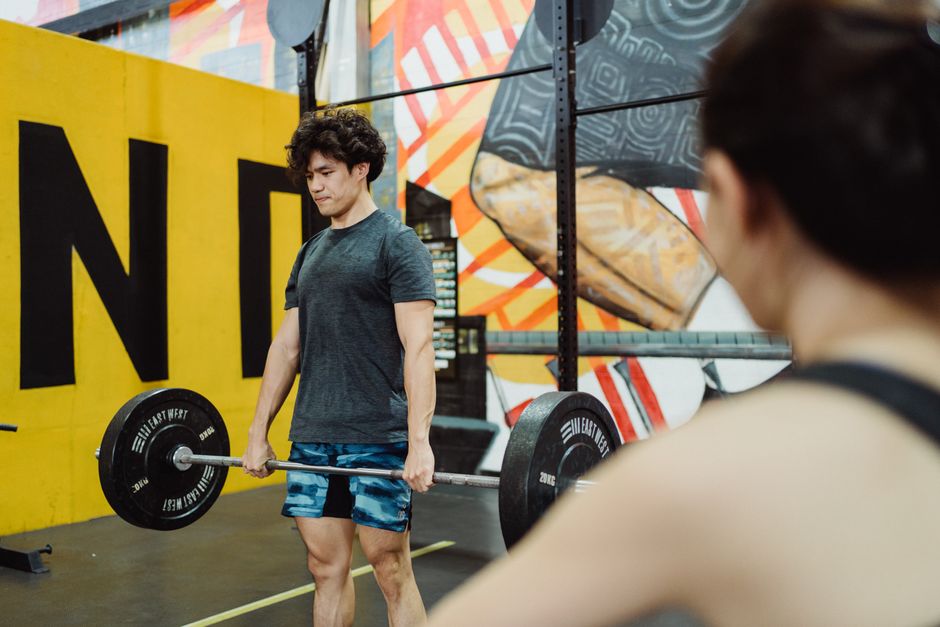
Deadlifts are one of the most debated exercises in the gym. Some people call them the king of all back exercises. Others warn that they will ruin your spine. The facts are more balanced. Yes, deadlifts work the back muscles intensely, but they are not a magic bullet for back growth or back pain relief. They are a compound movement that stresses the entire posterior chain, and how they affect your back depends entirely on your form, your load, and your individual anatomy.
What Muscles Do Deadlifts Actually Work?
Deadlifts are a full-body exercise, but the back does a specific type of work during the lift. The primary movers are the glutes and hamstrings. They extend the hips and drive the weight up from the floor.
The back muscles act as stabilizers and isometric contractors. The erector spinae muscles run along your spine and work hard to keep your torso from rounding forward under load. The latissimus dorsi, or lats, help keep the bar close to your body. The upper back muscles, including the traps and rhomboids, work to keep your shoulders stable.
This means the back is working, but it is not moving through a range of motion like it does in a row or a pull-up. Deadlifts build isometric strength in the back. Rows build dynamic strength. Both are useful, but they are not the same stimulus for muscle growth.
Do Deadlifts Build a Bigger Back?
If your goal is purely muscle size in the back, deadlifts are not the most efficient choice. Research consistently shows that muscles grow best when they are moved through a lengthened range of motion under tension. The deadlift places the back muscles under heavy tension, but it does not stretch and shorten them significantly.
Studies on muscle activation show that the lower back works hard during a deadlift. However, for the lats and upper back, exercises like pull-ups, lat pulldowns, and chest-supported rows produce higher levels of muscle activation. For overall back thickness and width, dedicated rowing and pulling movements are generally more effective.
This does not mean deadlifts are useless for back development. They build a strong, dense lower back and improve your ability to brace your entire torso. They also allow you to lift very heavy loads, which creates a unique systemic stress that can contribute to overall muscle growth when combined with other exercises.
Is the Deadlift Safe for the Lower Back?
This is where the conversation gets complicated. A deadlift performed with a neutral spine is a safe exercise for most healthy people. The spine is designed to handle compressive loads, and lifting a weight off the floor is a natural human movement pattern.
The risk comes from poor form, excessive load, or pre-existing spinal conditions. When the lower back rounds under heavy load, the intervertebral discs are placed under uneven stress. Over time, this can contribute to disc injuries. Lifting with a weight that is too heavy forces your body into compromised positions, and that is when injuries happen.
For people with a healthy back, deadlifting with proper form is generally considered safe and beneficial. It strengthens the muscles that support the spine, which can help protect against future injuries. For people with existing back problems, the answer is not so clear. Some research suggests that controlled spinal loading can be therapeutic, but this is highly individual. If you have a herniated disc, spinal stenosis, or other diagnosed condition, you need to work with a qualified professional before attempting heavy deadlifts.




Can Deadlifts Help or Hurt a Painful Back?
Many people search for “Do Deadlifts Work Back” because they have back pain and want relief. The evidence here is mixed. Some clinical approaches use progressive loading exercises like deadlifts to help people recover from back pain. The theory is that the spine adapts to load, and gradually increasing that load can build resilience.
However, no large clinical trials have confirmed that deadlifts are superior to other forms of exercise for back pain relief. Some studies suggest that general exercise, including walking, swimming, and mobility work, is just as effective as specific lifting protocols. The common thread is movement and progressive activity, not the specific exercise.
If you have acute back pain, meaning pain that came on suddenly and is severe, heavy deadlifting is not advisable. If you have chronic, low-level back pain that improves with movement, light deadlifting with perfect form might help. The honest answer is that deadlifts are neither a cure nor a guaranteed cause of back problems. They are a tool, and the outcome depends on how you use them.
How Does Deadlift Form Affect the Back?
Proper deadlift form is non-negotiable for back safety. The most important cue is to maintain a neutral spine throughout the lift. This means your back is in its natural curve, not rounded and not overextended.
Start with the bar over the middle of your feet. Grip the bar, brace your core as if you are about to be punched in the stomach, and pull the slack out of the bar. Drive through the floor with your legs, keeping the bar close to your body. Stand up tall, squeeze your glutes at the top, and lower the bar under control.
Common form errors that put the back at risk include rounding the lower back at the start of the lift, jerking the bar off the floor, and hyperextending the back at the top of the movement. All of these place unnecessary stress on the lumbar spine. If you cannot maintain a neutral spine with a given weight, that weight is too heavy for you.
What Are the Best Deadlift Variations for Back Health?
Not all deadlifts are the same. Different variations shift the stress to different muscles and change the demands on the back.
The conventional deadlift is the standard version. It requires more lower back strength because the hips start lower and the torso is more horizontal at the start. The sumo deadlift uses a wider stance and a more upright torso, which reduces the demand on the lower back and shifts more work to the legs.
The trap bar deadlift, also called the hex bar deadlift, places the lifter in the center of the load. This changes the mechanics so the torso stays more upright, significantly reducing shear forces on the lower back. Some research suggests that the trap bar deadlift is a safer option for people with back concerns while still building similar strength.
The Romanian deadlift is a hinge movement that targets the hamstrings and glutes with less load on the spine. It is often used as a teaching tool for hip hinge mechanics before progressing to full deadlifts. For beginners or people returning from injury, starting with the Romanian deadlift or the trap bar deadlift is often the smarter choice.
How Often Should You Deadlift for Back Strength?
Frequency depends on your experience level and recovery capacity. For most people, one to two deadlift sessions per week is sufficient. The deadlift is a demanding exercise that taxes the central nervous system and the lower back muscles. These muscles need time to recover and adapt.
If you are deadlifting for general strength, performing the movement once per week with a focus on progressive overload is a reasonable approach. If you are a more experienced lifter, you might deadlift twice per week, alternating between a heavy day and a lighter, technique-focused day.
Listen to your body. If your lower back feels sore and stiff for several days after deadlifting, you are likely doing too much. Chronic fatigue, decreased performance, and persistent soreness are signs that your training frequency or volume needs to be reduced.
Should You Deadlift If You Sit All Day?
Many people with desk jobs have tight hips and weak glutes. Sitting for long hours shortens the hip flexors and can inhibit glute activation. This creates a pattern where the lower back takes over during a deadlift, which is not ideal.
If you sit all day, you need to address mobility and activation before you deadlift. Hip flexor stretching, glute activation drills, and core bracing practice can help prepare your body for the movement. Without this preparation, you may find that your lower back rounds or that you feel the lift entirely in your spine rather than in your legs and glutes.
Deadlifts can be a valuable exercise for counteracting the effects of sitting, but only if your body can achieve the correct starting position. If you cannot set your back and hinge at your hips properly, fix that first before adding load.
What Does the Research Say About Deadlifts and Back Pain?
Some research suggests that exercises involving spinal loading can be beneficial for people with chronic low back pain. The concept is that gradual, progressive loading helps the spine and surrounding tissues adapt and become more tolerant to stress. Deadlifts fit this model because they place a controlled load on the spine.
However, the evidence is not strong enough to recommend deadlifts as a specific treatment for back pain. A review of studies on resistance training for back pain found that exercise in general is helpful, but no single exercise stood out as superior. The best exercise for back pain is often the one you can perform consistently with good form and without pain.
If you have a history of back pain, working with a physical therapist or qualified coach who can assess your movement patterns and prescribe appropriate loading is the safest path. Self-prescribing heavy deadlifts for back pain is risky without proper guidance.
Frequently Asked Questions
Do deadlifts work the lower back?
Yes, deadlifts strongly activate the erector spinae muscles of the lower back. These muscles work isometrically to keep your spine stable and neutral during the lift.
Are deadlifts good or bad for your back?
Deadlifts are good for a healthy back when performed with proper form and appropriate weight. They are bad when performed with a rounded spine, excessive load, or when you have an unmanaged spinal condition.
Can deadlifts relieve back pain?
Some people find that progressive loading exercises like deadlifts reduce their chronic back pain. However, the evidence is mixed, and deadlifts are not a proven treatment for all types of back pain.
What is the safest deadlift variation for the back?
The trap bar deadlift is generally considered the safest variation because it allows a more upright torso position. This reduces shear forces on the lower spine compared to a conventional deadlift.
