
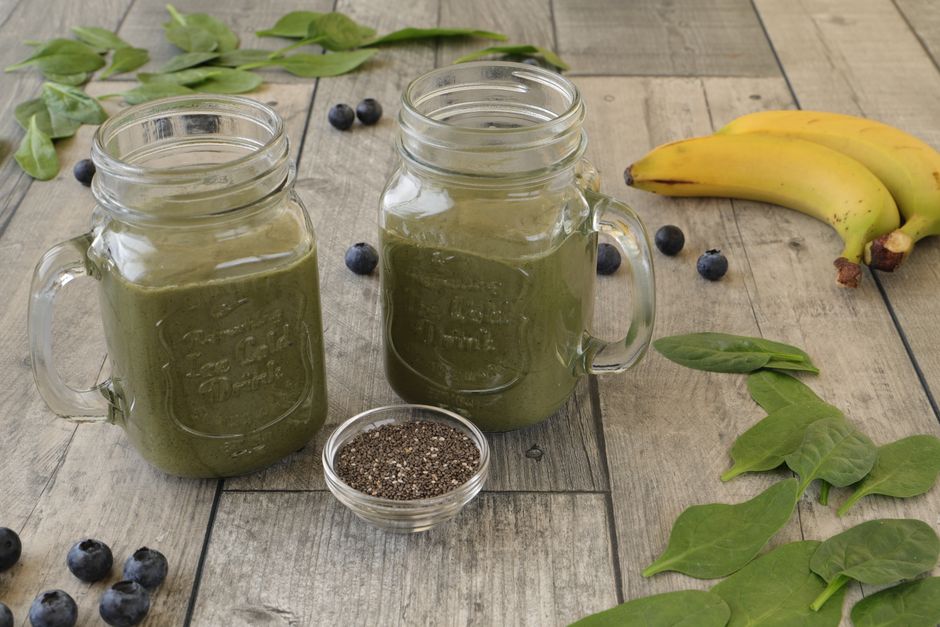
Chia seeds can support weight loss, but they are not a weight loss product. The evidence shows a modest effect at best. Chia seeds absorb water and swell, which can increase fullness and modestly reduce how much you eat at a meal. Those effects are real but small. No research shows chia seeds cause meaningful weight loss on their own.
That distinction matters. Chia seeds are a nutrient-dense food that can fit into a weight loss plan. They are not a shortcut around one. Here is what the research actually shows, what it does not, and how to think about chia seeds honestly.
Do Chia Seeds Help With Weight Loss?
The short answer is that they may help a little, mainly by increasing fullness. The longer answer is that the effect is modest and depends entirely on what else you are eating.
Chia seeds absorb several times their weight in water. When they meet liquid in your stomach, they form a gel. That gel takes up space and slows the pace at which your stomach empties. Both of those things can make you feel full sooner and stay full longer.
Some small studies have found that eating chia seeds with a meal reduces how much people eat at that meal. Other studies have found no meaningful difference. The evidence is mixed, and most of the trials are small and short. No large, long-term trial has shown that chia seeds produce significant weight loss compared with a similar diet without them.
One clarification worth making: chia seeds are often described as a “superfood” that “burns fat” or “boosts metabolism.” No study has confirmed either claim. Chia seeds do not increase metabolic rate in any meaningful way. Their possible benefit comes from appetite and food quality, not from speeding up your body’s energy use.
How Do Chia Seeds Affect Appetite and Fullness?
The fullness effect is the most studied and most plausible reason chia seeds might help with weight management. It rests on well-understood digestive physiology.
Chia seeds are about one-third fiber by weight, and most of that fiber is soluble. Soluble fiber absorbs water and forms a gel. This slows digestion and can blunt the rise in blood sugar after a meal. Slower digestion and steadier blood sugar are both linked to feeling satisfied for longer.
There is also a mechanical effect. The gel adds volume to stomach contents. Stretch receptors in the stomach wall signal fullness to the brain. More volume means more of that signal.
Here is where honesty is needed. Feeling fuller at one meal does not automatically translate into eating fewer calories over a whole day. People often compensate by eating more later. The research on chia seeds and total daily calorie intake is thin. Some studies suggest a benefit; others show none. The effect, when it appears, is small.
Fiber also feeds gut bacteria, and some research links gut bacteria to appetite signaling. That area is still emerging. It is not yet established enough to make specific claims about chia seeds and appetite through the gut.
What Does the Research Actually Show?
Human trials on chia seeds and body weight are limited. The studies that exist are mostly small, short, and often funded or conducted with commercial interest in chia products. That does not make them wrong, but it means the findings should be read with appropriate caution.
Across these studies, a few patterns appear:
- Chia seeds eaten with a meal can increase reported fullness in some trials.
- Effects on how much people eat at that meal are inconsistent.
- Studies measuring weight change over weeks to months have generally not found significant differences between chia and comparison groups.
- Chia seeds do not appear to cause weight gain, and they are generally well tolerated in the amounts studied.
What the research does not show is equally important. There is no evidence that chia seeds cause fat loss directly. There is no evidence they work better than other high-fiber foods. And there is no large trial confirming that adding chia seeds to your diet leads to meaningful weight loss over a year or more.
A reasonable reading of the evidence: chia seeds are a useful, fiber-rich food that may modestly support appetite control. They are not a weight loss intervention in themselves.

How Do Chia Seeds Compare With Other Foods?
Chia seeds are nutritionally strong, but they are not uniquely effective for weight loss. Comparing them with similar foods helps put their role in perspective.
| Food (per 1 oz / 28 g) | Calories | Fiber | Protein | Notes |
|---|---|---|---|---|
| Chia seeds | ~138 | ~10 g | ~5 g | High fiber, forms gel, good omega-3 (ALA) source |
| Ground flaxseed | ~150 | ~8 g | ~5 g | Similar fiber and omega-3 profile; must be ground to absorb nutrients |
| Rolled oats (dry) | ~110 | ~3 g | ~4 g | Lower fiber; soluble beta-glucan linked to fullness |
| Almonds | ~164 | ~3.5 g | ~6 g | Higher fat; filling but calorie-dense |
Nutritional values are from USDA data. The takeaway is that chia seeds are one of several high-fiber foods that can support fullness. Flaxseed is a close nutritional relative. Oats and other whole grains offer similar fiber benefits with fewer calories per serving. None of these foods is a weight loss tool on its own.
One practical point: chia seeds are calorie-dense. A single ounce delivers about 138 calories. Adding a large scoop to an already adequate diet adds calories, not a deficit. For weight loss, chia seeds only help if they replace something else or help you eat less overall.
How Should You Use Chia Seeds for Weight Management?
There is no established clinical guideline for using chia seeds for weight loss. No official body recommends a specific amount for this purpose. What follows is general guidance on fitting them into a balanced diet, not a prescription.
The most sensible approach is to use chia seeds as a replacement for less filling foods, not as an addition on top of them. A few practical ways:
- Stir a spoonful into yogurt or oatmeal to increase fiber and fullness at breakfast.
- Use chia gel (seeds soaked in water) as a thickener in smoothies or soups.
- Sprinkle them on salads or into sauces instead of higher-calorie toppings.
- Let them soak before eating. Dry chia seeds absorb liquid and can be uncomfortable or even risky if eaten in large dry handfuls, because they swell after swallowing.
Amounts matter. A typical serving is one to two tablespoons, roughly 12 to 24 grams, which provides about 4 to 8 grams of fiber. Increasing fiber quickly can cause bloating and gas. Ramp up gradually and drink enough water.
People taking blood pressure medication, blood thinners, or diabetes medication should talk to a clinician before adding large amounts of chia, because high-fiber foods can affect how some medications are absorbed and can interact with blood sugar and blood pressure management. Chia seeds are also a choking risk for people with swallowing difficulties.
What Else Matters More Than Chia Seeds?
Chia seeds are a small piece of a larger picture. The factors that actually drive weight loss are well established, and they matter far more than any single food.
Weight loss comes down to a sustained calorie deficit, which is created by eating less, moving more, or both. The foods that help people maintain that deficit are the ones that are filling relative to their calories: vegetables, fruits, legumes, whole grains, lean proteins, and high-fiber foods in general. Chia seeds fit into that group. They are not special within it.
Sleep, stress, and physical activity all influence appetite and energy balance. So does the overall quality of your diet. A person who adds chia seeds to a diet that is otherwise high in ultra-processed food and low in vegetables is unlikely to see much change.
There is also a behavioral point that gets overlooked. Foods that require effort to eat, like chia pudding or soaked seeds, tend to slow eating down. Slower eating is linked to eating less. That may be part of why chia seeds show up in some studies as helpful. It is not unique to chia. Any food that slows you down and fills you up can do the same thing.
The realistic expectation: chia seeds may modestly support appetite control as part of a balanced, calorie-appropriate diet. They will not produce weight loss on their own, and no evidence suggests they outperform other high-fiber foods.
Frequently Asked Questions
Do chia seeds actually help you lose weight?
They may help modestly by increasing fullness, but no large trial shows they cause meaningful weight loss on their own. Their effect depends on the rest of your diet.
How much chia should I eat to feel full?
A typical serving is one to two tablespoons, about 12 to 24 grams, which provides roughly 4 to 8 grams of fiber. No official guideline sets a specific amount for weight loss.
Can chia seeds make you gain weight?
They can contribute to weight gain if they add calories on top of what you already eat, since one ounce has about 138 calories. Used as a replacement for less filling foods, they are unlikely to cause weight gain.
Are chia seeds better than flaxseed for weight loss?
No evidence shows either is better for weight loss. Both are high-fiber foods with similar nutritional profiles, and neither produces significant weight loss on its own.
