
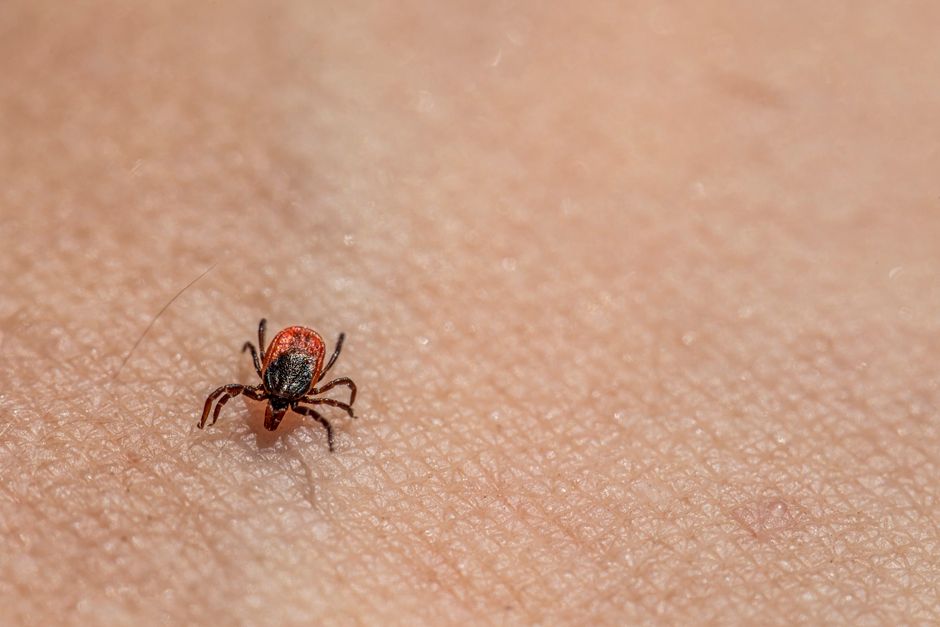
If you are finding small, itchy welts on your skin and also noticing tiny, striped bugs in your home, you might wonder if carpet beetles are the cause. The short answer is no — carpet beetles do not bite. They lack the mouthparts needed to bite or pierce human skin. However, the confusion is understandable, because the skin reactions some people experience can look very similar to insect bites.
Do Carpet Beetles Bite Humans?
Carpet beetles do not bite humans. Their mouthparts are designed for chewing plant fibers and animal products like wool, silk, and feathers — not for biting skin. They have no mechanism to draw blood, and they do not feed on people.
Adult carpet beetles feed on pollen and nectar outdoors. The larvae are the ones found indoors, where they feed on natural fibers and organic debris. Neither stage has any interest in biting a human. This is an established fact in entomology, not a debated point.
If you have marks on your skin, carpet beetles are not directly causing them. The real issue is usually an allergic reaction, which we will cover next.
What Causes the Rash That Looks Like Bites?
The itchy red welts that people attribute to carpet beetle bites are typically an allergic reaction. The reaction is triggered by tiny hairs on carpet beetle larvae. These hairs are called setae, and they are covered in microscopic barbs.
When these hairs come into contact with skin, they can cause a condition called carpet beetle dermatitis. The skin reacts with redness, itching, and small bumps. In some cases, the reaction can be delayed by 12 to 24 hours after contact, which makes it harder to link to the beetles.
Some people are highly sensitive to these hairs, while others show no reaction at all. This variability explains why one person in a household may have a rash while others do not. The reaction is not a bite — it is a physical irritation and an immune response to the foreign protein in the hairs.
It is also possible to inhale these hairs, which can cause respiratory symptoms in sensitive individuals, similar to mild allergy symptoms. This is less common than the skin reaction but has been reported in medical literature.
How Do Carpet Beetle Rashes Compare to Real Bites?
Real insect bites — from bed bugs, fleas, or mosquitoes — involve a puncture wound. The insect inserts its mouthparts into the skin and often injects saliva. Carpet beetle reactions do not involve any puncture. The skin is not broken by the beetle itself.
The appearance can be similar, though. Both can produce red, itchy bumps that may be clustered or scattered. There are a few clues that point toward carpet beetles rather than biting insects:
- The rash often appears on areas of skin that were exposed while sleeping, but not always.
- There is no central puncture mark, which is often visible with bed bug bites.
- The rash may appear in a straight line or a patch where skin touched contaminated fabric.
- You may find shed larval skins or fecal pellets in closets, under furniture, or along baseboards.
Bed bugs are the most common misdiagnosis. Bed bug bites usually appear in a line or cluster, often on the arms, neck, or face. Carpet beetle rashes can appear anywhere that touched infested material. If you cannot find signs of bed bugs — like blood spots on sheets or live bugs in the mattress seams — carpet beetles are worth investigating.





How to Confirm You Have Carpet Beetles
Before you treat a rash, you need to confirm the source. Carpet beetles are small, oval insects. Adults measure about 1/16 to 1/8 of an inch long. They are often black, brown, or patterned with white, yellow, and orange scales. They can look like small ladybugs at a glance.
The larvae are the more telling sign. They are elongated, covered in bristly hairs, and often brown with lighter stripes. They are sometimes called “woolly bears” because of their fuzzy appearance. You will most likely find them in dark, undisturbed areas:
- Under rugs and along carpet edges
- In closets, especially around wool clothing or stored fabrics
- Inside upholstered furniture
- Along baseboards and in heating vents
- In stored food products like dry pet food or birdseed
Look for shed skins, which look like hollow, brown husks. You may also find small, speck-like fecal pellets. Adult beetles are often found near windows, as they are attracted to light and may enter through open windows or doors.
If you are unsure whether you have carpet beetles or bed bugs, inspect your mattress and box spring. Bed bugs leave dark fecal spots along seams and shed their skins near the sleeping area. Carpet beetles are rarely found on the bed itself unless the bedding contains natural fibers like wool.
How to Treat the Skin Reaction
The rash from carpet beetle hairs is not dangerous, but it can be intensely itchy. Treatment focuses on reducing the irritation and calming the skin.
Washing the affected area with mild soap and cool water can remove any remaining hairs. Applying a cool compress can reduce itching and swelling. Over-the-counter hydrocortisone cream can help with inflammation. Oral antihistamines may reduce the itch, especially at night.
Most reactions resolve within one to two weeks once you remove the source of exposure. If the rash is severe, widespread, or shows signs of infection — like oozing, increased pain, or red streaks — see a healthcare provider. They may prescribe a stronger topical steroid or an oral medication.
Do not scratch the rash. Scratching can break the skin and lead to a bacterial infection. Keep fingernails short and consider covering the area with a loose bandage if you tend to scratch while sleeping.
How to Get Rid of Carpet Beetles
Getting rid of carpet beetles requires removing their food source and treating the infested areas. They feed on animal-based materials: wool, silk, fur, feathers, and leather. They also eat lint, dead insects, and pet hair that accumulate in corners and under furniture.
Start with a thorough vacuuming. Vacuum carpets, rugs, upholstered furniture, and along baseboards. Pay special attention to edges of carpets and areas under furniture where debris collects. After vacuuming, dispose of the vacuum bag or empty the canister outside your home immediately.
Wash all washable fabrics in hot water. The water temperature should be at least 120°F to kill larvae and eggs. Dry cleaning also kills all life stages of carpet beetles. For items that cannot be washed, freezing can work. Place the items in sealed plastic bags and freeze for at least two weeks at 0°F or below.
Store susceptible items properly. Keep wool clothing, blankets, and other natural fiber items in sealed plastic containers or garment bags. Add cedar blocks or lavender sachets if you like, but know that these are not reliable control methods — they may deter beetles in small areas, but they will not eliminate an infestation.
For serious infestations, an insecticide may be necessary. Products containing pyrethrins or permethrin are commonly used for carpet beetle control. Always follow the label instructions exactly. If the infestation is widespread, a professional pest control service may be the safest option.
Prevention is the best long-term strategy. Regular vacuuming, especially under furniture and along baseboards, removes the lint and hair that carpet beetles need. Keep closets clean and avoid storing natural fiber clothing for long periods without protection. Inspect secondhand clothing, rugs, and furniture before bringing them into your home.
When to See a Doctor
Most carpet beetle skin reactions are mild and resolve on their own. You should see a doctor if the rash is severe, covers a large area of your body, or does not improve with over-the-counter treatments. You should also seek medical attention if you develop signs of infection, including increased pain, swelling, warmth, or discharge from the rash.
If you have breathing problems after exposure to carpet beetles — such as wheezing, coughing, or shortness of breath — see a doctor, especially if you have asthma or allergies. This is uncommon, but it can happen in sensitive individuals who inhale the larval hairs.
Frequently Asked Questions
Can carpet beetles live in your bed?
Carpet beetles can be found in beds, but only if the bedding contains natural fibers like wool or if lint and hair have accumulated in the mattress seams. They are not drawn to the bed the way bed bugs are, and they do not bite you while you sleep.
What does a carpet beetle rash look like?
The rash looks like small, red, itchy bumps that may appear in clusters or scattered patches. It is caused by an allergic reaction to the tiny hairs on carpet beetle larvae, not by a bite.
How long does a carpet beetle rash last?
Most reactions last one to two weeks once you remove the source of exposure. If you keep coming into contact with infested fabrics, the rash can persist or keep recurring.
Are carpet beetles harmful to humans?
Carpet beetles are not harmful in the sense of transmitting disease, and they cannot bite you. They can cause allergic skin reactions and, in rare cases, respiratory symptoms in sensitive people. Their main damage is to fabrics and stored natural materials.
