
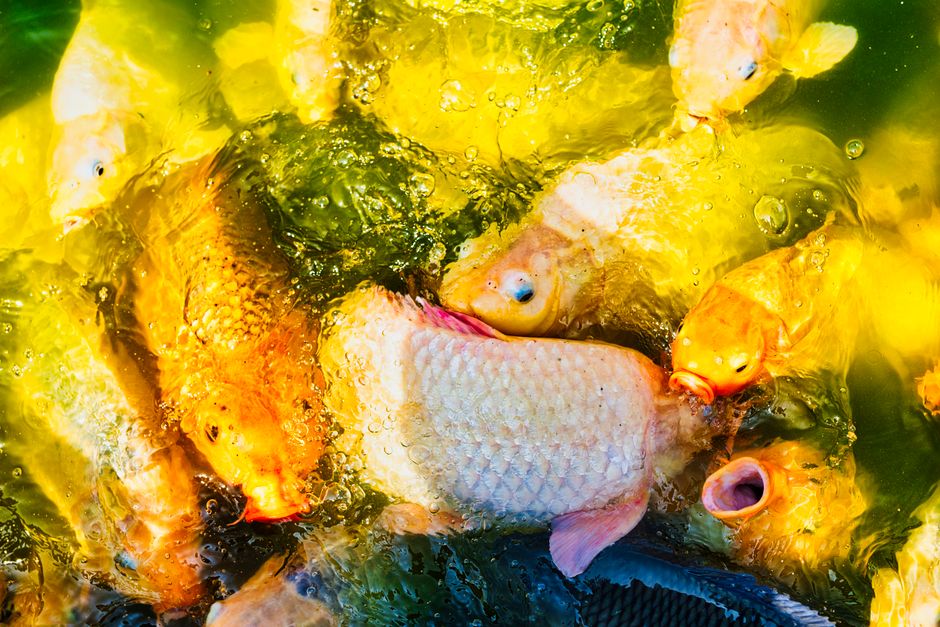
Yes, carp eat algae, but it is not their preferred or primary food source. Common carp are omnivorous bottom-feeders that will consume algae when it is abundant, but their diet consists mainly of insects, crustaceans, and plant matter found in the sediment. While they do eat some algae, their feeding habits often stir up more problems than they solve, which is a key part of their environmental impact.
What Do Carp Actually Eat?
Carp are opportunistic feeders. This means they eat whatever is easiest to find and catch. Their diet changes with the seasons, water temperature, and what is available in their specific environment.
Their primary food sources include aquatic insects, insect larvae, worms, small crustaceans, and snails. They also consume a significant amount of plant material, including decaying vegetation and seeds. Algae is part of their diet, but it is rarely the main course.
In many cases, algae is consumed incidentally. When carp suck up mouthfuls of mud and debris from the bottom to find insects, they also swallow the algae and detritus mixed in with it. This is a crucial distinction when considering their role in a pond or lake ecosystem.
Do Carp Eat Algae A Look At Their Diet And Impact
The relationship between carp and algae is complex. While carp do consume algae, their presence often leads to an increase in algae growth, not a decrease. This is one of the most important facts to understand about carp in freshwater systems.
The primary reason for this is their feeding behavior. Carp are bottom-feeders that root around in the sediment for food. This physical disturbance is called bioturbation. As they dig, they uproot aquatic plants and stir up nutrients like phosphorus and nitrogen that are trapped in the mud.
These nutrients then become suspended in the water column. Algae thrives on these nutrients. The result is that carp effectively fertilize the water, creating the perfect conditions for algae blooms, especially blue-green algae.
Furthermore, by uprooting native aquatic plants, carp remove the natural competitors of algae. Healthy plant life uses up nutrients and shades the water, which limits algae growth. When carp destroy these plants, the water clears of vegetation but becomes cloudy with algae instead. The net effect is that carp can turn a clear, plant-filled pond into a murky, algae-dominated one.
Why Do People Think Carp Are a Solution for Algae?
There is a common misconception that adding carp to a pond will clear up an algae problem. This idea likely comes from confusion between different fish species.
The fish people are often thinking of is the grass carp (also known as the white amur). Grass carp are a different species that genuinely do eat large amounts of aquatic plants. However, they specifically target higher plants, not the microscopic or filamentous algae that cause most pond problems. They are not an effective solution for algae control either.
Another fish, the silver carp, feeds on phytoplankton, which is microscopic algae. But silver carp are filter feeders and are not what most people mean when they say “carp” in a pond context. The common carp, which is the most widespread species, does not filter feed and will not clean up an algae bloom.
Adding common carp to a pond with an algae problem will almost certainly make the situation worse by stirring up nutrients and destroying competing plants.
The Environmental Impact of Carp Feeding Habits
The impact of carp on water quality is significant enough that they are considered a highly invasive species in many regions, including large parts of the United States and Australia. Their feeding habits cause a cascade of ecological changes.
In clear terms, their impact includes:
- Increased water turbidity: Their constant digging keeps sediment suspended in the water, making it murky and reducing light penetration.
- Nutrient pollution: They release phosphorus and nitrogen from the sediment back into the water, which fuels excessive algae growth.
- Loss of native vegetation: They uproot plants directly and the murky water prevents new plants from growing.
- Harm to native fish: The loss of plant life removes habitat and spawning grounds for native fish species.
These effects are well documented in scientific literature. The presence of carp is consistently linked to poorer water quality and reduced biodiversity. Their ability to consume algae does not offset the damage they cause to the overall ecosystem health.
What Fish Are Effective at Eating Algae?
If carp are not the solution, what is? The honest answer is that no single fish will completely solve an algae problem. Algae control requires addressing the root cause, which is usually an excess of nutrients in the water.
However, some fish and aquatic animals do graze on algae more effectively than carp. These are often used as part of a pond management strategy, not as a standalone cure.
Some options include:
- Nerite snails: These are excellent algae eaters, but they are best suited for aquariums, not large outdoor ponds.
- Amano shrimp: Similar to snails, these are effective algae grazers but are not practical for outdoor ponds.
- Plecostomus (Plecos): These catfish eat algae, but they require warm water and can grow very large, making them unsuitable for most outdoor ponds in colder climates.
- Fathead minnows: These fish eat some algae and are hardy, but they are not aggressive algae consumers.
For larger ponds and lakes, the most effective approach is not adding more fish. It is reducing nutrient input. This means limiting fertilizer runoff from lawns, managing animal waste near the water, and maintaining a healthy buffer of native plants around the shoreline. These methods address the source of the algae problem, while adding fish only manages the symptom, if it manages it at all.
Best Ways to Manage Algae Without Carp
Managing algae successfully starts with prevention. Once an algae bloom occurs, it is much harder to control. The most reliable strategies focus on the physical and chemical conditions of the water.
The first step is reducing nutrients. Algae cannot grow without phosphorus and nitrogen. Using phosphorus-free fertilizers on your lawn, preventing soil erosion into the pond, and keeping livestock waste away from the water are all critical steps. These actions limit the food supply for algae.
Another effective method is aeration. Installing a pond aerator or fountain increases oxygen levels and promotes water circulation. This helps beneficial bacteria break down organic matter at the bottom, which reduces the nutrient load available for algae. Aeration also prevents the stagnant conditions that favor blue-green algae.
Introducing beneficial bacteria is a common biological treatment. These bacteria compete with algae for nutrients. Some studies suggest they can be effective, but results vary widely depending on the pond’s condition and the specific product used. They are not a guaranteed solution.
For filamentous algae, which forms mats on the surface, physical removal is an option. Raking it out removes the algae and the nutrients stored inside it. This is labor-intensive but immediately effective for small ponds.
In severe cases, algaecides can be used. Copper-based algaecides are common, but they should be a last resort. They kill algae quickly, but the dead algae decompose and release nutrients back into the water, which can trigger another bloom shortly after. They also carry risks for other aquatic life if not dosed correctly.
Frequently Asked Questions
Will carp clean up a dirty pond?
No, common carp will not clean up a dirty pond. Their bottom-feeding behavior stirs up sediment and releases nutrients, which typically makes the water murkier and increases algae growth.
What is the difference between common carp and grass carp for algae control?
Common carp are bottom-feeders that eat insects and plants, while grass carp are a separate species that primarily eat aquatic plants. Neither is effective at controlling microscopic or filamentous algae, and grass carp can destroy beneficial vegetation.
Why does my pond have more algae after adding carp?
Carp disturb the sediment and release trapped phosphorus and nitrogen into the water. This nutrient release acts as a fertilizer for algae, causing blooms to increase even though the carp eat some algae incidentally.
What is the most effective way to reduce algae in a pond?
Reducing nutrient input is the most effective long-term strategy. This involves limiting fertilizer runoff, managing animal waste, and maintaining native shoreline plants to absorb excess nutrients before they reach the water.
