
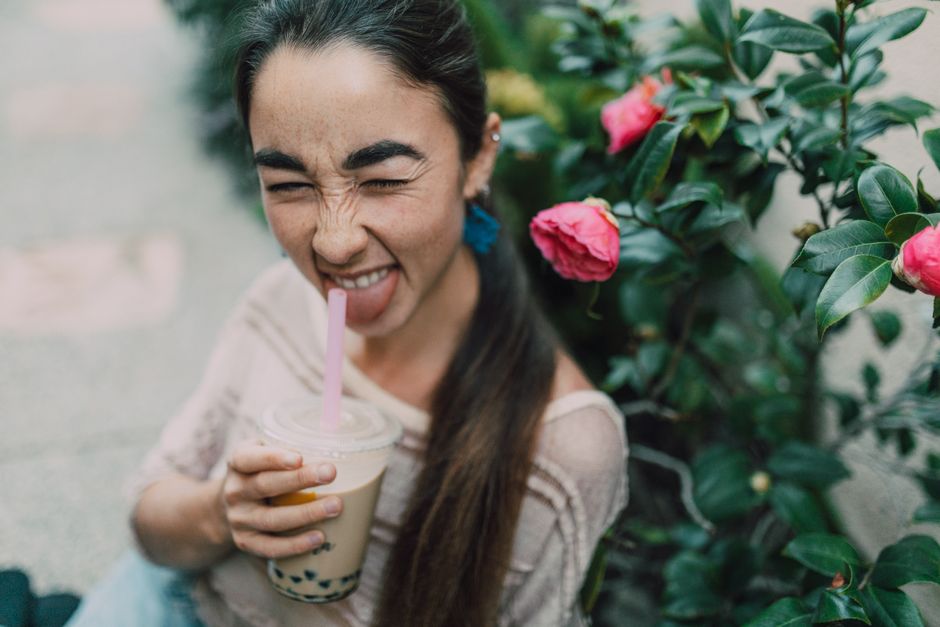
Boba tea, also called bubble tea or pearl milk tea, often contains caffeine. The amount depends almost entirely on the base tea used to make it. A standard 16-ounce serving made with black tea typically contains 30 to 50 milligrams of caffeine. That is roughly one-third to one-half the caffeine in a similar-sized cup of brewed coffee. If the drink is made with green tea, the caffeine is usually lower. If it is made with no tea at all, it contains zero caffeine.
Where Does the Caffeine in Boba Tea Come From?
The caffeine in boba tea comes from the tea itself. Most boba drinks start with a base of black tea, green tea, oolong tea, or jasmine tea. These teas come from the leaves of the Camellia sinensis plant, which naturally contains caffeine.
Black tea has the highest caffeine content of these common bases. Green tea has less. Oolong sits somewhere in between. The exact amount varies by brand, brewing time, and how much tea concentrate the shop uses. Some shops brew their tea strong because the milk and ice dilute the flavor.
The tapioca pearls themselves contain no caffeine. The milk, fruit syrups, and sweeteners also contain none. So the tea base is the single source of caffeine in the drink.
How Much Caffeine Is in a Typical Boba Tea?
A typical 16-ounce boba tea made with black tea contains about 30 to 50 milligrams of caffeine. This is a reasonable estimate based on how tea shops brew their products, but the range can be wide. Some shops use concentrated tea that pushes the caffeine higher. Others use lighter brews that keep it lower.
For comparison, an 8-ounce cup of brewed coffee contains about 80 to 100 milligrams of caffeine. A 12-ounce can of cola contains about 30 to 40 milligrams. A 16-ounce boba tea with black tea is therefore similar to a can of soda, not a cup of coffee.
Green tea boba drinks usually contain less caffeine, often in the range of 15 to 30 milligrams per 16 ounces. Herbal or fruit-based boba drinks made without true tea leaves contain no caffeine at all.
Do All Boba Teas Contain Caffeine?
No. Not all boba teas contain caffeine. The caffeine is present only when the drink is made with real tea from the Camellia sinensis plant. Drinks made with herbal infusions, fruit purees, or milk bases without tea contain zero caffeine.
Many shops offer caffeine-free options. Popular choices include taro milk tea, which is often made from taro root powder rather than tea, and fruit-based slushies with boba. However, some shops add a small amount of black or green tea to these drinks for flavor. The only way to know for certain is to ask the shop directly whether the drink contains tea.
Some shops also use decaffeinated tea. This is less common, but it exists. If you are sensitive to caffeine, ask the barista specifically whether the base contains regular tea, decaf tea, or no tea at all.

How Boba Tea Caffeine Compares to Other Drinks
Understanding where boba tea sits on the caffeine spectrum helps you make informed choices. The table below shows typical caffeine levels for common drinks.
| Drink | Serving Size | Typical Caffeine |
|---|---|---|
| Brewed coffee | 8 oz | 80–100 mg |
| Black tea boba | 16 oz | 30–50 mg |
| Green tea boba | 16 oz | 15–30 mg |
| Cola | 12 oz | 30–40 mg |
| Energy drink | 8 oz | 70–100 mg |
| Herbal boba (no tea) | 16 oz | 0 mg |
These numbers are typical ranges, not exact measurements. Commercial products vary. A heavily brewed boba tea from one shop could have more caffeine than a lightly brewed one from another.
Does Caffeine in Boba Tea Affect Sleep or Anxiety?
Caffeine is a stimulant. It blocks adenosine receptors in the brain, which delays the feeling of sleepiness. For most healthy adults, moderate caffeine intake is considered safe. The U.S. Food and Drug Administration cites 400 milligrams per day as a level not generally associated with dangerous effects for most adults.
That means most people could drink several boba teas a day and stay under this threshold. But individual sensitivity varies. Some people feel jittery or anxious after a single serving. Others metabolize caffeine quickly and feel nothing.
If you drink boba tea in the late afternoon or evening, the caffeine can interfere with sleep. Caffeine has a half-life of roughly 4 to 6 hours in most adults. That means half the caffeine is still in your system 4 to 6 hours after you finish the drink. A 40-milligram boba tea consumed at 4 p.m. could still leave about 10 to 20 milligrams in your system around 10 p.m.
Are There Other Stimulants in Boba Tea?
Tea also contains a compound called L-theanine. This amino acid is found naturally in tea leaves. Some research suggests L-theanine may promote relaxation without drowsiness. When combined with caffeine, it may produce a calmer, more focused alertness compared to coffee alone.
The evidence for this interaction comes from small studies and is not fully settled. Some research indicates the combination improves attention and reaction time. Other studies show minimal difference. What is clear is that tea contains both caffeine and L-theanine, and the combined effect is not identical to pure caffeine.
This matters because a boba tea with black tea may feel different from a soda with the same caffeine content. The L-theanine may blunt some of the jittery feeling caffeine can cause. But this is not a guarantee. Individual responses vary.
How to Order a Lower-Caffeine or Caffeine-Free Boba Tea
If you want to reduce your caffeine intake, you have several options. The most reliable is to order a drink made without tea. Ask for a fruit-based drink, a taro drink, or a milk-based drink with no tea added.
If you want real tea flavor but less caffeine, choose green tea over black tea. Green tea naturally contains less caffeine. You can also ask the shop to make your drink with a lighter tea brew. Some shops accommodate this request by steeping the tea for less time or using less tea concentrate.
Another option is to ask whether the shop offers decaffeinated tea. Not all shops do. If they do, the caffeine content drops significantly, though decaf tea still contains trace amounts.
Be aware that “milk tea” does not mean caffeine-free. Milk tea is a term for tea mixed with milk. It almost always contains caffeine because the base is tea. The word “milk” refers to the dairy or non-dairy additive, not the absence of tea.
Do Boba Teas Have Caffeine: The Bottom Line
Most boba teas contain caffeine because most are made with black or green tea. A 16-ounce black tea boba typically has 30 to 50 milligrams of caffeine. Green tea versions have less. Tea-free fruit or taro drinks have none.
The caffeine content is moderate compared to coffee. For most people, it is not a concern. For those sensitive to caffeine or avoiding it entirely, the key is to ask what is in the drink. The word “boba” tells you about the tapioca pearls. It tells you nothing about the tea.
Frequently Asked Questions
Does boba tea have more caffeine than coffee?
No. A 16-ounce boba tea with black tea has about 30 to 50 milligrams of caffeine, while an 8-ounce cup of coffee has about 80 to 100 milligrams.
Can I get boba tea without caffeine?
Yes. Drinks made without real tea leaves, such as fruit slushies or taro milk drinks with no tea base, contain zero caffeine. Ask the shop whether their base contains tea.
Is boba tea safe to drink every day?
For most healthy adults, the caffeine in one boba tea per day is well within safe limits. The larger concern is the sugar content, which can be high depending on the drink and sweetener level.
Does green tea boba have less caffeine than black tea boba?
Yes. Green tea naturally contains less caffeine than black tea. A green tea boba drink typically has 15 to 30 milligrams per 16 ounces, compared to 30 to 50 milligrams for black tea boba.
