
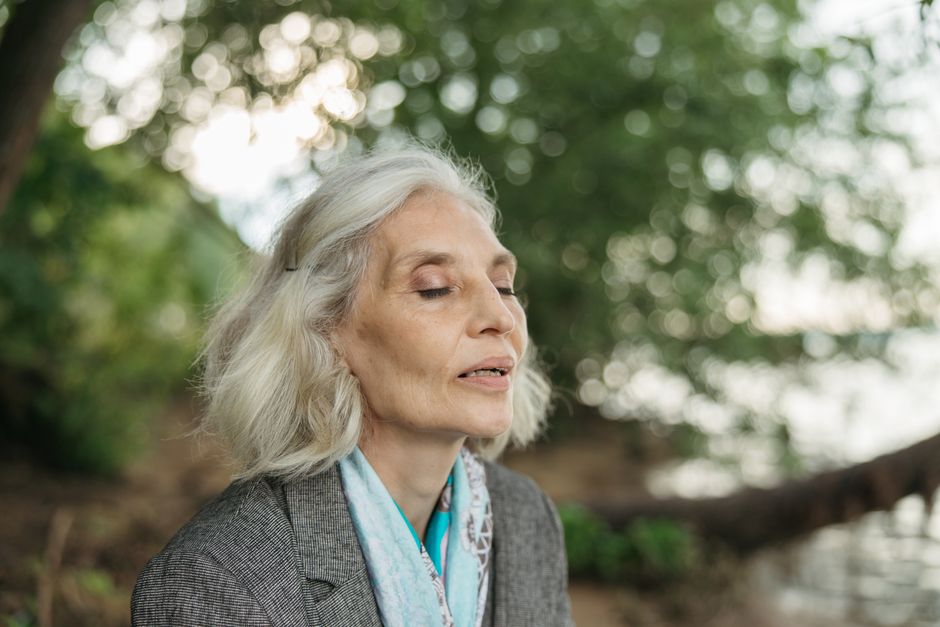
No, blondes do not go grey faster than people with other hair colors. Hair goes grey on the same biological schedule regardless of your natural color. What changes is how quickly you can see it. Grey hair against blonde hair is a low-contrast mix. The same amount of grey shows up far more obviously against dark brown or black hair.
That single fact explains most of the confusion behind this question. People with dark hair often notice their first greys earlier, not because they greyed earlier, but because the contrast made those hairs easy to spot. A blonde can have a scattering of grey strands for years and simply read it as lighter or duller hair.
Why Does Hair Color Change How Visible Grey Hair Is?
Visibility comes down to contrast between your natural pigment and the non-pigmented hair. Grey and white hair has lost its melanin, so it appears lighter and less saturated. Against dark hair, that difference is stark. Against blonde hair, it is subtle.
Blonde hair already contains less melanin than brown or black hair. The jump from blonde to grey is a smaller visual step than the jump from near-black to grey. This is why a person with dark hair may feel like they “went grey overnight” while a blonde seems to hold their color longer.
There is a second effect at play. Blonde hair tends to look less dense and slightly translucent. Grey strands mixed into blonde hair can blend into the overall lighter look. In dark hair, the same strands stand out as distinct bright lines.
None of this reflects a difference in the underlying process. The follicle is doing the same thing in both cases. You are only seeing it differently.
What Actually Causes Hair to Go Grey?
Grey hair results from a gradual loss of melanin-producing cells in the hair follicle. These cells are called melanocytes. They inject pigment into the hair shaft as it grows. When they slow down or stop, the hair emerges with less color, then none.
This is a normal part of aging. It is not a sign of poor health in most people. The timing is largely set by genetics. If your parents greyed early, you are more likely to as well.
Several factors influence when and how fast this happens:
- Genetics — the strongest single influence on timing
- Age — melanocyte activity declines over decades
- Ethnic background — average onset differs by population
- Stress — some evidence links severe stress to faster greying, though the research is still limited
- Certain medical conditions and nutritional deficiencies — can contribute in some cases
What does not appear on that list is natural hair color. Being blonde is not a cause of earlier greying.
Do Blondes Go Grey Faster Than Other Hair Colors?
No. The rate at which melanocytes decline does not depend on the color of the hair they produce. A blonde and a brunette of the same age and similar genetics will lose pigment on roughly the same timeline.
The misunderstanding comes from mixing up two different things: when greying starts and when it becomes noticeable. These are not the same. Research on the topic has generally looked at the age people first notice grey hair, which is shaped heavily by contrast. That is a measure of visibility, not of biology.
One clarification worth holding onto: blonde hair does not “turn grey” in a sudden switch. Individual strands lose pigment over time. Because blonde hair is already light, the transition can look gradual and blended. Dark hair shows the change strand by strand, which can feel more abrupt even though the process is identical.





At What Age Does Hair Usually Start to Go Grey?
Most people see their first grey hairs in their 30s or 40s, though the range is wide. Some notice them in their 20s. Others keep their color well into their 50s. Genetics drives most of this variation.
Average onset does differ by ethnic background. People of white and Asian descent tend to grey earlier on average than people of African descent. These are population averages, not predictions for any one person.
Men and women follow broadly similar patterns, though the timing of onset can differ slightly. The key point for this question is that none of these averages shift based on whether the original hair was blonde, brown, red, or black.
If greying begins unusually early, in your teens or early 20s, it is worth mentioning to a doctor. Early greying is usually just genetic. In some cases it can be associated with certain health conditions or nutritional problems, so a medical opinion can rule those out.
Does Blonde Hair Hide Grey Better Than Dark Hair?
Yes, and this is the practical heart of the matter. Blonde hair blends grey and white strands more effectively because the contrast is low. Dark hair does the opposite. It highlights every non-pigmented strand.
This has real consequences for how people experience greying. A brunette may start coloring earlier because the greys bother them visually. A blonde may go years without noticing. Neither is greying faster. One is simply seeing it more.
There is a related point about texture. Grey hair often feels coarser and drier than pigmented hair. On blonde hair, this texture change can be mistaken for damage or dryness rather than greying. On dark hair, the color change usually announces itself first.
Can You Slow or Prevent Greying?
For most people, no proven method slows natural greying. The process is driven by genetics and age, and there is no established treatment that reverses it. Be cautious of products that claim otherwise. No clinical evidence currently confirms that any supplement or topical product restores pigment in normally greying hair.
Some cases are different. If greying is linked to a specific nutritional deficiency or a treatable medical condition, correcting that issue may help. This is uncommon and should be assessed by a doctor rather than guessed at. Taking supplements on your own to “fix” greying is not supported by good evidence and can carry risks.
What you can do is manage the appearance. Hair dye, color-depositing products, and toning shampoos can blend or cover grey. Many people choose to keep their natural color instead. That is a personal decision, not a health one.
There is also the matter of hair health. Grey hair tends to be drier, so gentle cleansing and regular conditioning can make it easier to manage. This improves how the hair looks and feels. It does not change the pigment.
Does Stress Really Cause Grey Hair?
Some research suggests a link between severe stress and faster greying, but the evidence is not strong enough to call it a major cause. The studies are relatively small and the mechanism is not fully settled. Stress is not in the same category as genetics and age, which are clearly the dominant factors.
It is reasonable to say that extreme stress may contribute in some people. It is not accurate to say stress is a primary driver of greying for most people. Ordinary day-to-day stress has not been shown to meaningfully change hair color.
This is one of those areas where headlines run ahead of the science. A single study showing a stress effect does not mean stress is the reason your hair is going grey. Genetics remains the best explanation for most people.
Frequently Asked Questions
Do blondes go grey faster than brunettes?
No. The rate of greying is set by genetics and age, not by your natural hair color. Blondes may simply notice grey later because it blends in more.
Why does grey hair show up more on dark hair?
Because the contrast is higher. Grey and white strands stand out sharply against dark hair but blend into lighter blonde hair.
At what age do blondes usually go grey?
Blondes grey on roughly the same schedule as everyone else, with most people noticing first greys in their 30s or 40s. Genetics is the biggest factor in timing.
Can grey hair turn back to blonde or brown?
Naturally grey hair does not regain its pigment in most people. No established treatment reverses normal greying, though some cases linked to a deficiency may improve if the underlying issue is corrected.
