
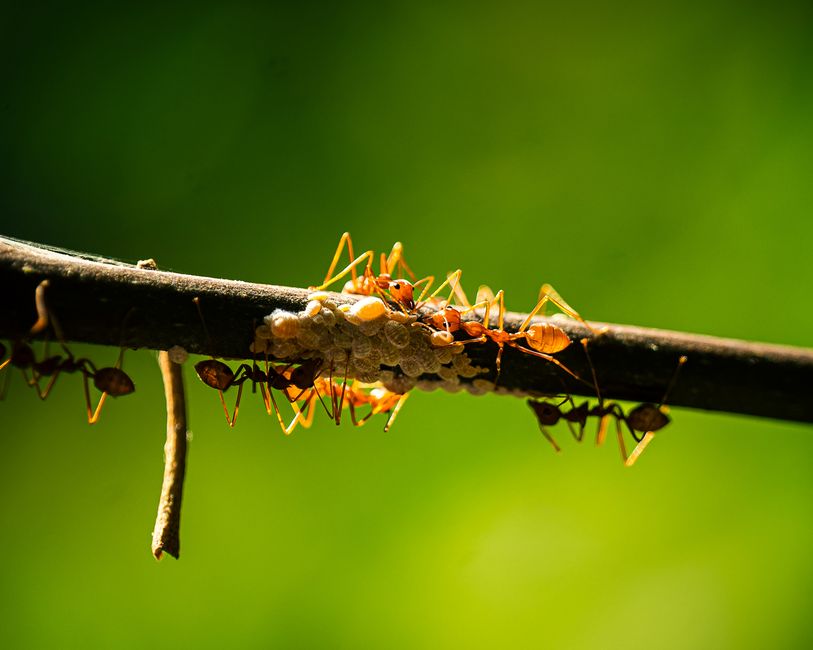
Yes, big ants can bite, and some of them can do more than that. The ants most people call “big ants” — carpenter ants, bull ants, bullet ants, and fire ants — all have jaws strong enough to pinch human skin. A few species also sting, and a small number deliver venom that causes serious pain. Size alone does not tell you whether an ant is dangerous, but it does tell you the bite will be noticeable.
Do Big Ants Bite or Sting?
Most big ants do both. They bite with their mandibles to grip the skin, then some species curl their abdomen underneath and sting. The bite holds you in place. The sting delivers venom.
This one-two action is common in fire ants. The ant bites down, anchors itself, and stings repeatedly in a small circle. That pattern produces the ring of raised bumps many people recognize. Carpenter ants are different. They bite but do not sting. Bull ants and bullet ants sting, and their venom is the part that hurts.
So when someone asks whether a big ant bites, the accurate answer is that biting is normal ant behavior. Ants bite to defend the colony, to subdue prey, and to grip surfaces. A large ant has larger mandibles, which means the pinch is easier to feel.
Which Big Ants Bite Humans?
Several large ant species bite people, and each one feels different. Knowing which ant you are dealing with helps you predict what happens next.
- Carpenter ants — among the largest ants in North America, often 6 to 12 mm long or more. They bite when disturbed but do not sting. The bite can break skin.
- Fire ants — smaller than carpenter ants but aggressive. They bite and sting, often in groups.
- Bull ants — large ants found in Australia. They sting, and the pain can last for days in sensitive people.
- Bullet ants — found in Central and South American rainforests. Their sting is widely described as one of the most painful insect stings known.
- Harvester ants — large seed-eating ants in the western United States. They bite and can sting.
The bullet ant deserves a specific note. Its sting is not dangerous in the way a bee allergy is dangerous, but the pain is intense and can last up to 24 hours. The venom contains a neurotoxin that affects nerve signaling. That is why the sensation is described as burning and throbbing rather than a simple sharp poke.
What Does a Big Ant Bite Feel Like?
A big ant bite feels like a sharp pinch followed by a burning or stinging sensation. The pinch comes from the mandibles. The burn comes from venom if the species stings.
Within minutes, the area usually turns red and slightly swollen. A small white bump may appear. Fire ant stings are distinctive because they form a pus-filled blister within a day or so. That blister is not an infection at first — it is a normal reaction to the venom. It can become infected later if scratched open.
Pain from a bull ant or bullet ant sting can be severe and outlast the visible mark. Most other big ant bites cause discomfort that fades within hours. The intensity depends on the species, the number of stings, and how sensitive you are.





Are Big Ant Bites Dangerous?
For most people, a big ant bite is painful but not dangerous. The real risk is an allergic reaction, which is uncommon but serious.
Anaphylaxis is a whole-body reaction. Signs include trouble breathing, swelling of the face or throat, a drop in blood pressure, dizziness, and widespread hives. This is a medical emergency. If these symptoms appear after any ant sting, call emergency services right away.
People who have had a severe reaction to one ant sting face a higher risk with future stings. If you know you are allergic to insect venom, talk to a doctor about whether carrying an epinephrine auto-injector is appropriate for you. That is a decision for a clinician, not something to guess at.
Beyond allergy, the main concern is infection. Scratching a bite or sting opens the skin, and bacteria can enter. Watch for increasing redness, warmth, swelling that spreads, or pus several days later. Those signs warrant medical attention.
How Do You Treat a Big Ant Bite?
Basic first aid handles most big ant bites. The goal is to reduce pain and prevent infection.
- Wash the area with soap and water.
- Apply a cold pack wrapped in cloth for short periods to ease swelling.
- Keep the bite clean and covered if it is open.
- Avoid scratching, which is the main way these bites get infected.
Over-the-counter pain relief and anti-itch creams are commonly used. Some clinicians recommend an oral antihistamine for itching and swelling, though evidence for how well this works specifically for ant bites is limited. If the bite is on a hand or foot and swelling is significant, elevating the limb can help.
Do not apply heat. Do not try to suck out venom. Neither approach helps, and heat can make swelling worse.
When Should You See a Doctor?
Seek medical care if you have signs of a severe allergic reaction, if the bite looks infected, or if symptoms are getting worse instead of better after a couple of days.
Specific reasons to get medical help include:
- Trouble breathing, throat tightness, or swelling of the lips or tongue
- Dizziness, confusion, or fainting
- Rapid heartbeat with widespread hives
- Spreading redness, red streaks, or pus at the bite site
- Fever along with a worsening bite
The first two on that list are emergencies. Do not wait to see if they pass. Call for help.
How Do You Avoid Getting Bitten by Big Ants?
Avoiding bites comes down to not disturbing colonies and not standing where ants forage. Big ants bite when they feel threatened or when their nest is disturbed.
Practical steps that reduce risk:
- Watch where you step and sit outdoors, especially near logs, rocks, and sandy soil.
- Wear closed shoes and socks in areas known for aggressive ants.
- Do not poke or dig into ant mounds.
- Keep food and sugary drinks covered outdoors, since these attract foraging ants.
- Shake out shoes, clothing, and blankets left on the ground before using them.
If you find ants inside a home, especially large carpenter ants, the issue is often a nest in wood that may be damp or damaged. Addressing moisture problems and sealing entry points are common steps. For a persistent infestation, a pest control professional can identify the species and the source.
Do Big Ants Bite More Than Small Ones?
Big ants do not necessarily bite more often than small ones. They bite harder.
Aggression depends on the species, not the size. Fire ants are smaller than carpenter ants but far more likely to sting in large numbers. A single carpenter ant bite is a sharp pinch. A dozen fire ant stings are a different experience entirely.
What size does change is the force of the bite and how easily it breaks skin. Larger mandibles mean a more noticeable pinch. But the ant’s behavior and venom matter more than its length when it comes to how much a bite affects you.
Does Every Big Ant Bite Need Medical Attention?
No. Most big ant bites and stings can be managed at home with cleaning, cold packs, and avoiding scratches. Medical attention is reserved for allergic reactions, signs of infection, or symptoms that keep getting worse.
It helps to know which ant bit you, if you can identify it safely. Carpenter ant bites rarely need more than basic care. Fire ant stings often form blisters that should be kept clean. Bull ant and bullet ant stings cause intense pain but usually resolve on their own in healthy people. If you are unsure or the reaction seems unusual for you, a quick call to a healthcare provider is reasonable.
Frequently Asked Questions
Do big ants bite humans?
Yes, many large ant species bite humans when disturbed or threatened. Some also sting, which is what causes most of the pain.
Are big ant bites dangerous?
For most people they are painful but not dangerous. The main serious risk is an allergic reaction, which can be life-threatening and needs emergency care.
What does a big ant bite look like?
It usually appears as a red, swollen bump that may have a small white center. Fire ant stings often turn into a pus-filled blister within a day.
How long does a big ant bite last?
Most bites and stings cause discomfort that fades within hours, though redness and itching can last a few days. Bull ant and bullet ant stings can cause severe pain that lasts much longer.
