
Yes, bananas can make you have gas, but they are not a common culprit for most people. The reason comes down to fiber and natural sugars that your gut bacteria ferment. Unripe bananas tend to cause more gas than ripe ones because of their resistant starch content. For most healthy adults, a banana is a low-gas food compared with beans, onions, or dairy.
Do Bananas Make You Have Gas?
Bananas can produce gas in some people, but the effect is usually mild and depends on ripeness and how much you eat. The gas comes from two main sources: fiber and fermentable sugars.
Your small intestine does not fully digest all the carbohydrate in a banana. What reaches the large intestine gets fermented by gut bacteria. That fermentation produces gas — mainly hydrogen, carbon dioxide, and in some people methane. This is normal physiology, not a sign of a problem.
What makes bananas interesting is that their carbohydrate profile changes dramatically as they ripen. A green banana and a fully yellow, spotted banana are almost different foods from a digestion standpoint. We will get into that below.
It is also worth being clear about scale. A banana is not a high-gas food for most people. Research on fermentable carbohydrates consistently places bananas in the lower tier compared with legumes, cruciferous vegetables, and dairy in lactose-sensitive people. If you are bloated and gassy, a banana is rarely the first thing worth eliminating.
Why Do Bananas Cause Gas in Some People?
The gas comes from carbohydrates your body cannot fully break down before they reach your colon. Bananas contain several types of these.
Resistant starch is the big one in unripe bananas. It is starch that resists digestion in the small intestine and arrives in the colon intact, where bacteria ferment it. Green bananas are high in resistant starch. As the fruit ripens, that starch converts to regular sugars, and resistant starch levels fall.
Soluble fiber, particularly pectin, is present in bananas at all stages of ripeness. Pectin is fermentable, though generally less so than the fiber in beans or onions.
Fructans are present in small amounts. These are chains of fructose that some people, particularly those with irritable bowel syndrome, handle poorly. Banana fructan content is low compared with wheat or onions, but it is not zero.
There is a useful clarification here that surprises many people: a ripe banana is generally easier on the gut than an unripe one. The common assumption is the opposite — that greener means gentler. For gas specifically, the resistant starch in green bananas is more fermentable, not less.
Do Ripe or Unripe Bananas Cause More Gas?
Unripe bananas generally cause more gas than ripe ones. The reason is resistant starch, which is highest in green bananas and drops as the fruit ripens and sweetens.
Here is roughly how the carbohydrate profile shifts across ripeness stages:
- Green, firm: Highest resistant starch, lowest sugar. Most fermentable fiber reaches the colon.
- Yellow, slightly firm: Resistant starch falling, sugars rising. A middle ground.
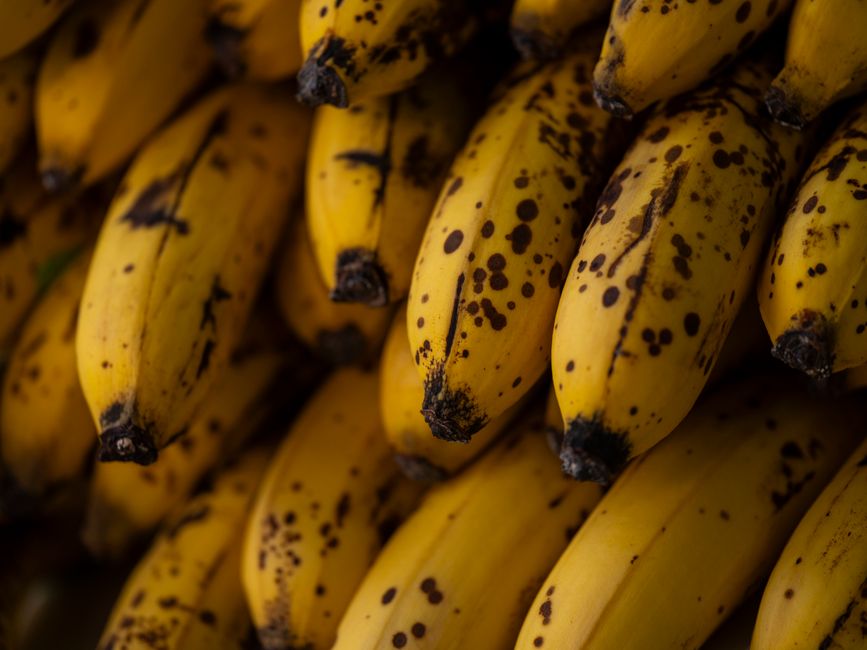
- Yellow with brown spots: Most starch converted to sugars. Lowest resistant starch, easiest to digest for most people.
- Overripe, very soft: Sugar content peaks. Easy to digest, but higher in free sugars.
If gas is your concern, a fully ripe banana with brown spots is usually the better choice. If you are eating green bananas for other reasons, such as resistant starch intake, expect more fermentation and possibly more gas, especially at first.
One practical note: the gut adapts. People who regularly eat resistant starch often report less gas over time as their gut bacteria adjust. That adaptation is real, though the timeline varies from person to person and is not well standardized in research.
How Common Is Gas From Bananas?
Gas from bananas is uncommon compared with the usual suspects. Most people eat bananas without noticeable bloating or gas.
When bananas do cause problems, there is often an underlying reason. The most common are:
- Irritable bowel syndrome (IBS). People with IBS can be sensitive to fermentable carbohydrates, including the fructans in bananas. Ripeness matters here too — a very ripe banana has a different sugar profile than a firm one.
- Eating several bananas a day. A large load of any fermentable food can produce gas, even a low-gas one.
- Eating them fast or on an empty stomach. This is more about swallowing air and rapid transit than the banana itself, but it can compound the effect.
- Individual gut bacteria differences. The composition of your gut microbiome affects how much gas a given food produces. Two people can eat the same banana and have very different experiences.
If bananas reliably cause significant gas, bloating, or discomfort, that is worth mentioning to a clinician. It does not automatically mean something is wrong, but persistent symptoms deserve a proper look rather than guesswork.
Are Bananas Good or Bad for Digestion?
For most people, bananas support digestion rather than disrupt it. They are a well-tolerated fruit and a common part of bland diets during recovery from stomach upset.
Bananas contain potassium, vitamin B6, vitamin C, and fiber. A medium banana provides roughly 3 grams of fiber and about 422 milligrams of potassium, based on USDA nutritional data. That fiber contributes to regular bowel function.
There is a widely repeated claim that bananas are constipating. The evidence here is mixed and largely anecdotal. Unripe bananas, with their higher resistant starch, have been associated with firmer stools in some settings, while ripe bananas do not show this consistently. The honest position is that bananas are not a reliable cause of constipation in most people, and the ripeness distinction likely explains much of the confusion.
Bananas are also sometimes recommended for diarrhea because they are low in fiber relative to other fruits and easy to tolerate. The BRAT diet (bananas, rice, applesauce, toast) is a traditional approach, though modern guidance for rehydration and recovery has moved toward broader nutrition where tolerated. Some clinicians still suggest bland foods early on.
How Can You Reduce Gas From Bananas?
You can usually reduce banana-related gas by changing ripeness, portion, and timing. None of these require cutting bananas out entirely.
- Choose riper bananas. Yellow with brown spots means less resistant starch and generally less fermentation.
- Eat fewer at a time. One banana is a modest fiber load. Three in a sitting is not.
- Eat them with other food. A banana alone on an empty stomach moves through faster. Pairing it with protein or fat can slow digestion.
- Chew thoroughly. Better mechanical breakdown means less undigested carbohydrate reaching the colon.
- Give your gut time. If you have recently increased fiber or resistant starch intake, gas often settles as your microbiome adjusts.
If you have IBS or a known sensitivity to fermentable carbohydrates, portion size and ripeness matter more. Some people with IBS find very ripe bananas problematic because of the higher free sugar content, while others tolerate them better than firm ones. There is no single rule that fits everyone here — this is genuinely individual.
What is not supported is the idea that bananas are a major gas-producing food that most people should avoid. For the majority, they are a convenient, well-tolerated fruit. If they cause you trouble, the fix is usually adjustment, not elimination.
Frequently Asked Questions
Do bananas cause gas and bloating?
Bananas can cause mild gas in some people because of fermentable fiber and resistant starch. Significant bloating is uncommon and usually points to an underlying sensitivity such as IBS.
Are green bananas more gassy than ripe ones?
Yes, green bananas generally cause more gas because they contain more resistant starch, which gut bacteria ferment. Ripe bananas with brown spots have less resistant starch and are easier to digest for most people.
How many bananas a day is too many for gas?
There is no established limit specific to gas. Most people tolerate one to two bananas a day without issue, but tolerance varies and depends on your overall diet and gut bacteria.
Are bananas good for your gut?
Bananas provide fiber and potassium and are well tolerated by most people, which supports normal digestion. Their fermentable fiber also feeds gut bacteria, though the health effects of that are still being studied.
