
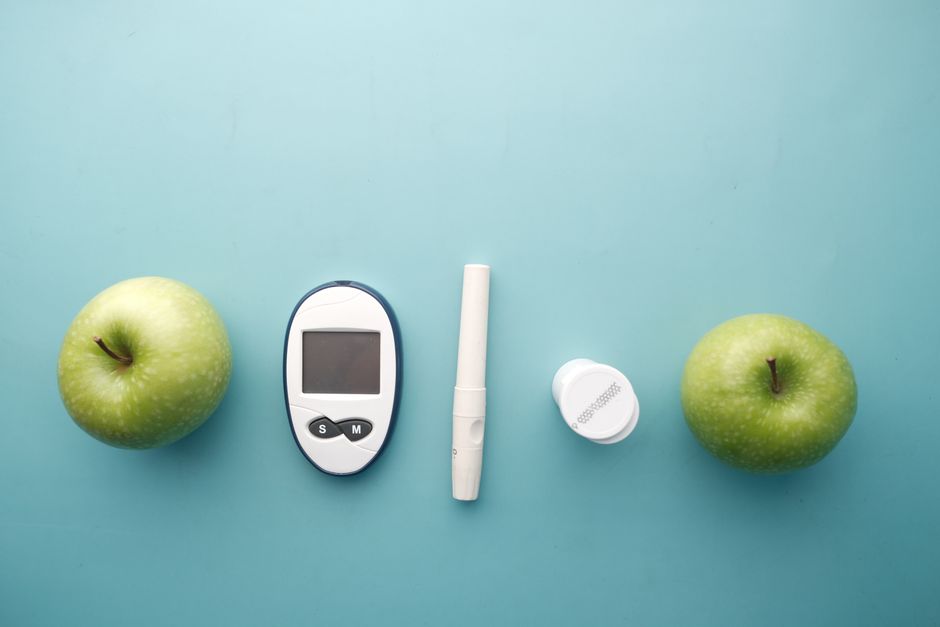
Apples contain sugar, but they do not raise blood sugar the way a candy bar or soda does. For most people, a whole apple has a modest effect on blood sugar because the fiber in the fruit slows down how quickly your body absorbs the sugar. Research consistently shows that whole apples are a better choice for blood sugar control than apple juice or applesauce.
Do Apples Raise Blood Sugar Quickly?
Apples raise blood sugar, but not quickly. The speed at which a food raises blood sugar is measured by the glycemic index (GI). A whole apple has a low GI score, usually around 36. For comparison, pure glucose has a GI of 100, and a slice of white bread is around 75.
The reason apples are low-GI is the fiber. A medium apple with the skin on has about 4.5 grams of fiber. Fiber slows digestion. When you eat an apple, the sugar enters your bloodstream gradually instead of all at once. This gives your body time to process it without a sharp spike.
The type of sugar in apples also matters. Apples contain mostly fructose and glucose. Fructose needs to be processed by the liver before it can enter the bloodstream, which further slows the rise in blood sugar.
What Does the Research Show About Apples and Blood Sugar?
Several studies have looked at apples and blood sugar control. A 2019 analysis of multiple studies found that eating apples was linked to a lower risk of developing type 2 diabetes. People who ate apples regularly had about an 18% lower risk compared to people who rarely ate them.
Other research has looked at what happens immediately after eating an apple. In one study, people with type 2 diabetes ate a meal with or without an apple. Those who ate the apple had lower blood sugar spikes after the meal. The fiber and plant compounds in the apple appeared to help.
It is important to note that most of these studies looked at whole apples, not apple juice or dried apples. When you remove the fiber, the effect on blood sugar changes dramatically.
Does Apple Juice Raise Blood Sugar Differently?
Yes, completely differently. Apple juice raises blood sugar fast. When you juice an apple, you remove nearly all the fiber. What remains is the sugar and water. Without fiber to slow absorption, the sugar hits your bloodstream quickly.
One cup of apple juice has about 24 grams of sugar and almost no fiber. A whole medium apple has about 19 grams of sugar with 4.5 grams of fiber. Even though the juice has more sugar, the bigger problem is the speed. The glycemic index of apple juice is around 44, but the glycemic load can be higher because people often drink more than one serving.
For someone with diabetes or prediabetes, whole apples are a reasonable choice. Apple juice is not. The American Diabetes Association lists whole fruits as a good option but recommends limiting fruit juice.





How Many Carbs Are in an Apple?
A medium apple (about 182 grams with skin) contains roughly 25 grams of total carbohydrates. Of those, about 19 grams are sugar and 4.5 grams are fiber. The net carbs — total carbs minus fiber — are about 20 grams.
For someone with diabetes who tracks carbohydrates, one medium apple counts as roughly one serving of carbs. That is similar to a slice of bread or a small potato. The difference is that the apple provides vitamins, minerals, and fiber that processed carbs do not.
Smaller apples obviously contain fewer carbs. A small apple (about 150 grams) has about 20 grams of total carbs and 15 grams of sugar. A large apple (about 230 grams) has about 31 grams of total carbs and 24 grams of sugar. Size matters if you are counting carbs closely.
Do Apples Affect People with Diabetes Differently?
Apples affect people with diabetes the same way they affect anyone else — just more noticeably. A person without diabetes has a working insulin response that keeps blood sugar in a tight range. A person with diabetes has a blunted or absent insulin response, so the same amount of sugar causes a larger and longer rise.
For most people with diabetes, a whole apple is still a good choice. The fiber helps slow the sugar absorption. Pairing an apple with a source of protein or fat, like peanut butter or cheese, slows it even more. The protein and fat delay stomach emptying, which further flattens the blood sugar curve.
Some people with diabetes find that apples affect them more in the morning than in the afternoon. This is because insulin sensitivity varies throughout the day. It is generally higher in the morning and lower in the evening for most people. If you have diabetes, testing your blood sugar after eating an apple at different times can tell you how your body responds.
Does Eating an Apple Before a Meal Help Blood Sugar?
Some evidence suggests yes. A small study found that eating an apple 30 minutes before a carbohydrate-rich meal reduced the blood sugar spike from the meal. The fiber in the apple appeared to slow the absorption of the meal’s carbohydrates.
The mechanism makes sense. Fiber from the apple forms a gel-like substance in your stomach. This slows gastric emptying. When the food from the meal enters your intestine more slowly, your body has more time to release insulin and process the sugar.
This is not a proven strategy for everyone, but it is a reasonable experiment. If you are concerned about blood sugar spikes after meals, try eating a small apple with the skin on about 20-30 minutes before eating. See how your body responds.
Do Green Apples and Red Apples Differ for Blood Sugar?
The difference is small. Green apples tend to be slightly lower in sugar than red apples. A medium Granny Smith apple has about 16 grams of sugar, while a medium Red Delicious has about 19 grams. That is a difference of about 3 grams of sugar.
The glycemic index of both varieties is still low. The fiber content is similar. For blood sugar purposes, the color of the apple matters far less than whether you eat the whole fruit versus drinking the juice.
If you are counting every gram of sugar, choose a green apple. If you prefer red apples, the difference is unlikely to matter for your overall blood sugar control. What matters more is the total amount of fruit you eat in a day and whether you eat it with other foods.
Does Apple Cider Vinegar Help with Blood Sugar?
Apple cider vinegar is a separate topic from apples themselves. Some studies suggest that vinegar taken before a meal can reduce the blood sugar spike after the meal. The acetic acid in vinegar appears to slow the breakdown of starches into sugar.
The evidence is not strong enough to recommend apple cider vinegar as a treatment for high blood sugar. Some studies show a modest effect, others show little to none. If you want to try it, dilute one tablespoon in a large glass of water and drink it before a meal. Never drink vinegar undiluted — it can damage your esophagus and tooth enamel.
Do not confuse apple cider vinegar with eating apples. They are completely different in how they affect blood sugar.
Frequently Asked Questions
Can I eat apples if I have type 2 diabetes?
Yes, most people with type 2 diabetes can eat whole apples in moderation. The fiber slows sugar absorption, and a medium apple counts as about one serving of carbohydrates.
How many apples can I eat per day without raising blood sugar too much?
One medium apple per day is a reasonable limit for most people who are watching their blood sugar. Eating two or more in one sitting may cause a noticeable spike, especially if eaten alone.
Is apple juice bad for blood sugar?
Yes, apple juice can raise blood sugar quickly because it lacks fiber. One cup of apple juice has about the same sugar as two whole apples but without the fiber that slows absorption.
Do apples raise blood sugar at night more than during the day?
For some people, yes. Insulin sensitivity tends to be lower in the evening, so the same apple may cause a larger blood sugar rise if eaten late at night. Testing your blood sugar can tell you how your body responds.
