
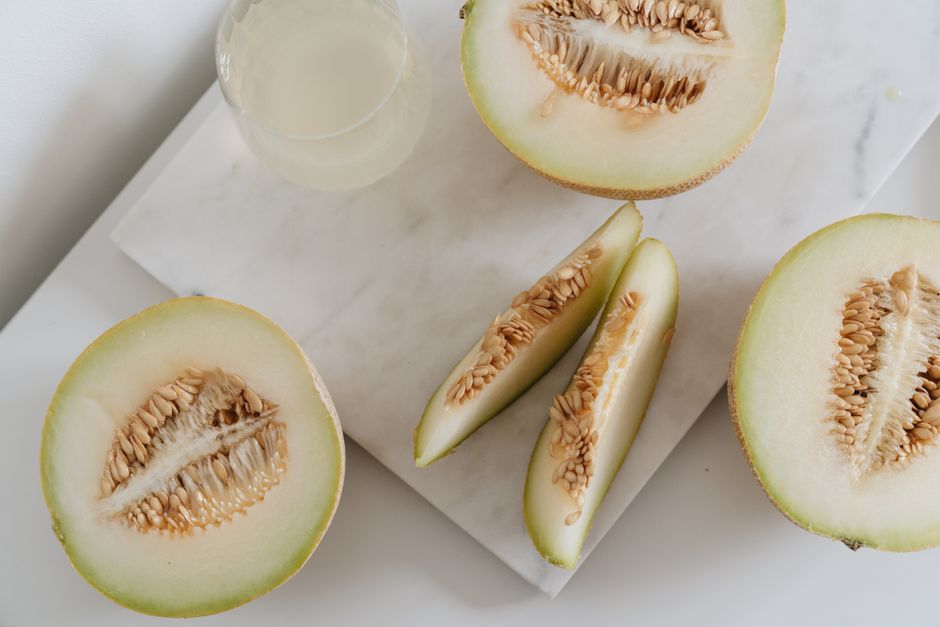
Cantaloupe is good for hydration, vitamin A, and vitamin C. One cup of raw cantaloupe cubes provides about 54 calories, roughly 1.5 grams of fiber, and more than half of an adult’s daily vitamin C needs. It is also one of the richest common food sources of beta-carotene, which the body converts into vitamin A.
That combination matters more than most people realize. Cantaloupe is mostly water, low in calories, and dense in two nutrients many Americans fall short on. It is not a superfood and it will not prevent disease on its own. But as a everyday fruit, it earns its place.
What Nutrients Does Cantaloupe Actually Contain?
Cantaloupe’s nutrition profile is unusually concentrated for a fruit that is over 90 percent water. The USDA tracks these values, and they are well established.
One cup of raw cantaloupe cubes (about 160 grams) contains roughly:
- 54 calories
- 1.4 grams of protein
- 1.5 grams of fiber
- About 60 percent of the daily value for vitamin C
- About 30 percent of the daily value for vitamin A, mostly as beta-carotene
- Potassium, folate, and small amounts of vitamin K and magnesium
The vitamin A in cantaloupe comes from carotenoids, not from retinol. That distinction matters. Beta-carotene is a provitamin A carotenoid, meaning the body converts it into usable vitamin A only as needed. This is one reason cantaloupe does not carry the same toxicity risk as preformed vitamin A from supplements or liver.
Vitamin C and beta-carotene are both antioxidants. That word gets used loosely in marketing. In the body, these compounds participate in normal cellular processes, but taking them in food form is not the same as taking high-dose supplements, and the two do not produce identical effects.
Cantaloupe Is Good For What Specific Health Needs?
The strongest case for cantaloupe is nutritional, not medicinal. It helps fill gaps that are common in typical American diets.
Hydration. Cantaloupe is roughly 90 percent water. For people who struggle to drink enough fluids, especially older adults whose thirst signals weaken with age, water-rich fruit contributes meaningfully to daily fluid intake.
Vitamin A and eye health. Vitamin A is required for the retina to function, particularly for low-light vision. Severe vitamin A deficiency causes night blindness and can progress to permanent eye damage. That said, deficiency is rare in the United States. Eating cantaloupe supports normal vitamin A status but does not reverse vision problems caused by aging, genetics, or other conditions.
Vitamin C and immune function. Vitamin C contributes to normal immune function and to collagen formation in skin, blood vessels, and connective tissue. Getting enough matters. Getting extra beyond what the body needs does not appear to boost immunity further in well-nourished people.
Potassium and blood pressure. Cantaloupe provides potassium, a mineral involved in regulating blood pressure. Diets rich in potassium-rich foods are associated with lower blood pressure in population studies. Cantaloupe is one contributor among many, not a treatment.
Fiber and digestion. At 1.5 grams per cup, cantaloupe is a modest fiber source. It helps, but it will not substitute for whole grains, legumes, or vegetables.
Does Cantaloupe Help With Weight Management?
Cantaloupe can support weight management because it is low in calories and high in water, which contributes to a feeling of fullness. A cup provides about 54 calories. Compare that to a cup of grapes at roughly 104 calories or a cup of banana slices at about 134 calories.
Volume and water content influence satiety. Foods with high water content take up more space in the stomach and tend to be eaten more slowly. This is one reason fruit intake is consistently associated with lower body weight in observational studies.
What cantaloupe will not do is cause weight loss by itself. No single food does. The useful role for cantaloupe is as a replacement for higher-calorie snacks, not as an addition on top of them. Swapping a 200-calorie dessert for a bowl of cantaloupe is a meaningful change. Adding cantaloupe to an already full plate is not.





How Does Cantaloupe Compare to Other Melons?
Cantaloupe and watermelon get grouped together, but their nutrient profiles differ in ways that matter.
| Nutrient (per 1 cup raw) | Cantaloupe | Watermelon | Honeydew |
|---|---|---|---|
| Calories | 54 | 46 | 64 |
| Vitamin C (% DV) | ~60% | ~21% | ~51% |
| Vitamin A (% DV) | ~30% | ~9% | ~1% |
| Potassium | ~427 mg | ~170 mg | ~404 mg |
Cantaloupe leads clearly on vitamin A. Watermelon is lower in calories and provides lycopene, a carotenoid cantaloupe does not contain in significant amounts. Honeydew is comparable on vitamin C and potassium but nearly devoid of vitamin A.
If vitamin A is the goal, cantaloupe wins. If lycopene is the goal, watermelon wins. There is no reason to pick only one.
Who Should Be Careful With Cantaloupe?
Cantaloupe is safe for most people, but a few groups need to take it seriously.
Food safety risk. Cantaloupe has been linked to several multistate outbreaks of foodborne illness, including Salmonella and Listeria. The reason is structural. The rough outer rind can harbor bacteria, and when the fruit is cut, a knife can drag surface contamination into the flesh. Cantaloupe also has a near-neutral pH, which is less acidic than many fruits and therefore more hospitable to bacterial growth.
This is why public health agencies recommend washing the outside of a cantaloupe under running water before cutting, scrubbing the rind with a clean produce brush, and refrigerating cut melon within two hours. Cut cantaloupe left at room temperature for extended periods is a genuine risk, not a theoretical one.
People at higher risk. Pregnant women, adults over 65, young children, and people with weakened immune systems are more likely to develop severe illness from foodborne infections. For these groups, the standard advice is to avoid cut cantaloupe that has been sitting out, and to be cautious with pre-cut melon from deli cases or buffets.
Diabetes. Cantaloupe has a moderate glycemic index, roughly in the 60s, which is higher than many other fruits. This does not mean people with diabetes must avoid it. Portion size and pairing with protein or fat matter more than the fruit itself. Anyone managing blood sugar should treat cantaloupe like any other carbohydrate source and account for it.
Potassium restrictions. People with advanced kidney disease who have been told to limit potassium should check with their care team. A cup of cantaloupe provides over 400 mg of potassium, which is significant for someone on a restricted diet.
What Is the Best Way to Choose and Store Cantaloupe?
A ripe cantaloupe smells sweet at the stem end and feels slightly heavy for its size. The rind should be tan or cream-colored under a raised netting pattern, not green. A green cantaloupe is underripe and will not sweeten much after picking.
Whole cantaloupe can sit at room temperature for a day or two to finish ripening. After that, refrigerate it. Once cut, cantaloupe should go into the refrigerator promptly and be eaten within a few days. Store it in a sealed container to limit moisture loss and prevent it from absorbing odors from other foods.
Frozen cantaloupe is a reasonable option for smoothies. It loses some texture but retains most nutrients. Canned cantaloupe is uncommon, and when found, it is often packed in syrup, which adds sugar.
One clarification worth making: the netted, orange-fleshed melon sold as cantaloupe in the United States is technically a muskmelon. True cantaloupe in Europe refers to a different, often smaller and smoother-skinned fruit. Nutritionally they are similar, but the names are not interchangeable in every market.
Frequently Asked Questions
Is cantaloupe good for you every day?
Yes, cantaloupe can be part of a daily diet for most people. One to two cups provides useful vitamin A and vitamin C without adding many calories.
What is cantaloupe good for nutritionally?
Cantaloupe is best known for vitamin A from beta-carotene, vitamin C, potassium, and water content. One cup provides about 54 calories and over half of daily vitamin C needs.
Can you eat cantaloupe if you have diabetes?
Yes, but portion size matters because cantaloupe has a moderate glycemic index. Pair it with protein or fat and count it toward your daily carbohydrate intake.
Is cantaloupe safe during pregnancy?
Whole cantaloupe that has been washed and cut at home is generally considered safe. Pregnant women should avoid cut cantaloupe that has been left at room temperature or sitting out at buffets, due to Listeria risk.
