
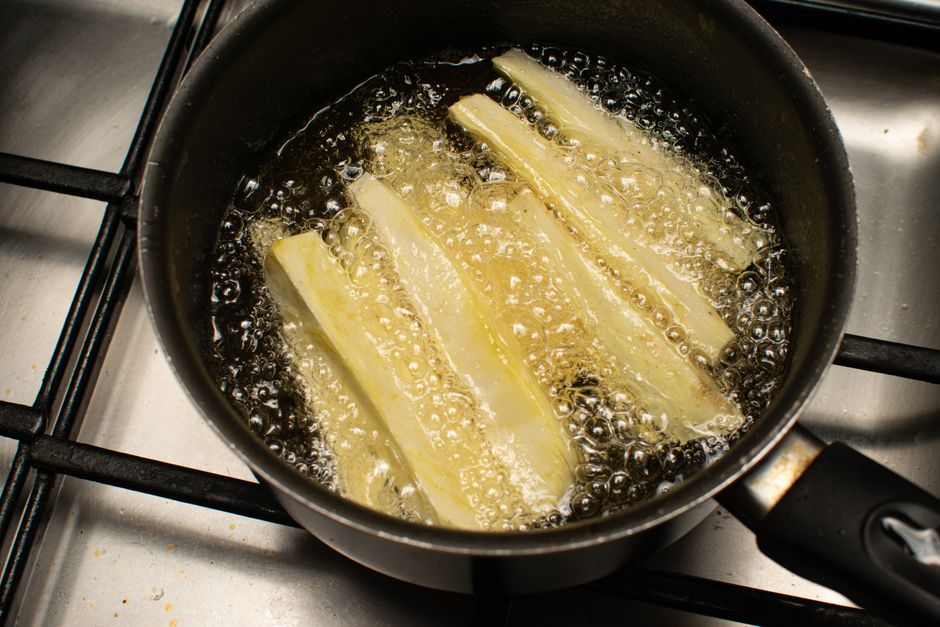
Canola oil can be used for frying, and its high smoke point makes it one of the more suitable cooking oils for the job. Its smoke point sits around 400°F (204°C) for refined canola oil, which is above the temperatures most home frying reaches. The bigger variables are how you fry, how often you reuse the oil, and what temperature you actually hold.
What Makes Canola Oil Good for Frying?
Frying is a heat transfer problem. The oil needs to stay stable at high temperature long enough to cook food without breaking down into compounds that taste bad or cause harm.
Refined canola oil has a smoke point near 400°F. Deep frying typically happens between 350°F and 375°F, and pan frying runs cooler still. That leaves a reasonable margin before the oil starts smoking.
Canola also has a favorable fat profile for high heat. It is low in saturated fat and high in monounsaturated fat, with moderate polyunsaturated content. Monounsaturated fats tend to hold up better under heat than polyunsaturated fats, which are more prone to oxidation.
One clarification worth making: “canola oil” on a store shelf usually means refined canola oil. Cold-pressed or unrefined versions exist but have lower smoke points and are not the right choice for high-heat frying. If the label does not say refined, check before you crank up the burner.
At What Temperature Does Canola Oil Break Down?
Smoke point is the temperature at which oil begins to produce visible smoke and break down. For refined canola oil, that is roughly 400°F (204°C).
Smoke point is not a fixed number. It drops each time oil is reheated and reused. Oil that has been through several frying sessions will smoke at a lower temperature than fresh oil.
When oil passes its smoke point, it starts forming breakdown products — including aldehydes and other oxidation compounds. These affect flavor, color, and smell. Some are also the compounds researchers study when looking at repeated oil use.
The practical takeaway: keep frying oil below its smoke point, and replace it when it darkens, smells off, or foams more than usual. Those are signs of breakdown, not just wear.
Is Reusing Canola Oil for Frying Safe?
Reusing frying oil is common and generally considered acceptable within limits. The evidence gets murkier the more times oil is reused and the harsher the conditions.
Each heating cycle degrades the oil. Free fatty acids accumulate, oxidation products build up, and the smoke point falls. Oil that has been used repeatedly at high heat is measurably different from fresh oil.
Research on repeatedly heated cooking oils has raised concerns about oxidative stress and cardiovascular markers in some studies, though much of this work is in animals or small human samples. The evidence is not strong enough to say exactly how many reuses are safe for everyone.
What is reasonable to say: reusing oil a few times, with proper storage and filtering between uses, is common practice. Reusing it many times, letting it sit at high heat for long periods, or continuing to use oil that has visibly degraded is not advisable.
Signs it is time to discard the oil:
- It smokes at normal frying temperatures
- It has a dark color or rancid smell
- It foams excessively when food is added
- Food comes out greasy rather than crisp
Does Canola Oil Form Harmful Compounds When Fried?
All cooking oils form some oxidation products when heated. This is not unique to canola. The question is how much, and whether it matters for health.
Canola oil contains alpha-linolenic acid (ALA), an omega-3 fat. Omega-3 fats are more prone to oxidation than monounsaturated fats. This has led to claims that canola is unsafe for frying.
The evidence does not support that conclusion in any strong way. Studies comparing oils under frying conditions generally find canola performs comparably to other common frying oils, and in some comparisons better than oils high in polyunsaturated fat. The ALA content is a theoretical concern that has not translated into clear evidence of harm at normal cooking temperatures.
What does matter is overheating. Oil held well above its smoke point for extended periods produces more breakdown products regardless of which oil you use. Temperature control matters more than oil choice.
How Does Canola Compare to Other Frying Oils?
Different oils suit different jobs. Here is how canola compares on the factors that matter for frying.
| Oil | Approximate smoke point (refined) | Main fat type | Notes for frying |
|---|---|---|---|
| Canola | ~400°F | Monounsaturated | Good all-purpose frying oil |
| Olive (refined/light) | ~400–465°F | Monounsaturated | Good for pan frying; flavor may carry over |
| Avocado | ~520°F | Monounsaturated | Very high heat tolerance; higher cost |
| Peanut | ~450°F | Monounsaturated | Popular for deep frying; allergen concern |
| Vegetable/soybean | ~400°F | Polyunsaturated | Common; less stable than monounsaturated oils |
| Sunflower (refined) | ~440°F | Polyunsaturated | Good heat tolerance; oxidizes faster than monounsaturated |
Smoke points vary by refinement and source, so treat these as approximate. For most home frying, canola, refined olive, peanut, and avocado oils all work. The choice often comes down to flavor, cost, and allergies.
What Is the Healthiest Way to Fry With Canola Oil?
Frying method and temperature control matter more than the oil itself. A few practical points grounded in how oil behaves under heat:
- Use refined canola oil for high-heat frying. Save unrefined or cold-pressed versions for lower-heat cooking or dressings.
- Keep oil at 350–375°F for deep frying. Use a thermometer rather than guessing.
- Do not let oil smoke. If it does, it has passed its stable range — lower the heat.
- Filter and store used oil properly if reusing. Keep it away from light and heat.
- Replace oil when it shows signs of breakdown rather than counting uses.
One point that gets lost in oil debates: fried food quality depends heavily on what you fry and how. Breading, oil temperature, and how much oil the food absorbs all shape the final result. Oil choice is one variable among several.
Canola oil is not a health food and it is not a hazard. It is a cooking oil with a reasonable heat tolerance and a favorable fat profile. Used sensibly, it does the job.
Frequently Asked Questions
Can you deep fry with canola oil?
Yes. Refined canola oil has a smoke point around 400°F, which is above typical deep-frying temperatures of 350–375°F. It is one of the more common oils used for home and commercial deep frying.
Is canola oil healthy for frying?
Canola oil is low in saturated fat and high in monounsaturated fat, and it holds up reasonably well at frying temperatures. Health outcomes depend more on how often you fry, what you fry, and whether you reuse oil excessively than on canola itself.
How many times can you reuse canola oil for frying?
No official guideline sets a specific number, and it depends on temperature, food type, and storage. A common approach is to reuse oil a few times, filtering between uses, and discard it once it darkens, smells off, or smokes at normal frying temperatures.
Does canola oil turn into trans fat when heated?
Heating oil does not create meaningful amounts of trans fat under normal frying conditions. Trans fats mainly come from industrial partial hydrogenation, not from heating liquid oil at home.
