
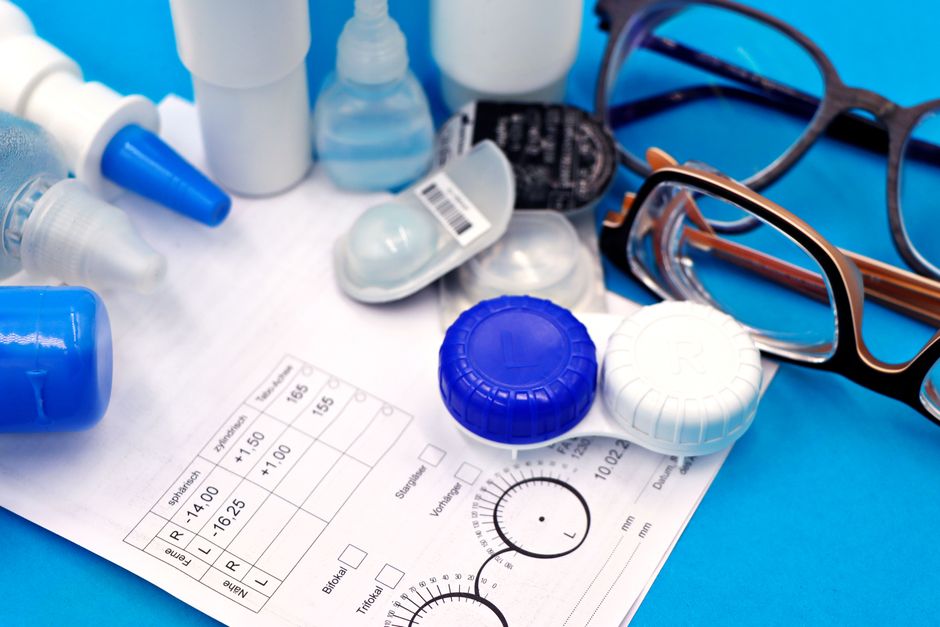
No. Regular eye drops are not a safe substitute for contact lens solution. They are made for different jobs, and using them to store, rinse, or re-wet lenses can cause irritation, blurry vision, and in some cases serious eye damage. The only liquid that should ever go on your lenses is the product designed for that specific purpose.
The confusion is understandable. Both come in small bottles, both go in your eyes, and both promise moisture. But the ingredients inside are not interchangeable. Some eye drops contain preservatives that build up on a lens surface. Others are thick and sticky in ways that cloud your vision. And a few types of drops can react badly with certain lens materials.
This guide explains why the two products are different, what can go wrong, and what to do if you have already used the wrong liquid.
Why Can’t You Use Eye Drops as Contact Lens Solution?
Eye drops and contact lens solution are formulated for two different environments. Drops are made to go directly onto the surface of your eye and then drain away. Lens solution is made to sit in a case with a lens for hours, then go onto your eye.
That difference matters. A product designed to drain away does not need to be safe for long contact with the eye. A product designed for storage does.
Here is what separates them:
- Preservatives. Many eye drops contain preservatives like benzalkonium chloride. These are generally fine for brief contact with the eye. But they can soak into a soft lens and stay there, releasing slowly onto your cornea. Over time this can irritate the eye surface.
- Thickness. Drops for dry eye are often thicker than lens solution. That thickness is useful on the eye but can leave a film on a lens that blurs vision.
- Sterility for storage. Contact lens solution is made to keep lenses clean and free of harmful organisms while they sit in a case. Eye drops are not designed for that job.
- Cleaning action. Lens solution contains ingredients that break down deposits and proteins from your eye. Eye drops do not.
The core issue is that a soft contact lens acts like a sponge. Whatever liquid it sits in can be absorbed and then held against your eye for hours. That is why the formulation matters so much.
What Happens If You Use Eye Drops Instead of Contact Lens Solution?
In many cases, a single accidental use causes temporary problems: stinging, redness, and blurry vision that clears when you remove the lens. But the risk is real and sometimes serious.
Here is what can go wrong:
- Irritation and redness. Preservatives and other ingredients can irritate the surface of the eye, especially with repeated exposure.
- Blurred vision. A film of the wrong liquid on the lens scatters light and clouds your sight.
- Lens damage. Some ingredients can degrade certain lens materials over time.
- Infection risk. This is the most important concern. If you store lenses in something that is not a proper disinfecting solution, harmful organisms can survive on the lens. The cornea can become infected, and corneal infections can threaten vision if not treated quickly.
That last point deserves emphasis. The reason lens solution exists is not just comfort. It is to disinfect. Eye drops do not disinfect lenses. A lens stored in drops overnight is a lens that has not been properly cleaned.
Can You Use Lubricating Eye Drops While Wearing Contacts?
This is a different question, and the answer is often yes, with a condition. Some lubricating drops are made to be used while wearing contact lenses. These are usually labeled “for use with contact lenses” or described as contact lens–compatible.
The key is the label, not the general category. A drop approved for use with lenses is formulated so its ingredients are safe to sit against the eye alongside a lens. A drop not approved for that use may contain preservatives that accumulate on the lens.
If you are unsure, ask your eye care professional which drops are compatible with your specific lenses. Preservative-free drops in single-use vials are often recommended for people who use drops frequently, because they avoid the buildup issue. But that is a general point, not a rule that fits every person or every lens.
One clarification worth knowing: using a compatible drop on a lens you are already wearing is not the same as using drops to store a lens. Rewetting a lens on your eye is fine with the right product. Soaking a lens in that same product overnight is not.
What Should You Actually Use to Store and Clean Lenses?
Use the multipurpose solution or cleaning system your eye care professional recommends for your lenses. There is no universal best product, because the right choice depends on your lens type and your eyes.
General guidance that applies to most soft lens wearers:
- Use fresh solution every time you store lenses. Never top off old solution in the case.
- Rub and rinse lenses with solution if your system calls for it, following the instructions on the bottle.
- Replace your lens case regularly. Cases can harbor organisms even when they look clean.
- Never use tap water, saliva, or homemade saline on lenses. Tap water can contain organisms that cause serious eye infections.
- Follow the replacement schedule for your lenses. Wearing them longer than intended raises infection risk.
Hydrogen peroxide–based systems are a real alternative to multipurpose solution, but they work differently. The lens sits in a special case with a neutralizing disc, and the solution must fully neutralize before the lens goes in your eye. Using a peroxide system incorrectly, or putting a lens in before neutralization is complete, causes severe stinging. These systems are effective when used exactly as directed.
What If You Have Already Used Eye Drops on Your Lenses?
Take the lens out. Do not put it back in until it has been properly cleaned and stored in the correct solution.
If the lens was soaked in eye drops, do not simply rinse it and wear it. Clean it with the proper solution, or if you are unsure, discard it. A lens is replaceable. Your cornea is not.
Seek urgent care if you notice any of the following after using the wrong liquid:
- Eye pain that does not settle after removing the lens
- Redness that gets worse rather than better
- Blurred vision that does not clear
- Sensitivity to light
- A feeling that something is stuck in your eye
- Discharge from the eye
These can be signs of a corneal infection or injury. Prompt treatment matters, because some eye infections can cause lasting damage if they are not addressed quickly. When in doubt, contact your eye care professional or seek urgent care.
Common Myths About Contact Lens Care
A few beliefs about lens care are widespread and wrong. Clearing them up prevents a lot of avoidable trouble.
“Saline is a safe all-purpose option.” Saline rinses lenses but does not disinfect them. Storing lenses in saline alone leaves them open to contamination.
“Water is basically the same as solution.” It is not. Tap water can carry organisms that cause serious corneal infections, and it does not clean or disinfect a lens.
“If it feels fine, it must be safe.” Comfort is not a measure of safety. A lens stored in the wrong liquid can feel acceptable at first while still carrying organisms or holding preservatives against the eye.
“Any drop labeled for eyes works on lenses.” Only drops specifically labeled for contact lens use are made for that purpose. The label is the reliable guide.
Frequently Asked Questions
Can I use eye drops to store my contacts overnight?
No. Eye drops do not disinfect lenses, and storing lenses in them can allow harmful organisms to survive. Only proper contact lens solution should be used for overnight storage.
Can I put regular eye drops on my contacts while wearing them?
Only if the drops are labeled for use with contact lenses. Drops not made for lenses may contain preservatives that build up on the lens and irritate your eye.
What happens if I accidentally put eye drops on my lens?
You may notice stinging, redness, or blurry vision. Remove the lens, clean it with proper solution or discard it, and seek urgent care if pain, worsening redness, or blurred vision does not clear.
Is saline solution the same as contact lens solution?
No. Saline rinses lenses but does not disinfect them. Storing lenses in saline alone leaves them vulnerable to contamination.
