
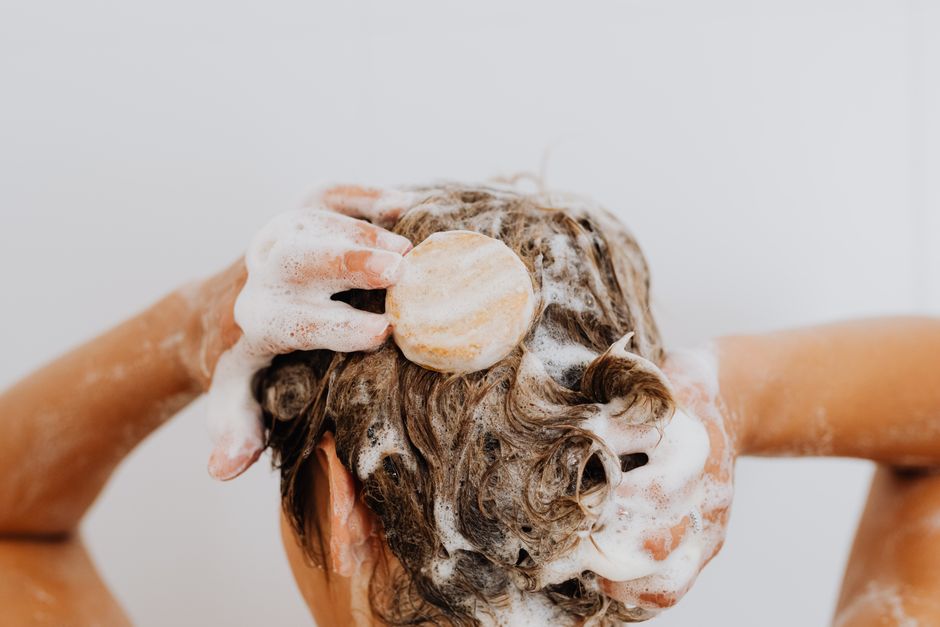
You can physically wash your hair with bar soap, but it is not a good idea if you want healthy hair. Bar soap is formulated for skin, not strands, and its high pH and hardening ingredients can leave hair dry, rough, and coated. For most people, regular shampoo is the better choice.
Can You Use Bar Soap On Hair Why You Shouldn’t?
Bar soap can clean hair in a pinch. It removes oil and dirt the same way shampoo does. The problem is what it leaves behind.
Most bar soaps are made through a process called saponification, which combines fats or oils with lye. The result is a product with a pH that is usually alkaline, often somewhere between 9 and 10. Healthy hair and scalp sit at a mildly acidic pH, generally around 4.5 to 5.5. That gap matters more than most people realize.
When you wash hair with an alkaline product, the outer layer of each strand — called the cuticle — tends to lift and swell. A lifted cuticle makes hair feel rough and look dull. It also makes strands more prone to tangling and breakage. Shampoo is designed to work at a pH closer to the hair’s natural range, so the cuticle stays flatter and smoother.
There is a second issue. Many bar soaps contain ingredients like tallow, stearic acid, or hard plant butters that are meant to leave a protective film on skin. On hair, that film builds up. It can make strands feel waxy or stiff, and it attracts dirt over time. This residue is often the reason hair washed with bar soap looks greasy again so quickly.
Why Does Bar Soap Leave Hair Feeling Waxy or Stiff?
The waxy feeling comes from a chemical reaction between soap and minerals in your water. This is the same reaction that creates soap scum on a shower door.
Hard water contains dissolved calcium and magnesium. When soap meets these minerals, it forms an insoluble compound that clings to surfaces — including your hair. This compound does not rinse out easily with water alone. Over repeated washes, it accumulates.
Shampoo avoids most of this problem because it relies on synthetic detergents called surfactants rather than traditional soap. These surfactants are less likely to react with hard water minerals, so they rinse away more cleanly. That is a big part of why shampoo leaves hair feeling lighter and cleaner than bar soap does.
If you live in a soft water area, you may notice less of this waxy buildup. That does not mean bar soap is good for your hair there — the pH issue and the residue from soap’s own ingredients still apply. It just means one of the problems is less obvious.
Does Bar Soap Damage Hair Over Time?
Occasional use is unlikely to cause lasting harm. Consistent use over months is where the real problems show up.
Repeated exposure to an alkaline product can weaken the hair’s outer structure. The cuticle can become rougher and more raised, which increases friction between strands. More friction means more tangles, and more tangles mean more breakage when you brush or comb.
Hair that is already damaged — from coloring, heat styling, or chemical treatments — tends to suffer more. So does naturally dry or curly hair, because the raised cuticle makes it harder for the hair to hold onto moisture. Curly and coily hair types are especially vulnerable to dryness and breakage from harsh cleansers.
It is also worth separating hair damage from scalp effects. Some people find bar soap leaves the scalp feeling tight or itchy. That can happen when a product disrupts the scalp’s natural barrier. The scalp has its own pH and moisture balance, and harsh alkaline cleansers can throw that off. For people with conditions like eczema or seborrheic dermatitis, this irritation can be more noticeable.
Can You Use Bar Soap On Hair In An Emergency?
If you have no shampoo and need to wash your hair, a plain, mild bar soap will get it clean. This is a reasonable one-time solution. It is not a routine worth adopting.
Here is what to keep in mind if you do it:
- Use the mildest, most fragrance-free bar you have. Harsh or heavily scented soaps are more likely to irritate.
- Rinse thoroughly. Residue is the main problem, so take extra time to rinse it all out.
- Follow with a conditioner if you have one. Conditioner helps smooth the cuticle back down and reduces the rough feel.
- Skip it if your hair is color-treated, chemically relaxed, or very dry. These hair types are more prone to damage.
One important distinction: some products sold as “shampoo bars” are not the same as regular bar soap. A true shampoo bar is formulated with surfactants and a pH closer to that of shampoo. Some are designed to work at a lower, more hair-friendly pH. These can be a reasonable option. The confusion is that many products labeled “soap” and many labeled “shampoo bar” look identical on the shelf. Checking the ingredient list and any pH information is the only reliable way to tell them apart.
How Is Bar Soap Different From Shampoo?
The core difference is chemistry. Shampoo is built specifically for hair. Bar soap is built for skin. That difference shows up in pH, ingredients, and how each product rinses away.
| Feature | Bar Soap | Shampoo |
|---|---|---|
| Typical pH | Often alkaline, around 9 to 10 | Usually closer to hair’s natural range, roughly 4.5 to 5.5 |
| Main cleansers | Traditional soap (fat plus lye) | Synthetic surfactants |
| Reaction with hard water | Forms residue that clings to hair | Rinses away more cleanly |
| Effect on cuticle | Tends to lift and roughen it | Designed to keep it smoother |
| Residue left behind | Often waxy or stiff | Minimal |
These are general tendencies, not absolute rules. Some bar soaps are formulated to be gentler, and some shampoos are harsh. But the broad pattern holds: shampoo is engineered for hair, and bar soap is not.
What Should You Use Instead?
Regular shampoo remains the most reliable choice for most people. If you want to avoid liquid plastic bottles, a properly formulated shampoo bar is a reasonable alternative — as long as it is genuinely a shampoo bar and not just repackaged soap.
If your concern is dry or damaged hair, the fix is usually less about the cleanser and more about the routine. Washing less often, using lukewarm rather than hot water, and applying conditioner after washing all help. Avoiding harsh brushing on wet hair also reduces breakage, since wet hair stretches and snaps more easily.
If you have a scalp condition that causes itching, flaking, or irritation, a doctor or dermatologist can recommend a shampoo made for that specific issue. Some medicated shampoos are designed for conditions like dandruff or seborrheic dermatitis, and these are not interchangeable with ordinary soap.
The bottom line is simple. Bar soap will clean your hair, but it works against the hair’s natural structure rather than with it. For healthy hair, a product made for hair is the smarter choice.
Frequently Asked Questions
Is it bad to wash your hair with bar soap?
Yes, regular bar soap is generally not good for hair because its alkaline pH and waxy residue can leave strands dry, rough, and coated. It will clean your hair, but it works against the hair’s natural structure.
Can bar soap cause hair loss?
Bar soap does not directly cause permanent hair loss, but it can make hair more prone to tangling and breakage, which may look like thinning over time. The breakage comes from a roughened cuticle and residue, not from the hair follicle.
What happens if you use bar soap on your hair every day?
Daily use can lead to ongoing dryness, waxy buildup, and increasing breakage, especially on dry, curly, or color-treated hair. Occasional use is unlikely to cause lasting harm, but daily use over months is where problems tend to appear.
Are shampoo bars the same as bar soap?
No, a true shampoo bar is formulated with surfactants and a hair-friendly pH, which makes it different from traditional bar soap. Many products look similar on the shelf, so checking the ingredient list is the only reliable way to tell them apart.
