
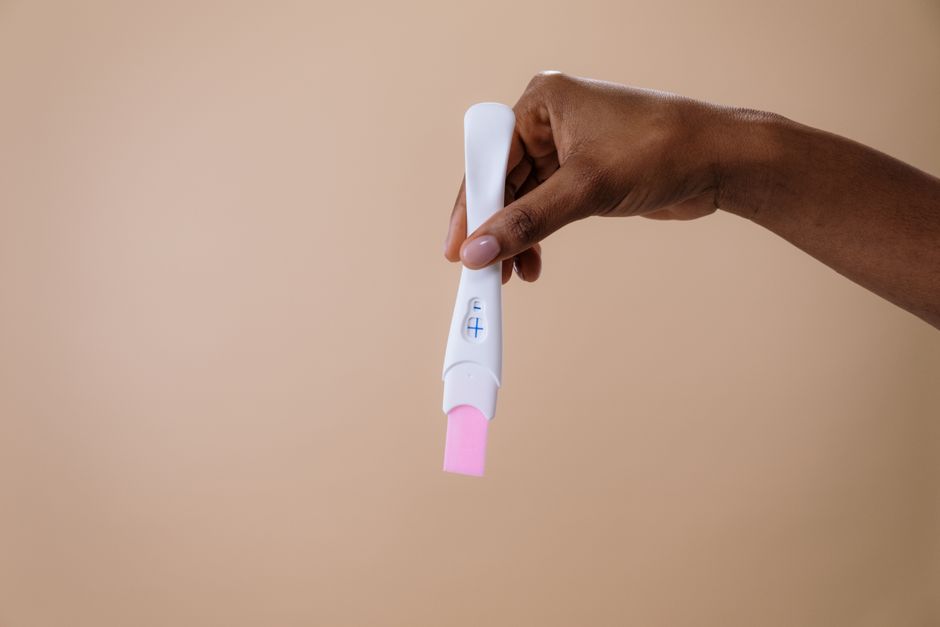
Yes, you can take a pregnancy test while on your period. The test measures a hormone in your urine or blood, and menstrual blood does not interfere with the result. However, the timing of your period matters more than the bleeding itself, because a true menstrual period usually means you are not pregnant.
How a Pregnancy Test Actually Works
Pregnancy tests detect a hormone called human chorionic gonadotropin, or hCG. Your body only produces this hormone after a fertilized egg attaches to the lining of the uterus. That attachment, called implantation, usually happens about 6 to 10 days after ovulation.
Home urine tests look for hCG in your urine. Blood tests done at a doctor’s office can detect it even earlier. The hormone doubles roughly every 48 to 72 hours in early pregnancy, so levels rise quickly in the first weeks.
Menstrual blood does not wash away hCG. It does not dilute your urine enough to change the test result either. The test strip only reacts to the hormone, not to blood or other fluids. So bleeding itself is not a problem for accuracy.
The Real Question: Is It a Period or Something Else?
Here is where the confusion starts. A true period means your uterine lining is shedding because no pregnancy occurred. If you are genuinely having a normal period, a pregnancy test will almost certainly be negative. There is no pregnancy to detect.
But some women experience bleeding during early pregnancy that they mistake for a period. This is called implantation bleeding, and it happens when the fertilized egg burrows into the uterine lining. It is usually lighter and shorter than a normal period, but not always. Some women also have light bleeding in early pregnancy for other reasons that are not well understood.
So if you are bleeding and still suspect pregnancy, the question is not whether blood affects the test. The question is whether what you are experiencing is actually a period or something else.
When to Take the Test for the Most Accurate Result
Timing matters more than anything else. Home pregnancy tests are most reliable when taken after you have missed your period. Testing too early can produce a false negative because hCG levels may still be too low to detect.
If you have irregular cycles, you may not know exactly when your period is due. In that case, wait at least 21 days after unprotected sex before testing. This gives your body enough time to produce detectable hCG if you are pregnant.
Some sensitive tests claim they can detect pregnancy up to 6 days before your missed period. These tests are more sensitive but still not as reliable as testing after a missed period. If you test early and get a negative result, test again a few days later.
Can a Period Be a Sign of Miscarriage?
Sometimes bleeding that seems like a period is actually an early miscarriage. This is more common than many people realize. Many early miscarriages happen before a woman even knows she is pregnant. The bleeding may seem like a slightly heavier or later period than usual.
If you took a pregnancy test and got a positive result, then started bleeding heavily, contact your doctor. Heavy bleeding with clots, severe cramping, or tissue passing through the vagina should always be evaluated by a healthcare professional. This is not something to manage at home on your own.
If you never took a test and just had a heavy period, you may never know whether it was a miscarriage. This is a common experience, and it does not mean anything is wrong with your fertility. Most women who experience early pregnancy loss go on to have healthy pregnancies later.
False Negatives and False Positives Explained
A false negative means the test says you are not pregnant but you actually are. This usually happens when you test too early. Your hCG levels are simply too low for the test to pick up. Testing again in a few days usually solves this.
A false positive means the test says you are pregnant but you are not. This is much rarer. It can happen if you have a chemical pregnancy, which is a very early miscarriage. It can also happen if you are taking certain medications that contain hCG, such as some fertility treatments.
Other rare causes of false positives include certain medical conditions that produce hCG-like substances. If you get a positive result and then start bleeding, the most likely explanation is a chemical pregnancy or early miscarriage. But you should still see a doctor to confirm.
What About Blood Tests?
Blood tests for pregnancy are more sensitive than urine tests. They can detect hCG as early as 6 to 8 days after ovulation. A quantitative blood test measures the exact amount of hCG in your blood. This is useful for tracking whether a pregnancy is progressing normally.
Doctors sometimes order two blood tests a few days apart to see if hCG levels are rising as expected. In a healthy early pregnancy, hCG levels should roughly double every 48 to 72 hours. If they are not rising normally, it may signal a problem.
Blood tests are not affected by bleeding either. The blood sample is taken from your arm, not from your uterus. So the same logic applies: bleeding does not interfere with the accuracy of a blood pregnancy test.
Can Birth Control Affect the Result?
Birth control does not affect pregnancy test results. The hormones in birth control pills, patches, rings, or injections do not contain hCG. They work by preventing ovulation, thickening cervical mucus, or thinning the uterine lining. None of these mechanisms produce the hormone that pregnancy tests detect.
However, birth control can affect your bleeding patterns. Some women have very light periods or no period at all while on certain types of birth control. This can make it harder to know when to test. If you are on birth control and concerned about pregnancy, test at least 21 days after the last time you had unprotected sex.
Other Reasons for Bleeding During Early Pregnancy
Not all bleeding during pregnancy is a miscarriage. Some women experience light bleeding or spotting in the first trimester for other reasons. Cervical irritation from a pelvic exam or intercourse can cause light bleeding. So can an infection in the cervix or vagina.
An ectopic pregnancy is a serious condition where the fertilized egg implants outside the uterus, usually in the fallopian tube. This can cause light bleeding and abdominal pain. Ectopic pregnancies are medical emergencies and require immediate treatment. If you have a positive pregnancy test and one-sided abdominal pain, seek medical care right away.
The point is that bleeding during pregnancy does not automatically mean miscarriage. But it does mean you should be evaluated by a doctor to determine the cause.
How to Test Correctly
Follow the instructions on the package exactly. Different tests have different instructions, but most recommend testing with your first morning urine. This is because your urine is most concentrated in the morning, making it easier to detect low levels of hCG.
Do not drink large amounts of water before testing. This can dilute your urine and potentially cause a false negative. Hold the test strip in your urine stream for the specified time, or dip it in a collected sample as directed. Then wait the exact amount of time before reading the result.
Reading the test too early or too late can produce inaccurate results. Most tests have a window of about 5 to 10 minutes. After that, the test may show an evaporation line that can be mistaken for a positive result.
What to Do If You Get a Positive Test While Bleeding
If you get a positive pregnancy test and you are bleeding, call your doctor. They will likely order a blood test to measure your hCG levels and may schedule an ultrasound. This is the best way to determine whether the pregnancy is viable and where it is located.
Do not assume the worst. Bleeding in early pregnancy is common, and many women who experience it go on to have healthy babies. But you need medical evaluation to know for sure.
Frequently Asked Questions
Can I take a pregnancy test while on my period?
Yes, menstrual blood does not affect the test result. But a true period usually means you are not pregnant, so the test will likely be negative.
How long after a missed period should I take a pregnancy test?
Testing on the first day of your missed period is reliable for most home tests. For the most accurate result, wait a few days after your missed period to allow hCG levels to rise.
Can implantation bleeding be mistaken for a period?
Yes, implantation bleeding is usually lighter and shorter than a period but can be confused with one. If you are unsure, take a pregnancy test.
Can birth control cause a false positive pregnancy test?
No, birth control hormones do not contain hCG and will not affect test results. A false positive is rare and usually has another cause.
