
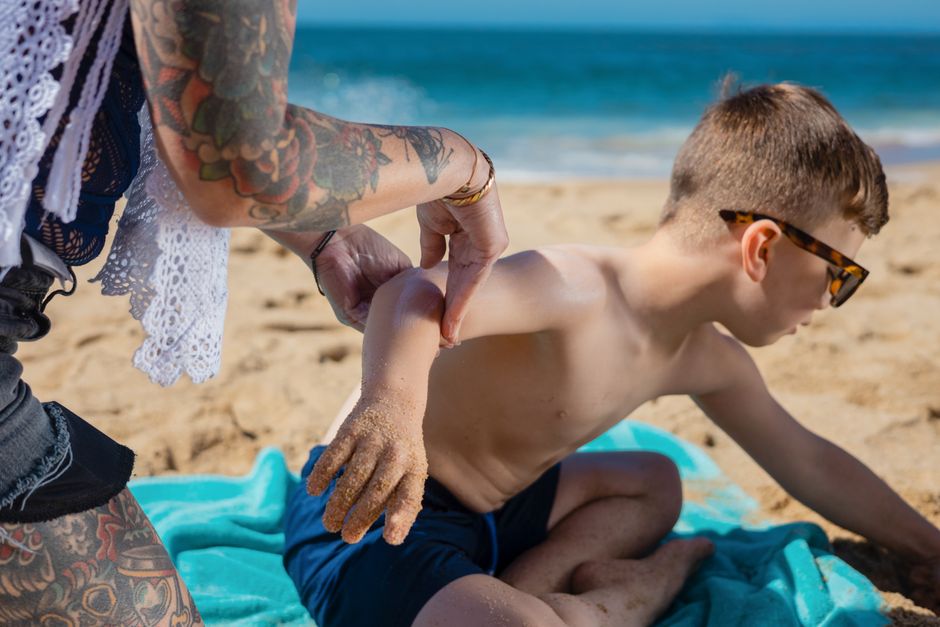
Yes, you can put sunscreen on a new tattoo, but not right away. A tattoo is an open wound for the first few days, and sunscreen belongs to the later stage of healing, once the skin has closed over. Putting it on too early can irritate the skin, trap bacteria, and interfere with how the ink settles.
Most artists and dermatologists suggest waiting until the outer layer of skin has healed, which usually takes about two to three weeks. After that, daily sunscreen becomes one of the most important things you can do to protect both your skin and your tattoo.
Why Does A New Tattoo Need Different Care Than Normal Skin?
A fresh tattoo is not just decorated skin. It is a wound.
The tattoo needle pushes ink through the epidermis, the outer layer, and deposits it into the dermis, the layer underneath. That process creates thousands of tiny punctures. In response, your immune system sends cells to the area, blood vessels open up, and the skin becomes red, swollen, and tender. This is normal and expected.
Over the next few days, the skin begins to close. A thin layer forms over the surface. Then it starts to flake and peel, much like a healing scrape. Underneath, the ink is being taken up by immune cells called macrophages, which is part of why tattoos fade over time.
During this window, the skin barrier is compromised. Anything you put on it can either help or harm. Sunscreen falls into the “harm” category early on because the ingredients and the rubbing motion can both irritate healing tissue.
When Can You Start Using Sunscreen On A New Tattoo?
Wait until the skin has fully closed and peeling has stopped, which typically takes two to three weeks. Some tattoos take longer. Larger pieces, tattoos on areas that stretch or rub, and tattoos on people who heal slowly may take four weeks or more.
How do you know it is ready? The surface should look like normal skin again. No scabs, no flaking, no open spots, no weeping. If you can run a clean finger across it without feeling raw or tender, it is probably healed enough for sunscreen.
If you are unsure, ask your tattoo artist or a dermatologist. They can look at it directly, which is something no article can do.
What Should You Use Instead Of Sunscreen While It Heals?
During the healing phase, the goal is to keep the tattoo clean, lightly moisturized, and covered from the sun by other means.
Most artists recommend a thin layer of a fragrance-free ointment or lotion. Some suggest petroleum-based products for the first few days, then a gentle unscented moisturizer. Others recommend specific aftercare balms. Follow the instructions your artist gave you, since aftercare routines vary and there is no single standard that all professionals agree on.
For sun protection during healing, use clothing instead of sunscreen:
- Wear loose clothing that covers the tattoo without rubbing it.
- Keep the tattoo out of direct sun entirely for the first few weeks.
- If you must be outside, use a bandage or gauze recommended by your artist, and change it as instructed.
Direct sun on a healing tattoo is a real problem. It can cause the skin to burn unevenly, slow healing, and lead to patchy ink. It can also increase the chance of infection if the skin is already irritated.




Why Does Sunscreen Matter So Much After A Tattoo Heals?
Once your tattoo has healed, sunscreen becomes the single most useful habit for keeping it looking sharp.
Ultraviolet light breaks down the ink particles sitting in the dermis. Over years, this causes fading, blurring, and loss of contrast. The colors that fade fastest tend to be the ones most sensitive to UV, though the exact rate depends on ink type, skin tone, and sun exposure.
UV exposure also affects the skin around the tattoo. Sun damage causes thinning, uneven pigmentation, and loss of elasticity. A tattoo on sun-damaged skin looks older than a tattoo on protected skin, even if the ink itself is the same age.
This is why dermatologists often describe sunscreen as the best long-term investment in a tattoo. It does not restore faded ink. It slows the fading that has not happened yet.
What Kind Of Sunscreen Is Best For A Tattooed Area?
Broad-spectrum sunscreen with an SPF of 30 or higher is the standard recommendation for general skin protection, and that applies to tattooed skin too. Broad-spectrum means it blocks both UVA and UVB rays.
Some practical points:
- Choose a formula you will actually use daily. The best sunscreen is the one you apply consistently.
- Fragrance-free and dye-free options tend to be gentler on skin that has recently healed.
- Mineral sunscreens containing zinc oxide or titanium dioxide are often recommended for sensitive or newly healed skin, though evidence does not show they protect ink better than chemical sunscreens.
- Reapply every two hours when outdoors, and more often if you are swimming or sweating.
No sunscreen is fully waterproof. “Water-resistant” means it maintains its SPF for a set time in water, as defined by labeling standards, not that it stays on all day.
One point worth clarifying: sunscreen does not make a tattoo fade. Some people avoid it because they have heard otherwise. The opposite is true. Sun exposure is what fades tattoos, and sunscreen slows that process.
Can You Use Sunscreen On A Tattoo That Is Still Peeling?
No. Peeling means the skin barrier is still rebuilding. Sunscreen applied during this stage can sting, clog the surface, and possibly introduce bacteria if the skin is not fully sealed.
Wait until peeling has completely stopped and the surface looks smooth. If a small area is still flaking while the rest looks healed, wait a few more days. It is not worth risking the outcome of a tattoo you paid for and will wear for decades.
Does Sunscreen Damage Tattoo Ink?
No. There is no evidence that sunscreen damages tattoo ink. The ingredients in sunscreen are designed to sit on the surface of the skin and absorb or reflect UV. They do not penetrate deep enough to interact with ink in the dermis.
What does affect ink is UV radiation. It breaks down pigment particles over time. Sunscreen reduces that exposure, which is why it protects the tattoo rather than harming it.
If a tattoo looks faded after years of sunscreen use, the cause is almost always the sun exposure that happened anyway, the natural aging of ink, or the original application. Not the sunscreen.
What About Tattoos On Areas That Are Hard To Protect?
Some spots are harder than others. Hands, necks, forearms, and ankles get constant sun exposure and are difficult to keep covered. Tattoos in these areas tend to fade faster, and that is largely a sun exposure issue.
For these areas, daily sunscreen is not optional if you want the tattoo to last. Reapply more often than you would on covered skin. Consider clothing with UPF protection when you will be outside for long stretches. Hats and sleeves help on the neck and arms.
There is no way to fully stop a tattoo from changing over time. Skin ages, ink shifts, and some fading is inevitable. What you can control is how fast it happens.
What Do Tattoo Artists And Dermatologists Actually Say?
There is broad agreement on the basics. Wait until the skin has healed before applying sunscreen. Use sunscreen daily once it has. Keep the tattoo out of direct sun during healing.
Beyond that, recommendations vary. Some artists suggest specific aftercare products. Some dermatologists recommend mineral sunscreens for sensitive skin. Some suggest waiting longer than three weeks before any sunscreen, especially for large pieces.
What you will not find is a professional who says to skip sunscreen entirely. The evidence on UV damage to skin and to tattoo pigment is consistent enough that the advice does not change from one expert to the next.
If your artist gives you aftercare instructions that differ from what you read here, follow your artist’s guidance for the healing phase. They can see your tattoo. This article cannot.
Frequently Asked Questions
Can I put sunscreen on my tattoo after 3 days?
No. Three days is too early. The skin is still an open wound at that stage, and sunscreen can irritate it and slow healing.
How long after getting a tattoo can I use sunscreen?
Wait until the skin has fully closed and peeling has stopped, which usually takes two to three weeks. Larger tattoos or slower healing may take longer.
Does sunscreen fade tattoo ink?
No. Sunscreen does not fade tattoo ink. UV radiation from the sun is what breaks down ink particles over time, and sunscreen reduces that exposure.
What SPF should I use on a healed tattoo?
SPF 30 or higher with broad-spectrum coverage is the standard recommendation for skin protection, including tattooed skin. Reapply every two hours when outdoors.
