
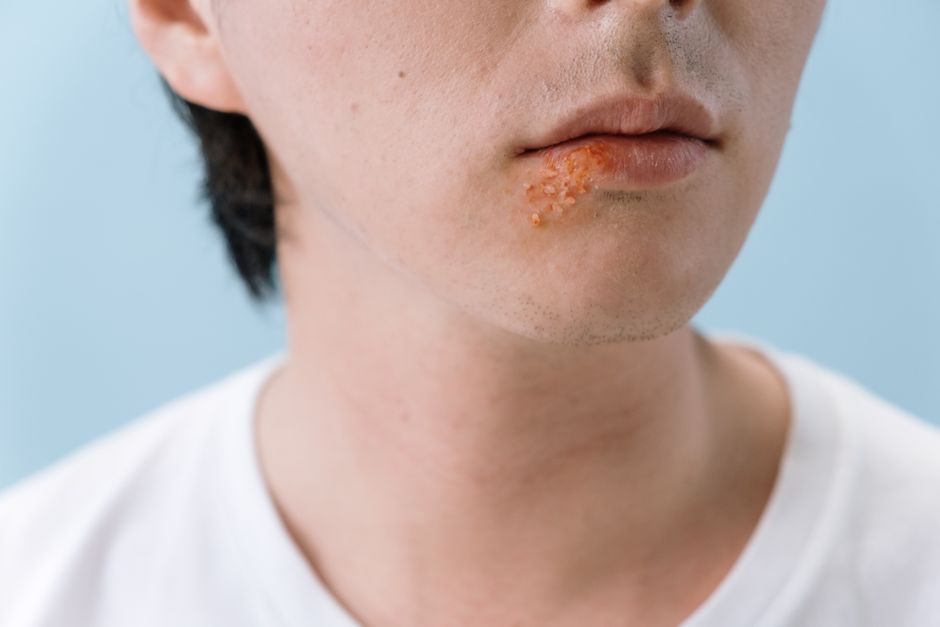
No, you should not pop a cold sore. A cold sore is a cluster of fluid-filled blisters caused by the herpes simplex virus, and it is not a pimple. Popping it does not release the virus or speed healing. It breaks the skin, spreads virus-laden fluid to nearby skin and fingers, and raises the risk of bacterial infection and scarring.
The blister is the body’s response to the virus, not a pocket of pus that needs draining. When it bursts on its own, that is part of the normal healing process. Forcing it open is not. Here is what actually happens during a cold sore, why popping backfires, and what helps instead.
What Is a Cold Sore, Exactly?
A cold sore is a viral infection of the skin, most often caused by herpes simplex virus type 1 (HSV-1). It usually appears on or around the lips and the border of the mouth.
The infection starts with a tingling, itching, or burning feeling in one spot. Within a day or so, small fluid-filled blisters form. These blisters cluster together, then break and crust over. The whole outbreak typically runs its course over about one to two weeks, though the exact timeline varies from person to person.
HSV-1 is extremely common. The World Health Organization estimates that billions of people worldwide carry it. Many have no symptoms at all. The virus stays in the body for life and can reactivate from time to time, which is why cold sores come back.
This is where a common misunderstanding matters. A cold sore is not a sign that your immune system has failed or that you are unclean. Reactivation is normal and can be triggered by things as ordinary as sun exposure, a fever, stress, or fatigue. Some people get them often. Others rarely or never do.
Can You Pop a Cold Sore Safely?
There is no safe way to pop a cold sore. The blister is not like a pimple with a single pore and trapped debris. It sits on delicate skin, and the fluid inside is packed with live virus.
When you squeeze or pierce it, you do several unhelpful things at once. You push virus-filled fluid onto the surrounding skin, where it can start new blisters. You create an open wound that bacteria can enter. And you damage tissue that was already inflamed, which can slow healing and increase the chance of a scar.
There is also a real risk of spreading the virus to your eyes or fingers. Herpes infection of the eye is a serious condition that needs medical care. This is a strong reason to keep your hands away from the sore and to wash them well if you touch the area at all.
If a blister is large, painful, or looks infected, that is a reason to see a clinician, not to squeeze it. Drainage of a herpes lesion is not something to do at home.
What Happens If You Pop It Anyway?
If you have already popped a cold sore, the main concerns are spread and infection. Watch the area for signs that need medical attention.
Signs to take seriously include spreading redness, increasing pain, warmth, pus, or a fever. These can point to a bacterial infection on top of the viral one. Seek care if they appear.
Seek prompt medical care if the virus reaches the eye, causing pain, redness, or blurred vision, or if a cold sore appears near the eye at all. People with weakened immune systems and newborns exposed to the virus also need urgent medical advice.
To limit spread in the meantime, keep the area clean and dry, avoid touching it, and do not share towels, lip balm, utensils, or drinks while the sore is present. The virus spreads through direct contact with the sore or its fluid.
What Actually Helps a Cold Sore Heal?
Cold sores heal on their own in most healthy people. The goal of treatment is to ease symptoms and, in some cases, shorten the outbreak.
Antiviral medicines are the main treatment that targets the virus itself. Some are available as creams, and others are taken by mouth. Oral antivirals tend to work best when started at the first sign of tingling, before the blister fully forms. Whether an antiviral is right for you, and which one, is a decision for a clinician or pharmacist, not a self-directed choice.
For comfort while it heals, some people find relief from a cool compress or an over-the-counter topical product. These ease discomfort but do not cure the infection. No cream or home remedy has been shown to reliably stop a cold sore once it has formed.
Be cautious with viral remedies. Applying toothpaste, alcohol, nail polish remover, or essential oils to a cold sore is not supported by evidence and can irritate broken skin. Some of these can make the damage worse.
If you get frequent or severe outbreaks, talk to a clinician. There are preventive approaches, including daily antiviral medicine for some people, that a clinician can assess. This is common clinical practice for recurrent outbreaks, though whether it fits your situation depends on your history.
Cold Sore Versus Pimple: Why the Difference Matters
A cold sore and a pimple can look similar at a glance, but they behave differently and need different handling. The key difference is that a cold sore is contagious and a pimple is not.
- Cause: A cold sore comes from a virus. A pimple comes from a blocked pore, oil, and bacteria.
- Location: Cold sores usually sit on or right at the edge of the lips. Pimples can appear anywhere, including the lip line but also the chin, nose, and forehead.
- Early feeling: Cold sores often start with tingling or burning before anything is visible. Pimples usually do not.
- Look: Cold sores tend to form clusters of small blisters that crust over. Pimples are usually single bumps, sometimes with a white center.
- Spread: Cold sore fluid can infect other skin and other people. Pimples do not spread.
Because the two can be confused, the safe rule is simple. If a sore is on or near the lips and you are not sure what it is, treat it as a cold sore. Do not squeeze it. If it does not follow the usual pattern, or if you are unsure, a clinician can tell the difference.
How Do You Prevent Cold Sores From Coming Back?
You cannot fully prevent cold sores if you carry the virus, but you can reduce how often they flare. The virus reactivates more easily when your body is under strain.
Common triggers include strong sun, fever or illness, physical stress, lack of sleep, and skin irritation. Using lip balm with sun protection and shading your lips from strong sun can help some people. Managing stress and getting enough rest are reasonable general steps, though the direct link to outbreaks varies from person to person.
For people with frequent outbreaks, a clinician may recommend preventive antiviral treatment. This is a decision to make with a clinician based on how often you get them and how severe they are.
If you are around a newborn, take extra care. HSV infection in a newborn is a medical emergency. Do not kiss a baby or let a baby touch a cold sore, and wash your hands carefully.
When Should You See a Doctor for a Cold Sore?
Most cold sores do not need medical care. Some situations do.
See a clinician if a cold sore is near or in the eye, if it lasts longer than the usual one to two weeks, or if outbreaks are frequent or severe. Also seek care if you have a weakened immune system, since the infection can be more serious in that setting.
Get urgent help for a cold sore in a newborn, or if you develop signs of a bacterial infection such as spreading redness, pus, or fever. These are not situations to manage at home.
The core message holds. A cold sore is a viral blister, not a pimple, and popping it spreads the virus and invites infection. Leave it alone, keep your hands clean, and let it heal. For treatment that targets the virus, ask a clinician or pharmacist early, ideally at the first tingle.
Frequently Asked Questions
Can you pop a cold sore to make it heal faster?
No. Popping a cold sore does not speed healing and can spread the virus to nearby skin and your fingers. It also raises the risk of bacterial infection and scarring.
What happens if you pop a cold sore?
The fluid inside is full of live virus, so squeezing can start new blisters and create an open wound that bacteria can enter. Watch for spreading redness, pus, or fever, which need medical care.
Is a cold sore the same as a pimple?
No. A cold sore is a viral blister that is contagious, while a pimple is a blocked pore and is not. If a sore is on or near the lips and you are unsure, do not squeeze it.
How long does a cold sore last?
Most cold sores heal on their own in about one to two weeks, though the timeline varies. Antiviral treatment started at the first tingle may shorten an outbreak for some people.
