
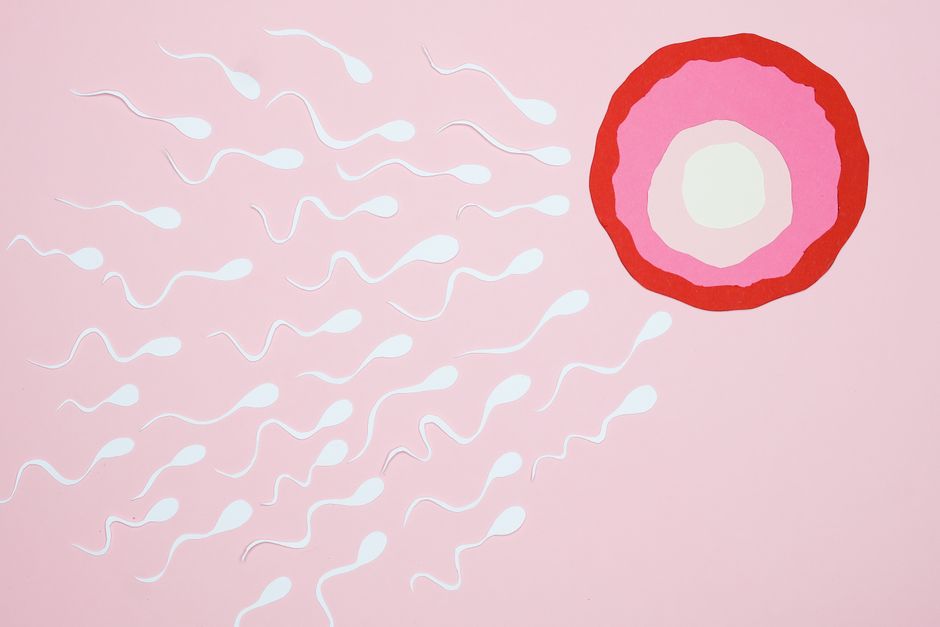
Yes, you can ovulate twice in one cycle — but only in a specific way. The two eggs must be released within about 24 hours of each other, during a single ovulation event. What you cannot do is ovulate in week two, and then again in week four of the same cycle.
This distinction matters more than most people realize. It shapes how twins happen, how fertility apps get things wrong, and why the rhythm method fails more often than couples expect.
What Actually Happens During Ovulation
Ovulation is the release of a mature egg from a follicle in one of the ovaries. In a typical cycle, a group of follicles begins developing, but only one becomes dominant and ruptures. The rest break down.
The egg then travels into the fallopian tube, where it survives for roughly 12 to 24 hours. Sperm can survive in the reproductive tract for up to about five days under favorable conditions. That window — the egg’s short life plus sperm’s longer survival — is why the fertile window spans several days even though ovulation itself is a single moment.
Once the egg is released, the ruptured follicle becomes a structure called the corpus luteum. It produces progesterone, which thickens the uterine lining and, critically, suppresses the hormones that would start another follicle growing. That suppression is the reason a second ovulation cannot happen later in the same cycle.
So the answer hinges on timing. Two eggs within one ovulation event: possible. Two separate ovulation events in one cycle: not possible.
Can You Ovulate Twice In One Cycle and Release Two Eggs?
This is where the real answer lives. In a small percentage of cycles, two follicles mature at nearly the same time, and both release an egg within a short window — typically within 24 hours. This is called multiple ovulation.
When two eggs are released and both are fertilized, the result is fraternal (dizygotic) twins. They are no more genetically similar than any two siblings. This differs from identical (monozygotic) twins, which come from a single fertilized egg that splits.
Multiple ovulation becomes more common with age, up to a point. Women in their late 30s and early 40s tend to have higher levels of follicle-stimulating hormone (FSH), which can push more than one follicle toward maturity in the same cycle. This is one reason fraternal twinning rates rise with maternal age, though the effect is modest and varies between individuals and populations.
Fertility medications that stimulate the ovaries intentionally increase the odds of releasing multiple eggs. That is a known and expected effect, and it is why these treatments carry a higher risk of twins and higher-order multiples.
Why Some People Believe They Ovulate More Than Once
A common claim online is that women can ovulate multiple times across a cycle — sometimes days or even a week apart. This idea circulates widely, but it conflicts with how the hormonal cycle works.
After ovulation, progesterone from the corpus luteum actively suppresses the follicle-stimulating and luteinizing hormones needed to grow and release another egg. Without that suppression, the cycle would not function. A second, separate ovulation later in the same cycle would require the corpus luteum to fail early and a new follicle to develop and rupture — something that is not part of normal menstrual physiology.
Where the confusion comes from is usually one of these:
- Multiple ovulation — two eggs released close together, which gets described as “ovulating twice.”
- Misread ovulation tests — LH (luteinizing hormone) surges can sometimes be missed or misread, leading to false conclusions about timing.
- Irregular cycles — in conditions like polycystic ovary syndrome (PCOS), ovulation timing is unpredictable, so it can seem like it happens more than once.
- Breakthrough bleeding — mid-cycle spotting is often mistaken for a second ovulation.
None of these mean two separate ovulations occurred.





Does Ovulation Always Happen on Day 14?
No. The day-14 rule is a textbook average, not a biological rule. It assumes a 28-day cycle, and many people do not have 28-day cycles.
What is more consistent is the length of the luteal phase — the time from ovulation to the next period. It usually runs about 12 to 14 days. So ovulation timing is better estimated by counting backward from the expected start of the next period than by assuming day 14.
For someone with a 32-day cycle, ovulation is more likely around day 18 or 19. For someone with a 24-day cycle, it may be closer to day 10. This is why fertility apps that rely on a fixed day-14 assumption can be off by several days.
Cycle length itself can shift from month to month. Stress, illness, travel, significant weight change, and sleep disruption can all delay ovulation. When ovulation is delayed, the whole cycle lengthens — but it still results in only one ovulation event.
Can You Ovulate Twice Without Knowing It?
Ovulation often happens without any noticeable signs. Many women feel nothing at all. Others notice mild cramping on one side, a change in cervical mucus, or a slight rise in basal body temperature after ovulation.
Tracking methods each have limits:
- LH test strips detect the surge that precedes ovulation, but they can miss it or give false positives, especially in PCOS.
- Basal body temperature confirms ovulation after the fact, not before. It cannot predict it.
- Cervical mucus changes are useful but subjective and vary between individuals.
- Progesterone blood tests around day 21 of a 28-day cycle are commonly used to confirm ovulation, though the timing needs adjusting for longer or shorter cycles.
No home method reliably detects multiple ovulation. The only way to know two eggs were released is the outcome — fraternal twins, or ultrasound visualization during a monitored fertility cycle.
What This Means for Getting Pregnant or Avoiding Pregnancy
If you are trying to conceive, the practical takeaway is that the fertile window is defined by one ovulation event, not two. Having sex in the days leading up to ovulation and on the day of ovulation covers the window. Because sperm survive longer than eggs, sex before ovulation is generally more likely to result in pregnancy than sex after.
If you are avoiding pregnancy, the key point is that the rhythm method — counting days based on a calendar — is unreliable. It assumes predictable ovulation, and ovulation is frequently not predictable. Cycle-tracking methods that combine multiple signs (mucus, temperature, LH testing) tend to be more accurate than calendar math alone, but none are as effective as barrier methods or hormonal contraception when used correctly.
One thing worth being clear about: the existence of multiple ovulation does not mean the fertile window is wider than commonly described. Two eggs released within 24 hours still fall inside the same short window. The window does not stretch across the cycle.
When Irregular Ovulation Is a Sign of Something Else
If your cycles are consistently shorter than 21 days, longer than 35 days, or very unpredictable, that pattern can point to an underlying issue. Common causes include PCOS, thyroid dysfunction, high prolactin levels, and perimenopause.
These conditions affect when or whether ovulation happens — not how many times it happens per cycle. A doctor can evaluate cycle irregularity with blood tests and, in some cases, ultrasound. If you have been trying to conceive for a year (or six months if you are over 35) without success, that is a reasonable point to seek evaluation.
Frequently Asked Questions
Can you ovulate twice in one cycle?
You can release two eggs within about 24 hours during a single ovulation event, which is called multiple ovulation. You cannot have two separate ovulation events later apart in the same cycle because progesterone prevents it.
Can you ovulate twice in one month?
Only if you have two separate menstrual cycles within that calendar month. Each cycle allows one ovulation event, so two cycles could mean two ovulations — but not two within the same cycle.
Does ovulating twice mean you will have twins?
Not necessarily. Releasing two eggs raises the chance of fraternal twins, but both eggs must be fertilized and both must implant for twins to develop.
Can you ovulate twice in one cycle and still get a period?
Yes. After ovulation, the corpus luteum produces progesterone for roughly 12 to 14 days, then breaks down if no pregnancy occurs, which triggers a period. This happens whether one egg or two were released.
