
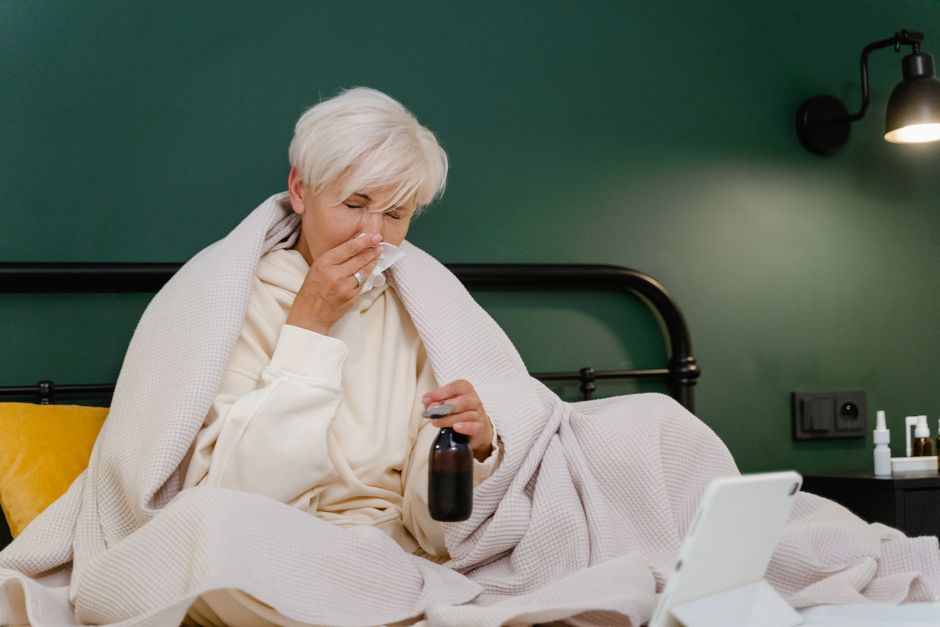
Yes, you can lose your sense of taste with a cold, though it happens less often than you might think. Most people who feel like food has gone bland during a cold are actually dealing with a blocked nose, not damage to their taste buds. True taste loss is possible with a cold, but it is usually partial and temporary.
The confusion matters because taste and smell are easy to mix up. Knowing which one is affected tells you a lot about what is going on and when to see a doctor.
Can You Lose Taste With a Cold?
Yes — but the loss is usually partial and short-lived. A cold can reduce your ability to taste, and in most cases the change is mild rather than a complete loss.
The reason is anatomy. Your sense of taste comes from taste buds on your tongue and in your mouth, which detect sweet, salty, sour, bitter, and savory (umami). Your sense of smell comes from receptors high in your nasal passages. When you chew and swallow, aroma travels up the back of your throat to those receptors. That pathway is called retronasal smell, and it does much of the heavy lifting for what we call “flavor.”
A cold inflames and blocks the nasal passages. Airflow to the smell receptors drops. Food still registers as sweet or salty on your tongue, but the rich, specific flavor — coffee, garlic, chocolate — fades. Many people describe this as losing taste when they have actually lost smell.
Direct taste loss can happen too. Some cold viruses cause inflammation in the mouth and nose that affects taste function temporarily. The evidence points to this being less common and generally milder than smell-related changes.
Is It Taste Loss or Smell Loss?
Most “taste loss” during a cold is smell loss. This is the single most useful thing to understand about the topic.
Here is a simple way to tell them apart. If you can still detect that a food is sweet, salty, or sour but cannot identify what flavor it is, your taste buds are working and your smell is not. If everything tastes metallic, bitter, or simply wrong regardless of what you eat, that suggests a genuine taste disturbance.
You can test this at home with a few common items:
- Put a pinch of sugar on your tongue. If you can taste sweetness, your basic taste function is intact.
- Try a small amount of salt, then lemon, then a bitter food like dark chocolate or black coffee. These cover the main taste categories.
- Pinch your nose closed and eat something with a strong flavor, like a piece of fruit or a mint. Then release your nose. If the flavor suddenly appears, your smell pathway is doing the work.
That last test is the clearest demonstration of how much smell contributes to flavor. It is also why people with a stuffy nose often report that food “has no taste” even when their taste buds are perfectly healthy.
How Long Does Taste Loss From a Cold Last?
In most people, taste and smell changes from a common cold improve within one to two weeks as nasal congestion clears. That timeline reflects the typical course of a cold rather than a strict rule.
Some people notice that flavors stay slightly muted for a short while after other symptoms resolve. This is generally not a cause for concern if it is improving.
Smell loss that lasts longer deserves attention. Viral infections are a recognized cause of lasting smell dysfunction, and a small share of people do not recover fully on their own. If your sense of smell or taste has not returned after a few weeks, or if it is getting worse rather than better, talk to a doctor. This is especially important if the loss is complete rather than partial.
What Causes Taste Changes During a Cold?
Several mechanisms can be at work at the same time during a cold. Understanding them helps explain why the experience varies so much from person to person.
Nasal congestion is the most common driver. Swollen tissue and mucus block airflow to the smell receptors, so aromas never reach them. This produces the bland-food effect described earlier.
Inflammation in the mouth and nose can affect taste buds directly. Cold viruses trigger an immune response, and that inflammation can temporarily alter how taste receptors function. Some people notice a metallic or bitter taste during a cold for this reason.
Postnasal drip — mucus running down the back of the throat — can coat the tongue and taste buds, dulling their sensitivity.
Reduced appetite and dry mouth are common during illness. Saliva helps dissolve food molecules so they can reach taste buds. A dry mouth can make food taste weaker even without any direct effect on the taste buds themselves.
It is also worth separating a cold from other causes. Influenza, COVID-19, and other respiratory infections can all affect taste and smell. Loss of smell and taste became a widely recognized sign of COVID-19, and it can occur with other viral illnesses too. A cold is one possible cause among several, and the symptoms alone do not reliably tell them apart.
Does a Blocked Nose Really Change How Food Tastes?
Yes, and the effect can be striking. A blocked nose is the most common reason food tastes bland during a cold, even when taste buds are completely normal.
Flavor is a combined experience. Your brain builds it from taste signals on the tongue plus smell signals from the nose, along with texture and temperature. When the smell component drops out, the result is a flattened version of the food. Sweet is still sweet, but it loses its identity.
This is why a stuffy nose can make a favorite meal seem disappointing without any actual damage to your sense of taste. It also explains why the effect resolves when congestion clears rather than needing any specific treatment for taste.
What Can You Do About Taste Changes From a Cold?
There is no treatment that specifically restores taste during a cold. The practical approach is to manage the cold and support your sense of smell while it recovers.
Keeping nasal passages clear is the most direct step. Saline nasal sprays or rinses can help loosen mucus and reduce congestion. Steam from a hot shower or a bowl of hot water may provide temporary relief. Over-the-counter decongestants can reduce swelling, but they should be used as directed and are not appropriate for everyone — people with high blood pressure, heart conditions, or those taking certain medications should check with a pharmacist or doctor first.
Staying hydrated matters more than it might seem. Saliva is needed for taste buds to work properly, and a dry mouth worsens the bland-food effect.
Some people find that strongly flavored foods are easier to taste during a cold. Spices, citrus, and foods with bold textures can make meals more enjoyable when smell is reduced. This is a practical tip rather than a treatment — it does not speed recovery, but it can make eating less frustrating.
If you smoke, this is a good moment to note that smoking independently reduces both taste and smell function. It is one of the more consistent findings in this area, and it can make cold-related changes worse.
When Should You See a Doctor?
Most taste and smell changes from a cold resolve on their own. Certain situations warrant medical attention.
- Loss of smell or taste that lasts more than a few weeks or is not improving
- Complete loss of smell or taste rather than a partial change
- Taste changes that persist after all other cold symptoms have cleared
- Loss of smell or taste along with other neurological symptoms, such as weakness, confusion, or severe headache
- A distorted sense of smell, where ordinary things smell foul or burnt
These signs do not automatically mean something serious, but they are worth evaluating. A doctor can help determine whether the cause is a lingering viral effect, another condition, or something that needs specific attention.
What Else Can Cause Taste Loss?
A cold is only one possible cause. If taste changes persist or occur without cold symptoms, other explanations should be considered.
Other viral infections, including influenza and COVID-19, are well-recognized causes. Sinus infections and nasal polyps can block airflow and reduce smell. Allergies cause congestion that affects flavor perception. Some medications can alter taste as a side effect. Head injury, certain neurological conditions, and nutritional deficiencies are also recognized causes, though these are less common.
Age matters too. Taste and smell function tend to decline gradually with age, which is a normal part of aging rather than a sign of disease.
The key distinction is timing. Taste changes that arrive with a cold and fade as the cold resolves are usually not a concern. Taste changes that appear without a clear cause, persist, or worsen deserve a closer look.
Frequently Asked Questions
Can a cold make you lose your taste completely?
Complete taste loss from a cold is uncommon. Most people experience a partial dulling of flavor, usually because nasal congestion is blocking smell rather than damaging taste buds.
How long does it take for taste to come back after a cold?
Most people notice improvement within one to two weeks as congestion clears. If taste or smell has not returned after a few weeks, see a doctor.
Is it taste or smell that you lose with a cold?
It is usually smell. A blocked nose prevents aromas from reaching smell receptors, which flattens flavor even when taste buds are working normally.
Can I speed up getting my taste back after a cold?
No treatment is proven to restore taste faster during a cold. Keeping nasal passages clear and staying hydrated supports normal function while the cold runs its course.
