
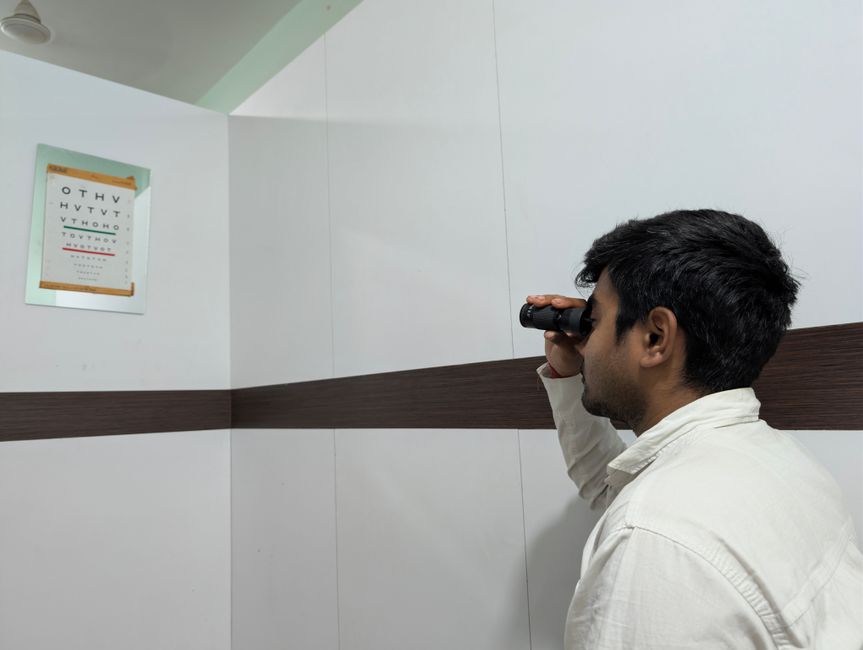
Can you improve your eyesight? For most vision problems, no treatment has been shown to reverse the underlying cause. What you can do is correct blurry vision, slow certain progressive conditions, and lower your risk of vision loss. Those are different goals, and mixing them up is where a lot of bad eye advice comes from.
Glasses, contacts, and surgery can make vision sharper right away. They do not fix the eye itself. Separately, a small number of conditions — some cases of amblyopia in children, for example — can genuinely improve with treatment if caught early. For adults, the honest answer depends on what is causing the problem.
What Actually Causes Blurry Vision?
Most blurry vision comes down to how light bends as it enters your eye. In a normal eye, light focuses sharply on the retina at the back. In a nearsighted eye, it focuses in front of the retina. In a farsighted eye, it would focus behind it. Astigmatism means the cornea is shaped unevenly, so light scatters instead of landing at one point.
These are called refractive errors. They are the most common reason people need glasses, and they are structural. No exercise, supplement, or diet changes the length of your eyeball or the curve of your cornea.
Other causes of blurry vision are not refractive at all:
- Cataracts — clouding of the lens, usually related to age
- Glaucoma — damage to the optic nerve, often from high eye pressure
- Macular degeneration — breakdown of the central retina
- Diabetic retinopathy — blood vessel damage from diabetes
- Dry eye — an unstable tear film that scatters light
The distinction matters. A refractive error is a focusing problem. The conditions above are diseases, and some of them can cause permanent vision loss if untreated. Blurry vision that comes on suddenly, or comes with pain, flashes, or floaters, needs urgent medical attention.
Can Eye Exercises Improve Your Eyesight?
Eye exercises do not change refractive errors. There is no evidence that moving your eyes in patterns, focusing near and far, or covering one eye will reduce your need for glasses. The muscles that move your eye are not the same structures that focus light.
That said, eye exercises are not useless in every situation. Vision therapy — a structured program supervised by an eye care professional — has evidence for certain specific problems. These include some cases of convergence insufficiency, where the eyes struggle to work together for close tasks, and certain types of double vision. This is a clinical treatment for a diagnosed condition, not a general vision improvement routine.
The popular “eye yoga” videos online are a different thing. They may help you blink more and feel less eye strain, but feeling better is not the same as seeing better. No study has shown they change a prescription.
Do Vitamins and Supplements Help Your Eyes?
For most people, no. A well-nourished adult taking a general eye supplement has no clear evidence of benefit. The marketing runs far ahead of the data here.
There is one area where the evidence is stronger. A large clinical trial found that a specific high-dose formula of antioxidants and minerals slowed the progression of intermediate age-related macular degeneration to advanced disease in some people. That formula — often called AREDS2 — contains vitamin C, vitamin E, zinc, copper, lutein, and zeaxanthin. It was studied in people who already had intermediate AMD, not in the general population.
That last point is the one most people miss. The supplement helped people with an existing, diagnosed eye disease. It did not prevent AMD in healthy eyes, and it did not improve vision in people without the disease. Taking it “just in case” is not supported by the trial data.
Two more cautions. High-dose beta-carotene, which was in the original formula, was linked to a higher risk of lung cancer in smokers, which is why it was replaced with lutein and zeaxanthin. And high-dose vitamin E and beta-carotene have shown harm in some other large trials. More is not better with these nutrients.




Does Diet or Lifestyle Change Your Eye Health?
Diet does not reverse a refractive error, but it does influence your risk of some eye diseases. The strongest links are with cardiovascular and metabolic health, because the eye is full of small blood vessels.
What the evidence supports:
- Managing blood sugar matters a great deal in diabetes, since diabetic retinopathy is a leading cause of vision loss in working-age adults
- Managing blood pressure supports the small vessels in the retina
- Not smoking lowers risk for cataracts and macular degeneration
- A diet rich in leafy greens, colorful vegetables, and fish is associated with lower risk of AMD in observational studies
Observational studies show associations, not proof of cause. People who eat well also tend to do many other things that protect their health. Still, the direction of the evidence is consistent, and these habits help your whole body, not just your eyes.
One nutrient worth knowing about: lutein and zeaxanthin concentrate in the macula, the part of the retina responsible for sharp central vision. They are found in spinach, kale, and egg yolks. Whether eating more of them prevents AMD in healthy people is not established. Getting them from food is reasonable; expecting them to fix your vision is not.
Can You Improve Your Eyesight Without Glasses or Surgery?
For refractive errors, no. If your eye is too long, too short, or your cornea is unevenly curved, the only reliable way to focus light correctly is to change how light enters the eye. That means lenses or a procedure that reshapes the cornea.
Some people do notice their vision seems to fluctuate. Blood sugar swings, dry eye, and fatigue can all affect how sharp things look from day to day. That is a change in the quality of the image, not a change in the eye’s structure. When the underlying issue is treated, vision often returns to its usual baseline.
There is one genuine exception, and it is age-related. Around age 40, the lens loses flexibility and close-up vision blurs. This is called presbyopia, and it happens to nearly everyone. It is not a sign of disease and it does not reverse. Reading glasses, bifocals, or multifocal contacts are the standard answer.
For children, the picture is different. Amblyopia — sometimes called lazy eye — can genuinely improve with treatment, but only within a developmental window. Patching, glasses, or other therapy can strengthen the weaker eye if started early. This is why vision screening in childhood matters. Once that window closes, the improvement is much harder to achieve.
What About LASIK and Other Vision Correction?
Laser surgery reshapes the cornea so light focuses correctly. For many people with mild to moderate nearsightedness, farsightedness, or astigmatism, it can reduce or remove the need for glasses. This is a real change in how the eye focuses, not a temporary fix.
It is not risk-free and it is not permanent in every case. Some people still need glasses for certain tasks. Vision can shift over time, especially with age. Dry eye is a common side effect, and in some people it persists. Rare complications exist. A thorough evaluation with an ophthalmologist is the only way to know whether you are a good candidate.
Other options include implantable lenses and, for presbyopia, multifocal lenses. Each has its own trade-offs. None of them treats the underlying disease processes that cause glaucoma, macular degeneration, or diabetic retinopathy.
The Bottom Line on Improving Eyesight
Correcting vision and improving the health of your eyes are two separate goals, and both matter. Glasses, contacts, and surgery fix how light focuses. Managing blood sugar, blood pressure, and smoking habits lowers your risk of the diseases that steal vision over time.
What does not work is the promise that exercises, supplements, or a special diet will let you throw away your glasses. The evidence is not there. What does work is regular eye exams, because the conditions that cause lasting damage — glaucoma, macular degeneration, diabetic retinopathy — are often silent until damage is advanced. Catching them early is where real vision preservation happens.
Frequently Asked Questions
Can you improve your eyesight naturally?
You cannot reverse a refractive error with natural methods, because the shape of your eye and cornea does not change with exercise or diet. You can lower your risk of some eye diseases through blood sugar control, blood pressure management, and not smoking.
Do eye exercises really work?
Eye exercises do not change a glasses prescription, and no study has shown they improve refractive errors. Vision therapy can help specific diagnosed conditions like convergence insufficiency, but that is a clinical treatment, not a general routine.
Can vitamins improve eyesight?
For most people, no supplement has been shown to improve vision. A specific high-dose formula slowed progression of intermediate macular degeneration in one large trial, but it did not prevent the disease or help people without it.
Can you improve eyesight at any age?
Children with amblyopia can sometimes improve vision with treatment, but only within a developmental window. In adults, vision correction works at any age, but the underlying eye structure does not change.
