
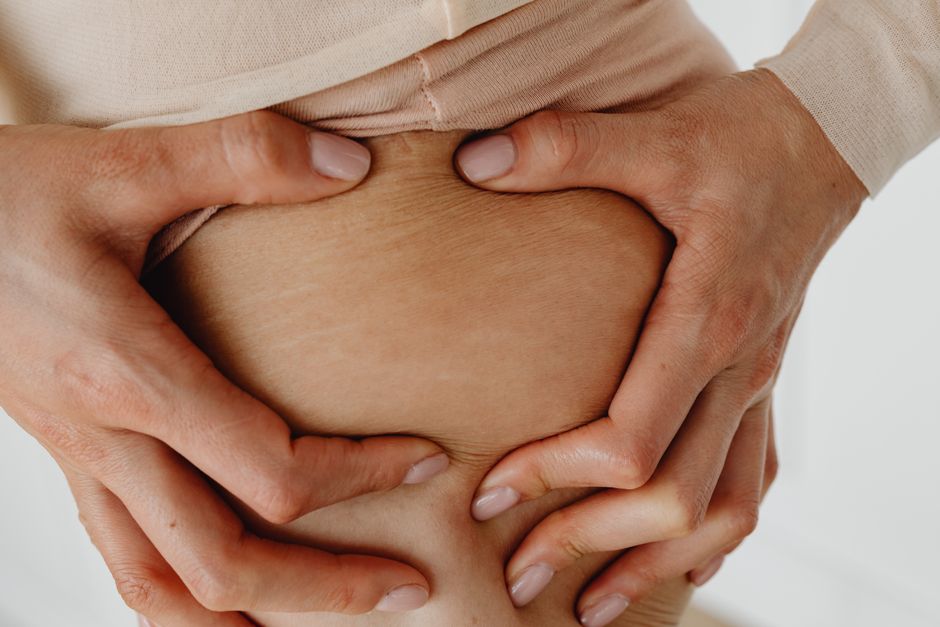
Yes, you can get stretch marks when you lose weight, though it is less common than getting them from weight gain. Stretch marks form when skin stretches or shrinks faster than it can adapt, and rapid weight loss can trigger the same process. The marks are not caused by the weight loss itself but by how quickly the skin changes size.
Most people think of stretch marks as a weight-gain problem. That makes sense, since pregnancy and rapid growth during the teen years are two of the most common causes. But the skin does not care which direction it is being pulled. What matters is speed and how much the skin has to adjust.
Can You Get Stretch Marks When You Lose Weight?
Yes. Weight loss can cause stretch marks, especially when the loss is fast or the amount is large.
Stretch marks, called striae by doctors, are a type of scar. They happen when the middle layer of your skin, the dermis, gets stretched or compressed beyond what its elastic fibers can handle. The dermis contains collagen and elastin, two proteins that let skin stretch and snap back. When that support network tears, the skin heals with scar tissue instead of normal skin. That scar tissue shows up as a line or band that looks different from the skin around it.
During weight loss, the skin that was stretched over extra fat has to shrink down to fit a smaller body. If the skin cannot keep pace, the same tearing can happen. This is why people who lose a large amount of weight quickly sometimes notice new marks or see old ones change.
The key factor is not the direction of the weight change. It is how fast it happens and how much the skin has to adapt.
Why Does Skin Tear During Weight Loss?
Skin is built to stretch, but only at a certain speed. Collagen and elastin fibers give skin its flexibility and its ability to return to shape. When the body changes size faster than those fibers can remodel, they can break.
Think of a rubber band that has been stretched around a large object for a long time. When you suddenly remove the object, the band does not always spring back to its original shape. Some of that stretch is permanent. Skin behaves in a similar way, though it is far more complex than a rubber band.
Two things drive the process during weight loss:
- Speed of loss. Rapid weight loss gives skin less time to adjust. Slow, gradual loss is easier on the skin.
- Amount of loss. Losing a large amount of weight means the skin has more ground to cover as it shrinks.
There is also a timing issue. Skin that was already stretched from weight gain or pregnancy may have lost some of its elasticity. That older, thinner skin has less room to adapt when the body shrinks. So the skin most likely to develop new marks during weight loss is often skin that was already under strain.
What Do Weight Loss Stretch Marks Look Like?
Stretch marks change appearance over time, and that timeline is one of the most reliable things about them.
When a mark first forms, it tends to look pink, red, purple, or reddish-brown, depending on your skin tone. Doctors call this the striae rubrae stage. The mark may feel slightly raised or have a different texture than the surrounding skin. During this early phase, the mark is still active, meaning the skin is still healing and remodeling.
Over months to years, the mark fades. It becomes lighter, often silvery or white, and may look like a thin indented line. This is the striae albae stage, the mature or older stage. At this point the mark is essentially a scar, and it is much harder to change.
Stretch marks can appear on the abdomen, thighs, hips, breasts, upper arms, and lower back. Where they show up depends on where your body stored fat and how that fat came off.
One detail worth knowing: stretch marks are not harmful to your health. They do not signal a medical problem on their own. They are a cosmetic concern for most people, not a health one.





Who Is More Likely to Get Stretch Marks From Weight Loss?
Some people are more prone to stretch marks than others, and that tendency is largely out of their control.
Genetics play a major role. If your parents have stretch marks, you are more likely to get them too. This is one of the strongest known risk factors.
Other factors that raise the odds include:
- Rapid weight loss. Losing weight quickly, whether through very low-calorie diets or certain medical interventions, gives skin less time to adapt.
- Large amounts of weight loss. The more weight lost, the more the skin has to shrink.
- Age. Skin loses collagen and elasticity as you get older, so it adapts less easily.
- Prior stretch marks. Skin that has already been stretched is more likely to develop new marks.
- Certain medical conditions and medications. Some conditions that affect connective tissue, and long-term use of corticosteroid medications, are linked to stretch marks.
Body weight itself is not the whole story. A person who loses a small amount of weight slowly may never develop a mark, while someone who loses a large amount quickly may develop several.
Can You Prevent Stretch Marks During Weight Loss?
There is no proven way to prevent stretch marks completely. That is an honest statement, not a pessimistic one. The research on prevention is limited, and no product or routine has been shown to stop them in everyone.
What may help is slowing down the process so your skin has time to keep up. Losing weight gradually is generally easier on the skin than losing it fast. This is the one factor most within your control, and it aligns with general guidance for sustainable weight loss anyway.
Keeping skin hydrated may support its overall health, though there is no strong evidence that moisturizers or oils prevent stretch marks. Some people find that keeping skin moisturized improves how it feels and looks, but that is different from preventing the marks.
If you are losing weight under medical supervision, talk with your clinician about the pace of loss and what to expect for your skin. They can give you guidance based on your situation.
Be cautious with products that claim to prevent or erase stretch marks. No cream, oil, or supplement has been shown to reliably prevent them. Marketing claims often run ahead of the evidence.
Do Stretch Marks From Weight Loss Go Away?
Stretch marks do not go away completely. They fade, and that fading is real, but the mark itself usually remains visible in some form.
The early red or purple stage is the most treatable. Once a mark matures into the silvery or white stage, it is much harder to change because it is essentially scar tissue.
Some treatments may improve the appearance of stretch marks, especially newer ones. These include certain prescription creams, laser therapy, microneedling, and other procedures performed by dermatologists. Results vary widely from person to person, and no treatment removes them entirely. If you are considering treatment, a dermatologist can tell you what is realistic for your skin and the age of your marks.
It helps to set expectations. Most people see some improvement with treatment, but complete removal is not a realistic goal based on current evidence.
When to Talk to a Doctor
Stretch marks are usually harmless. But there are times when it makes sense to see a doctor.
If you notice stretch marks along with other symptoms, such as easy bruising, thinning skin, or weight changes you did not intend, talk to a clinician. In rare cases, stretch marks can be a sign of an underlying condition, including ones that affect the body’s connective tissue or hormone levels.
Also see a doctor if you are losing weight without trying. Unintended weight loss is a symptom that deserves a medical evaluation, separate from any concern about stretch marks.
For most people, though, stretch marks are a normal part of how skin responds to change. They are common, they are not dangerous, and they are not a sign that something is wrong with your health.
Frequently Asked Questions
Can losing weight cause stretch marks?
Yes, weight loss can cause stretch marks, especially when it happens quickly or involves a large amount of weight. The marks form when skin shrinks faster than its collagen and elastin fibers can adapt.
Do stretch marks from weight loss go away?
They fade over time but usually do not disappear completely. Early red or purple marks are more treatable than older silvery ones, which are essentially scar tissue.
How do I prevent stretch marks when losing weight?
There is no proven way to prevent them completely. Losing weight gradually may help, since slower changes give your skin more time to adjust.
Are stretch marks from weight loss different from weight gain stretch marks?
No, they form the same way and look the same. The direction of the weight change matters less than how fast it happens and how much the skin has to adapt.
