
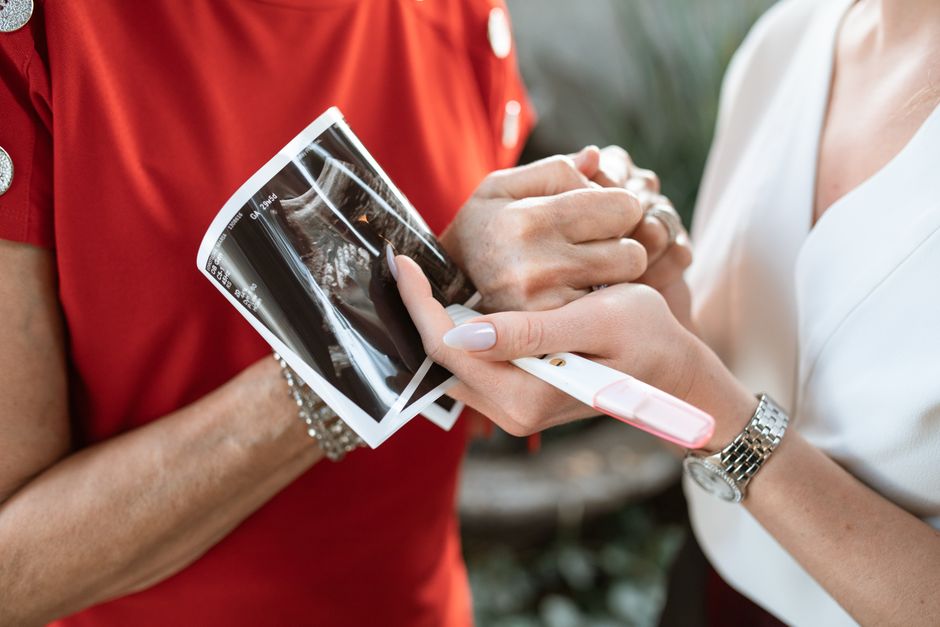
Yes, you can get pregnant on ovulation day. In fact, the day of ovulation and the one to two days before it are the most fertile days of your cycle. The window is short because an egg lives only about 12 to 24 hours after it is released.
That single fact explains a lot. It explains why timing matters so much. It also explains why so many people trying to conceive feel confused by apps, calendars, and test strips that never seem to agree with each other.
This guide walks through what ovulation actually is, how the fertile window works, how to spot your own signs, and where the limits of at-home tracking really are.
What Happens During Ovulation?
Ovulation is the release of a mature egg from one of your ovaries. It happens roughly midway through your cycle, though the exact day varies widely from person to person and even from month to month.
The process starts in the brain. The hypothalamus signals the pituitary gland to release follicle-stimulating hormone, or FSH. FSH prompts a group of follicles in the ovary to grow. One of them usually becomes dominant. As that follicle matures, it produces rising amounts of estrogen.
When estrogen reaches a high enough level, it triggers a sharp surge of luteinizing hormone, or LH. That surge is the trigger for ovulation. The egg is released roughly 24 to 36 hours after the LH surge begins.
After release, the egg travels into the fallopian tube. If sperm are already waiting there, fertilization can occur. If not, the egg begins to break down. The empty follicle becomes a structure called the corpus luteum, which produces progesterone to prepare the uterine lining for a possible pregnancy.
If no pregnancy occurs, hormone levels fall, the lining sheds, and your period begins. The whole sequence repeats.
How Long Does The Fertile Window Last?
The fertile window is about six days long. It includes the five days before ovulation plus ovulation day itself.
That window exists because of how long each cell survives. Sperm can live up to about five days in fertile cervical mucus. The egg lives only about 12 to 24 hours after release.
This is why the days before ovulation matter so much. If sperm arrive a few days early, they can wait for the egg. If they arrive after the egg has already broken down, pregnancy cannot happen that cycle.
Pregnancy is most likely from intercourse in the two days before ovulation and on ovulation day itself. The probability drops sharply the day after ovulation.
One point that surprises many people: ovulation day is not always the single best day. For some couples, the day before ovulation carries a similar or slightly higher chance, because sperm are already in place when the egg is released.
Can You Get Pregnant On Ovulation Day?
Yes. Ovulation day is one of the most fertile days of your cycle. If live sperm are present in the fallopian tube when the egg is released, fertilization is possible.
What matters is timing relative to the egg’s short life. An egg remains fertilizable for roughly 12 to 24 hours. Sperm that reach the fallopian tube during that window can fertilize it.
There is a common misconception worth correcting. Many people believe ovulation happens on day 14 of every cycle. That is a textbook average, not a rule. Cycle length varies, and ovulation timing shifts with it. In a 28-day cycle, ovulation often falls near day 14. In a 32-day cycle, it may fall closer to day 18. In a 24-day cycle, it may fall near day 10.
Stress, illness, travel, sleep changes, and weight shifts can all delay ovulation in a given month. That is why calendar math alone is unreliable.





How Can You Tell When You Are Ovulating?
Your body gives several signals, and no single one is perfect. Combining methods gives a clearer picture than relying on any one sign.
- Cervical mucus changes. As estrogen rises, mucus becomes clear, slippery, and stretchy, similar to raw egg white. This type of mucus helps sperm survive and travel.
- Basal body temperature. After ovulation, progesterone raises resting body temperature slightly. Tracking it daily can confirm that ovulation happened, but it rises after the fact, so it does not predict the day in advance.
- Ovulation predictor kits. These detect the LH surge in urine, which usually occurs 24 to 36 hours before ovulation. They can give a day or two of warning.
- Mittelschmerz. Some people feel a mild twinge or ache on one side of the lower abdomen around ovulation. Not everyone experiences this, and it is not a reliable standalone sign.
- Calendar tracking. Useful for spotting patterns over months, but weak for predicting a specific day.
None of these methods is exact. Studies comparing them have found meaningful variation between what each method reports and when ovulation actually occurs.
How Accurate Are Ovulation Tracking Methods?
No at-home method confirms ovulation with certainty. Each has strengths and limits, and the differences matter when you are trying to time intercourse.
| Method | What It Detects | Timing Relative to Ovulation |
|---|---|---|
| Cervical mucus | Rising estrogen | Days before, peaks near ovulation |
| LH urine test | LH surge | About 24 to 36 hours before |
| Basal body temperature | Progesterone rise | After ovulation has occurred |
| Calendar/app estimates | Historical cycle patterns | Approximate, varies widely |
Ovulation predictor kits are generally the most useful for predicting the day in advance. But they can produce false positives in some situations, including certain fertility medications and conditions like polycystic ovary syndrome. They can also miss the surge if testing is not frequent enough.
Basal body temperature confirms that ovulation happened but cannot tell you it is about to happen. That limits its usefulness for timing intercourse in the current cycle, though it is valuable for understanding your overall pattern.
What Affects Your Chances Of Conceiving?
Timing is one factor among several. Age is the most significant single influence on natural fertility.
Fertility in women begins a gradual decline in the late 20s and accelerates after about age 35. This reflects both a decrease in egg quantity and changes in egg quality. It does not mean pregnancy is impossible after 35. It means the monthly probability of conception is lower on average, and the time to conception tends to be longer.
Other factors that can affect fertility include:
- Irregular cycles or conditions that disrupt ovulation, such as PCOS or thyroid disorders
- Smoking, which is linked to reduced fertility in both partners
- Heavy alcohol use
- Extremes of body weight, both underweight and obesity
- Certain medications and medical treatments
- Male factor issues, which contribute to a substantial share of infertility cases
Intercourse frequency also matters. For couples without known fertility problems, having sex every one to two days during the fertile window is a common approach. Some evidence suggests that daily ejaculation does not meaningfully reduce sperm quality in healthy men, though individual circumstances vary.
When Should You Seek Help?
Many couples conceive within a year of trying. If you have been trying for 12 months without success, it is reasonable to talk to a doctor. If you are 35 or older, that conversation is often recommended after 6 months.
Some situations warrant earlier evaluation:
- Very irregular or absent periods
- Known conditions affecting fertility, such as endometriosis or PCOS
- Previous pelvic surgery or treatment for cancer
- Known male factor concerns
- Two or more pregnancy losses
An evaluation typically includes a review of cycle history, blood tests to check hormone levels, and in some cases imaging or semen analysis. It is not a sign that something is wrong. It is simply a way to identify anything that might benefit from support.
Does Ovulation Day Guarantee Pregnancy?
No. Ovulation is necessary for pregnancy, but it is not sufficient on its own. Even with perfect timing, conception does not happen every cycle.
For healthy couples in their 20s and early 30s, the chance of pregnancy in any single cycle is roughly 20 to 25 percent when intercourse occurs during the fertile window. That number declines with age. This is normal, not a sign of a problem.
It also helps to remember that many factors must align. The egg must be released. Sperm must reach it. Fertilization must occur. The resulting embryo must implant in the uterine lining. Each step has its own variables.
If you are tracking carefully and timing intercourse well, you are already doing the most important things within your control. The rest is largely biology and time.
Frequently Asked Questions
Can you get pregnant on ovulation day itself?
Yes. Ovulation day is one of the most fertile days of your cycle, as long as live sperm are present when the egg is released. The egg remains fertilizable for about 12 to 24 hours.
How many days after ovulation can you get pregnant?
Pregnancy is very unlikely the day after ovulation because the egg has usually broken down by then. The fertile window closes once the egg is no longer viable, which is typically within about 24 hours of release.
Can you get pregnant on ovulation day with pull-out method?
Yes. Withdrawal does not reliably prevent pregnancy, especially around ovulation when fertility is at its peak. Pre-ejaculate can contain sperm, and timing errors are common.
How do I know if I ovulated on a specific day?
No at-home method confirms ovulation with certainty. A rise in basal body temperature the next morning is the most common sign that ovulation has occurred, but it confirms it only after the fact.
