
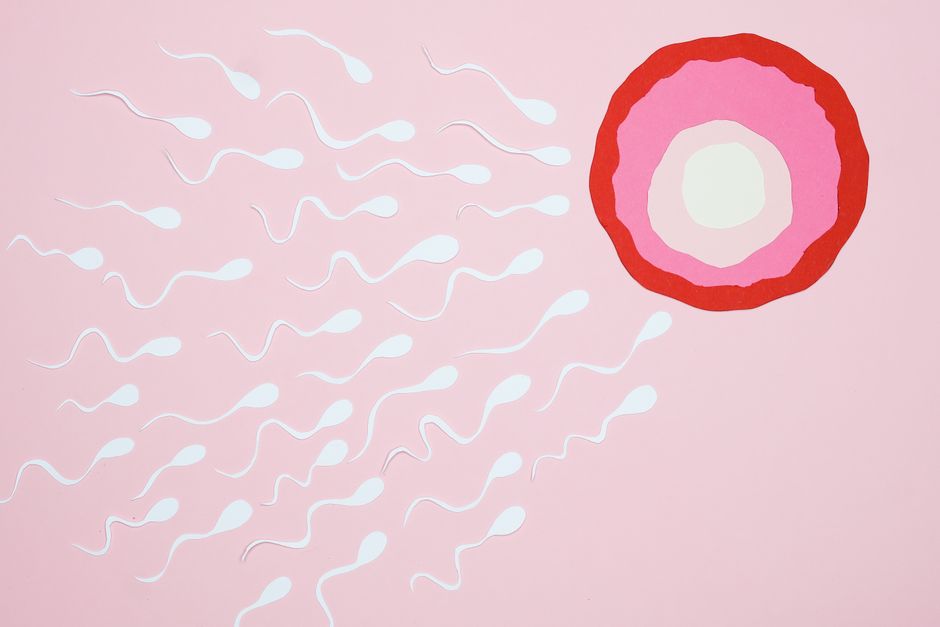
No, you cannot feel the moment a sperm fertilizes an egg. The event happens deep inside a fallopian tube, involves cells far too small to register as a physical sensation, and produces no signal your nervous system can detect. Any twinge, cramp, or flutter you notice around the time of conception is not fertilization itself.
This is one of the most common questions people ask when trying to conceive, and the answer is straightforward. Fertilization is a microscopic cellular event. There is no physical sensation attached to it, no matter what you may read online.
What people sometimes feel are other things happening in the body around that time. Understanding what is actually occurring — and what your body can and cannot sense — clears up a lot of confusion.
Can You Feel When The Sperm Fertilizes The Egg?
No. Fertilization is not something you can feel, and there is a biological reason why.
The sperm and egg meet in the fallopian tube, a narrow structure that connects the ovary to the uterus. The entire process happens at the cellular level. A sperm cell is roughly 50 micrometers long — about half the width of a human hair. The egg is one of the largest cells in the body but is still only about 0.1 millimeters across. Neither is large enough to trigger the type of nerve signal that produces a physical sensation.
Your internal organs do have some sensory nerve supply, but it is limited and not designed to detect microscopic events. You cannot feel ovulation itself in most cases, and you certainly cannot feel a single sperm penetrating an egg.
Some people describe a brief twinge or pressure around ovulation — a sensation clinicians sometimes call mittelschmerz. That is associated with the release of the egg from the ovary, which can stretch the ovarian surface and irritate nearby tissue. It is not fertilization, and it happens before the sperm and egg ever meet. Not everyone experiences it, and its timing varies.
What Actually Happens During Fertilization?
Fertilization is a sequence of cellular steps that unfolds over several hours. It begins when sperm reach the egg after traveling through the cervix, uterus, and into the fallopian tube.
Of the millions of sperm in a typical ejaculate, only a small fraction reach the egg. The journey is physically demanding, and many sperm are lost along the way. The ones that arrive must first penetrate the egg’s outer layers. Once a single sperm enters, the egg’s surface changes almost immediately to block other sperm from getting in. This prevents more than one sperm from fertilizing the egg, which would create an abnormal set of chromosomes.
After the sperm enters, the genetic material from both cells combines. This marks the creation of a zygote — a single cell with a full set of chromosomes. The zygote then begins dividing as it travels down the fallopian tube toward the uterus. This journey takes several days.
None of these steps produce a sensation. The body does not have a mechanism to signal “fertilization has occurred” to the brain.
Why Do Some People Report Feeling Implantation?
Some people report mild cramping or spotting around the time an embryo implants in the uterus. This is often called implantation bleeding, and it is a real phenomenon — but it is not well understood and not reliably identifiable.
Implantation happens when the early embryo burrows into the lining of the uterus. This occurs roughly 6 to 12 days after ovulation, though the timing varies. Some people notice light spotting or a brief cramp around this time. Others notice nothing at all.
The evidence here is limited. There is no reliable way to confirm that a particular twinge or spot of blood is implantation. Many people who are not pregnant also experience mid-cycle spotting or cramping for unrelated reasons. Studies have not established a consistent set of implantation symptoms that can be used for diagnosis.
What is clear is that implantation is a different event from fertilization. It happens days later. Even if someone feels something around implantation, that is not the same as feeling the moment of fertilization.





What Symptoms Do People Mistake for Fertilization?
Many sensations get attributed to conception that have nothing to do with it. Understanding the timing helps separate what is plausible from what is not.
- Ovulation pain: A twinge on one side of the lower abdomen, typically mid-cycle. This happens before fertilization is even possible.
- Progesterone-related symptoms: After ovulation, progesterone levels rise. This can cause breast tenderness, bloating, and fatigue — symptoms that mimic early pregnancy but occur whether or not conception happens.
- Premenstrual symptoms: Cramping, mood changes, and breast sensitivity in the days before a period are driven by hormonal shifts, not by fertilization.
- Digestive sensations: Gas, bloating, and bowel activity can produce twinges that get noticed more when someone is paying close attention to their body.
The key point is timing. Fertilization, if it happens, occurs within about a day of ovulation. Any symptoms in the two-week window after ovulation are driven by progesterone, not by the fertilization event itself. Progesterone rises whether or not an egg is fertilized.
When Can You Actually Confirm Pregnancy?
Pregnancy can be confirmed with a home pregnancy test or a blood test, not by physical sensation. Home urine tests detect human chorionic gonadotropin (hCG), a hormone produced after implantation.
hCG becomes detectable in urine at different times for different people. Many home tests are marketed as usable from the first day of a missed period. Testing earlier than that increases the chance of a false negative because hCG levels may still be too low to detect.
Blood tests can detect hCG earlier than urine tests because they are more sensitive. A healthcare provider can advise on timing if there is a reason to test early.
No physical symptom — cramping, spotting, breast tenderness, or fatigue — can reliably confirm pregnancy on its own. These symptoms overlap heavily with normal hormonal changes. A test is the only way to know.
Does a Lack of Sensation Mean Something Is Wrong?
No. Feeling nothing around the time of conception is completely normal and expected. The absence of sensation says nothing about whether fertilization occurred.
This is worth stating plainly because the opposite belief causes real distress. People who are trying to conceive sometimes monitor their bodies closely, looking for a sign that something happened. When they feel nothing, they worry something went wrong. That worry is based on a false premise.
The body does not provide feedback at the moment of fertilization. It cannot. The event is too small and too far inside the body to register as a physical feeling. Anyone who reports feeling fertilization is almost certainly feeling something else — ovulation, hormonal changes, or ordinary bodily sensations.
If you are trying to conceive and want to understand your cycle, tracking ovulation through methods your healthcare provider recommends is more useful than watching for sensations that do not exist. Some people use ovulation predictor kits, which detect a surge in luteinizing hormone in urine. Others track basal body temperature or cervical mucus changes. Each method has limitations, and none can confirm fertilization.
What About the “Implantation Dip” and Other Tracking Signals?
Some people who track basal body temperature notice a brief drop followed by a rise in the days after ovulation. This is sometimes called an implantation dip. The evidence that this reliably indicates implantation is weak.
Basal body temperature shifts are driven by progesterone and can fluctuate for many reasons, including sleep quality, illness, and measurement timing. A single temperature dip is not a reliable sign of anything specific. Some research has looked at temperature patterns around implantation, but the findings do not support using a dip as a dependable indicator.
The same caution applies to other tracking signals people attribute to conception. Cervical changes, breast changes, and mood shifts are all influenced by hormones that rise and fall regardless of whether an egg is fertilized. They cannot distinguish between a cycle that leads to pregnancy and one that does not.
Frequently Asked Questions
Can you feel fertilization happen?
No, fertilization cannot be felt. It occurs inside the fallopian tube at the cellular level, and the body has no mechanism to detect or signal it.
What does fertilization feel like?
It does not feel like anything, because there is no physical sensation associated with it. Any twinges or cramps around mid-cycle are more likely related to ovulation or normal hormonal changes.
How soon after fertilization can you feel symptoms?
You cannot feel fertilization itself, and symptoms attributed to early pregnancy are caused by progesterone or, later, hCG — not by the fertilization event. These symptoms typically overlap with normal premenstrual changes and cannot confirm pregnancy.
Can you feel implantation cramping?
Some people report mild cramping or spotting around the time of implantation, but the evidence is limited and these sensations are not reliably distinguishable from other causes. Implantation is a separate event from fertilization and happens several days later.
