
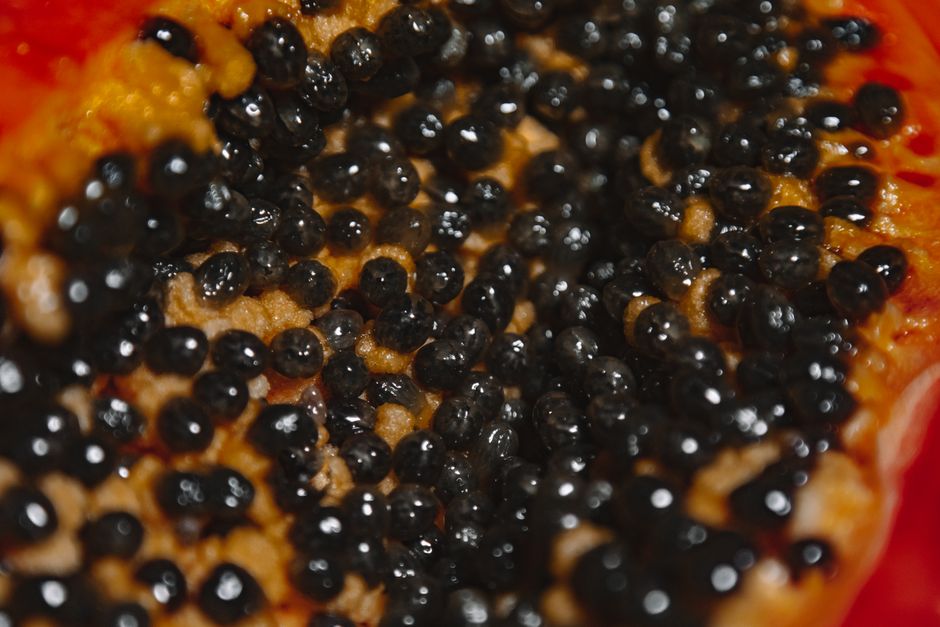
Yes, you can eat papaya seeds. They are not toxic, and people in many parts of the world have eaten them for years. The seeds have a sharp, peppery, and slightly bitter taste. While the research on their health benefits is still early, eating a small number of seeds is generally considered safe for most people.
What Do Papaya Seeds Taste Like?
Papaya seeds have a strong flavor. Most people describe it as peppery and bitter, similar to a cross between black pepper and mustard. The outer shell is slippery, while the inner seed is crunchy. Because the taste is intense, most people do not eat a large handful at once. A teaspoon or less is a common amount to try.
The flavor can be a shock if you expect something sweet like the fruit. Some people blend the seeds into salad dressings, smoothies, or sauces to mask the bitterness. Others dry and grind them to use as a pepper substitute. If you eat them raw, chew them well to break down the hard outer coating.
Are Papaya Seeds Safe to Eat?
For healthy adults, eating small amounts of papaya seeds is generally safe. Studies have looked at the seeds and found no serious toxicity at normal food amounts. However, no clinical guidelines exist for how many seeds a person should eat. There is no official “safe daily dose” because the research is not there yet.
You should not eat papaya seeds if you are pregnant or trying to become pregnant. Some animal studies suggest that compounds in the seeds may affect fertility or fetal development. The evidence is not strong enough to prove harm in humans, but it is enough to warrant caution. Pregnant women should avoid them entirely.
People with digestive conditions like diverticulitis should also be careful. The seeds are small and hard, and they may be difficult for some people to digest. If you have a history of intestinal issues, talk to your doctor before adding them to your diet.
Can You Eat The Seeds Of The Papaya for Health Benefits?
Research on papaya seeds is growing, but most studies have been done in labs or on animals, not humans. The seeds contain compounds called polyphenols and flavonoids. These are plant chemicals with antioxidant properties. Antioxidants help protect cells from damage caused by unstable molecules called free radicals.
Some research suggests papaya seeds may have antibacterial effects. In particular, laboratory studies have shown that extracts from the seeds can fight certain strains of bacteria and fungi. One area of interest is whether the seeds can help with intestinal parasites. Some traditional medicine systems have used papaya seeds for this purpose, and some preliminary studies support the idea. However, no large human trials have confirmed that eating the seeds will cure or prevent a parasite infection.
The honest position is this: papaya seeds are a nutritious addition to food, but they are not a medicine. No study has confirmed that eating them will lower your risk of any disease or treat any condition. The evidence is promising in early stages, but it is not yet strong enough to make health claims.




Nutritional Content of Papaya Seeds
Papaya seeds contain fiber, healthy fats, and small amounts of protein. They also provide plant compounds that are not found in the fruit itself. The seeds are rich in oleic acid, which is a monounsaturated fat also found in olive oil and avocados. They contain smaller amounts of other fatty acids as well.
Like the fruit, the seeds contain some vitamins and minerals, but the amounts are small. You would need to eat a large quantity of seeds to get any meaningful nutritional value. That is not realistic because of the strong taste and the lack of safety data for large amounts. Think of the seeds as a flavorful garnish, not a primary source of nutrients.
How to Prepare Papaya Seeds
If you want to try papaya seeds, start small. Rinse the seeds to remove any fruit pulp. You can eat them raw, but most people prefer to dry them first. To dry, spread the seeds on a baking sheet and leave them at room temperature for a few days. Once dry, they can be stored in an airtight jar.
Here are some common ways to use papaya seeds:
- Crush them and sprinkle over salads for a peppery kick
- Blend a small amount into smoothies or juices
- Grind dried seeds and mix with black pepper
- Add them to marinades or salad dressings
Start with just a few seeds the first time. Wait to see how your stomach reacts. Some people experience mild stomach upset when they first try papaya seeds. If that happens, stop eating them.
Who Should Avoid Papaya Seeds?
Papaya seeds are not for everyone. Pregnant women should avoid them because of the theoretical risk to fetal development. People who are trying to conceive may also want to avoid them, as some animal research suggests the seeds may affect male and female fertility. The human evidence is not clear, but the caution is reasonable.
Children should not eat papaya seeds. No safety research exists for this age group, and their smaller bodies may react differently. People with known food allergies to papaya should also avoid the seeds. If you have never eaten papaya fruit, be aware that a latex allergy can sometimes cross-react with papaya. If you have a latex allergy, talk to your doctor before trying papaya seeds.
Anyone with a history of stomach ulcers, gastritis, or inflammatory bowel disease should be cautious. The seeds are hard to digest and may irritate the digestive tract. The evidence is not strong enough to say they are harmful, but it is also not strong enough to say they are safe for these groups.
What Does the Research Actually Show?
Most papaya seed studies have been conducted in test tubes or on animals. These studies are useful for identifying what might be worth studying in humans, but they cannot tell us what will happen when a person eats the seeds. The difference matters. A compound that kills bacteria in a petri dish may not survive digestion or reach the right part of the body at a high enough concentration to work.
One area of research that has received attention is the effect of papaya seeds on intestinal parasites. A few small human studies have suggested that papaya seeds may help reduce parasite counts. However, these studies are old, small, and not well controlled by modern standards. Some research suggests the seeds may have anti-inflammatory properties, but again, the human data is limited.
There is no credible evidence that papaya seeds can treat cancer, diabetes, or any other serious disease, despite claims you may see online. Some websites suggest that a compound in papaya seeds called carpaine has anti-cancer properties. Laboratory studies have looked at this, but no clinical evidence confirms that eating the seeds affects cancer in humans. Treat any such claim with deep skepticism.
Papaya Seeds vs. Papaya Fruit
The fruit and the seeds are very different. Papaya fruit is sweet, soft, and rich in vitamin C and vitamin A. A single cup of papaya provides more than 100% of the daily recommended intake of vitamin C for most adults. The fruit is widely studied and clearly beneficial as part of a healthy diet.
The seeds, on the other hand, are concentrated in different compounds. They contain more fat and fiber than the fruit, but they are not a significant source of vitamins. The health benefits of the fruit are well established. The health benefits of the seeds are not. If you are eating papaya for the nutritional value, eat the fruit. The seeds are an optional addition for flavor, not a nutritional necessity.
Bottom Line on Papaya Seeds
Papaya seeds are safe to eat in small amounts for most healthy adults. They have a strong, peppery taste and can be used as a spice or garnish. The research on their health benefits is early and mostly limited to laboratory and animal studies. No large human trials have confirmed that eating the seeds provides any specific health benefit.
If you want to try them, start with a small amount. Chew them well. If you are pregnant, trying to conceive, or have digestive issues, skip them entirely. Papaya seeds are not a miracle food and they are not a treatment for any disease. They are simply an edible seed with an interesting flavor and some promising early research behind them.
Frequently Asked Questions
Can you eat papaya seeds raw?
Yes, you can eat papaya seeds raw. Chew them thoroughly, as the outer shell is tough and the taste is strong and peppery.
How many papaya seeds can you eat in a day?
No clinical guidelines exist for a safe daily amount. Most people who eat them stick to one teaspoon or less, but this is not an official recommendation.
Do papaya seeds kill parasites?
Some small studies suggest papaya seeds may have antiparasitic effects, but no large human trials have confirmed this. The evidence is not strong enough to recommend them as a treatment.
Are papaya seeds safe during pregnancy?
No, pregnant women should avoid papaya seeds. Some animal studies suggest compounds in the seeds may affect fetal development, so caution is warranted.
