
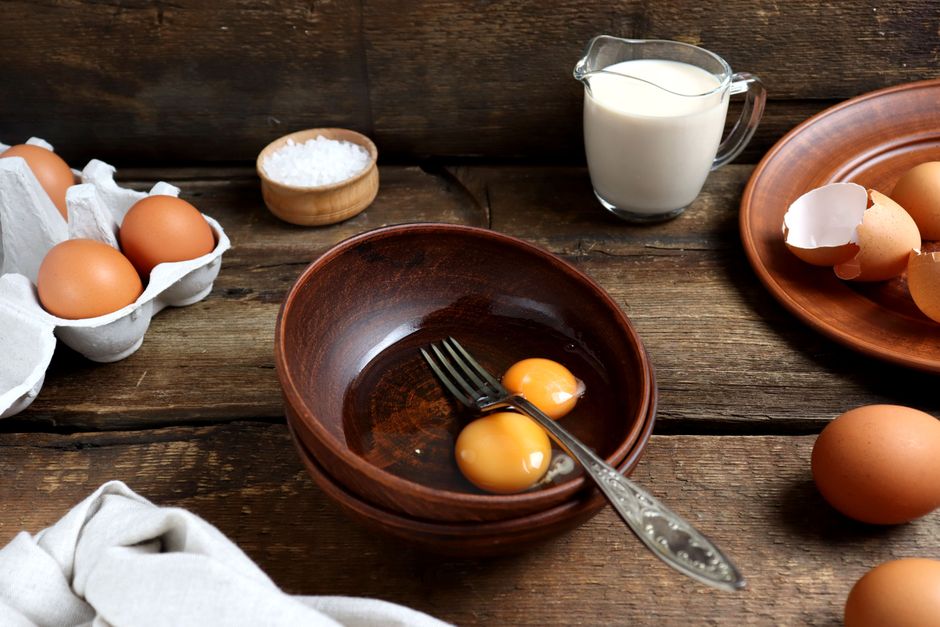
Raw egg yolks show up in steak tartare, homemade mayonnaise, aioli, carbonara, and the classic raw egg stirred into a glass of milk. People eat them for the taste, the texture, and the belief that raw means more nutrients. The short answer: yes, you can eat raw egg yolk, but it carries a real risk of Salmonella infection that cooking eliminates. The risk is small per egg, but it is not zero, and certain groups of people should not take that chance.
Can You Eat Raw Egg Yolk Safely?
Raw egg yolk is edible. Nothing about the yolk itself is toxic, and many food cultures have used raw yolk for centuries.
The safety question is not about the yolk’s nutrition. It is about bacteria. Salmonella can be present on the shell and inside the egg. The bacteria can reach the yolk, especially if the egg is cracked, stored too long, or left at room temperature.
Estimates from public health agencies put the rate of Salmonella contamination in eggs at roughly 1 in 20,000. That sounds tiny. But if you eat raw eggs often, the odds stack up over time.
Most healthy adults who get Salmonella recover in about a week without treatment. Symptoms include diarrhea, fever, and stomach cramps. Some cases are severe enough to require hospitalization. In rare cases, the infection can spread beyond the gut and become life-threatening.
So the honest position is this: raw egg yolk is not automatically dangerous, but it is not risk-free. The only way to remove the Salmonella risk is to cook the egg until both yolk and white are firm.
Who Should Avoid Raw Egg Yolk?
Some people should not eat raw egg yolk at all. For these groups, a Salmonella infection can be far more serious than a bout of diarrhea.
- Adults over 65
- Pregnant women
- Infants and young children
- Anyone with a weakened immune system, including people on chemotherapy, organ transplant patients, and those with HIV
- People with sickle cell disease or other conditions that raise infection risk
For pregnant women, Salmonella infection is not just a personal illness. It can lead to serious complications, including miscarriage or preterm labor. No clinical guidelines support eating raw eggs during pregnancy.
For infants and young children, the immune system is still developing. The same infection that a healthy adult fights off in a week can be dangerous for a small child.
If you fall into any of these groups, use pasteurized eggs or cook your eggs thoroughly. This is not a gray area. It is a clear recommendation from public health agencies.
What Is the Actual Risk of Salmonella From Raw Egg Yolk?
The risk is real but low per egg. The problem is that low risk repeated many times becomes a meaningful risk.
Salmonella contamination in eggs can happen in two ways. The first is on the outside of the shell, from the hen’s environment. The second is inside the egg, if the hen was infected and the bacteria entered the egg before the shell formed.
Modern egg production has reduced contamination rates compared to decades past. Refrigeration, washing, and vaccination of hens have all helped. But no system is perfect, and contaminated eggs still reach store shelves.
Most people who get Salmonella from eggs do not know which egg caused it. The illness typically starts 6 hours to 6 days after eating the contaminated food. That delay makes it hard to trace.
Some people assume that a clean-looking egg is a safe egg. That is not true. Salmonella does not change the look, smell, or taste of an egg. You cannot tell by inspecting it.
Another common belief is that adding acid, like lemon juice or vinegar, kills the bacteria. It does not. Acid can slow bacterial growth but does not reliably kill Salmonella in the short time it sits in a recipe. Only heat does that.





Are Raw Egg Yolks More Nutritious Than Cooked?
Raw egg yolks are not more nutritious than cooked ones. In some ways, they are less nutritious.
Cooking does two things. It kills bacteria, and it makes some nutrients easier for your body to absorb.
Protein is the clearest example. Research on protein digestibility has found that cooked egg protein is absorbed more completely than raw. One classic study found that the body uses a notably higher percentage of the protein in cooked eggs compared to raw. So the idea that raw is better for muscle or nutrition does not hold up.
Biotin is another factor. Raw egg whites contain a protein called avidin that binds to biotin, a B vitamin. Cooking deactivates avidin. If you eat raw egg whites regularly over a long period, you can develop a biotin deficiency. This is more of a concern with raw whites than with yolks alone, since avidin is in the white. But it is one more reason raw is not automatically better.
Some vitamins, like certain B vitamins, are slightly reduced by cooking. The difference is small and does not outweigh the safety and protein benefits of cooking.
| Nutrient Factor | Raw Egg Yolk | Cooked Egg |
|---|---|---|
| Salmonella risk | Present | Eliminated when cooked firm |
| Protein absorption | Lower | Higher |
| Biotin availability | Reduced by avidin in raw white | Avidin deactivated |
| B vitamin content | Slightly higher | Slightly lower |
What About Pasteurized Eggs?
Pasteurized eggs are the answer for people who want raw egg yolk without the Salmonella risk. Pasteurization uses gentle heat to kill bacteria without cooking the egg.
Pasteurized shell eggs are available in many grocery stores. They look and taste like regular eggs. You can use them in recipes that call for raw or lightly cooked eggs, like homemade mayonnaise, mousse, or eggnog.
The key word is pasteurized. Eggs labeled “organic,” “free-range,” or “farm-fresh” are not pasteurized. Those labels describe how the hens were raised, not whether the eggs are safe to eat raw.
Liquid pasteurized eggs in cartons are also an option. They are pasteurized and can be used in uncooked recipes. Check the label to confirm.
If you cannot find pasteurized eggs, the safest choice is to cook your eggs until the yolk and white are firm.
How Should You Handle Eggs to Reduce Risk?
Proper handling reduces risk but does not eliminate it. These steps lower the chance of contamination and bacterial growth.
- Refrigerate eggs at 40°F (4°C) or below
- Keep eggs in their original carton, not the door shelf where temperature fluctuates
- Discard eggs that are cracked or dirty
- Wash your hands after handling raw eggs
- Clean surfaces and utensils that touched raw eggs
- Use raw eggs within the time frame on the carton
Never leave raw egg dishes at room temperature for more than 2 hours. Bacteria multiply quickly in warm conditions.
If you are making a recipe that calls for raw egg yolk, like homemade mayonnaise, use it right away and refrigerate what you do not eat. Do not let it sit out.
These steps help, but they do not make raw eggs safe for high-risk groups. For those people, cooking or pasteurization is the only reliable protection.
Does Cooking Egg Yolk Destroy Nutrients?
Cooking does not destroy the main nutrients in egg yolk. It slightly reduces some vitamins, but the loss is minor.
Egg yolk is rich in fat-soluble vitamins like A, D, E, and K, plus B vitamins, choline, and lutein. These nutrients are fairly stable during cooking. Some B vitamins, like folate and B12, can be reduced by high heat, but normal cooking does not wipe them out.
The bigger point is that cooking improves protein digestion and eliminates Salmonella. For most people, those benefits outweigh the small vitamin loss.
If your goal is maximum nutrition, a cooked egg gives you more usable protein than a raw one. That is the opposite of what many people assume.
The Bottom Line on Raw Egg Yolk
You can eat raw egg yolk, but you are accepting a small risk of Salmonella infection every time. For healthy adults, that risk is low. For pregnant women, young children, older adults, and people with weakened immune systems, the risk is not worth taking.
Raw egg yolk is not more nutritious than cooked. In fact, cooked eggs give you more absorbable protein and no Salmonella risk. Pasteurized eggs offer a middle path if you want the texture of raw yolk without the bacteria.
If you choose to eat raw egg yolk, use pasteurized eggs or handle fresh eggs carefully and eat them soon after preparing. If you are in a high-risk group, cook your eggs until they are firm.
Frequently Asked Questions
Can you eat raw egg yolk?
Yes, you can eat raw egg yolk, but it carries a small risk of Salmonella infection. Cooking the egg until firm eliminates that risk.
Is raw egg yolk healthier than cooked?
No, raw egg yolk is not healthier than cooked. Cooking makes egg protein easier to absorb and kills bacteria, with only minor vitamin loss.
Can pregnant women eat raw egg yolk?
No, pregnant women should avoid raw egg yolk because Salmonella infection can cause serious complications. Pasteurized eggs or fully cooked eggs are the safe choice.
Do pasteurized eggs taste different from regular eggs?
No, pasteurized shell eggs taste and look like regular eggs. They are gently heated to kill bacteria without cooking the egg, so you can use them in raw recipes.
