
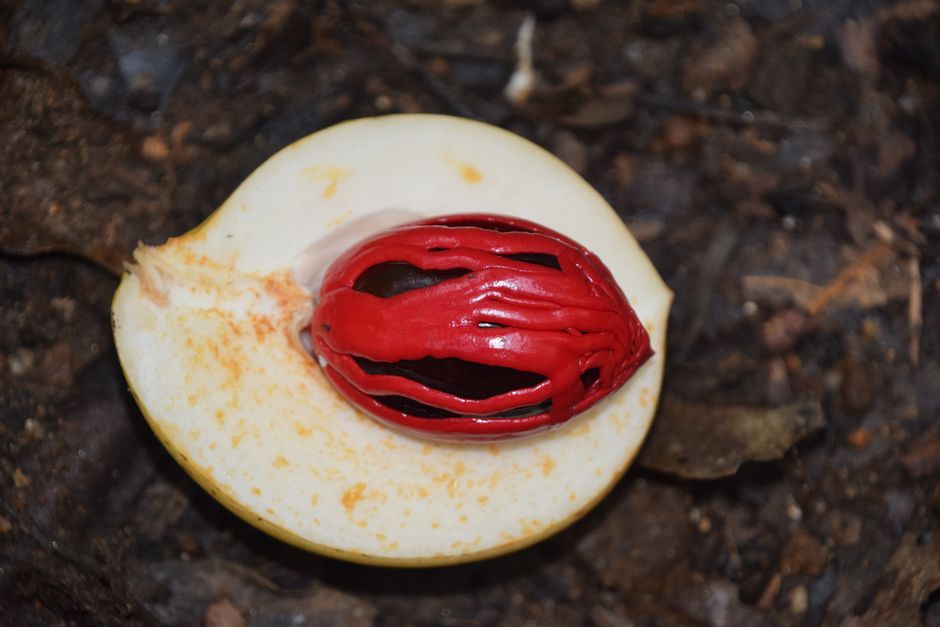
Nutmeg fruit is edible, but it is not the nutmeg spice you know from baking. The fruit is the fleshy outer layer that surrounds the nutmeg seed. It has a mild, slightly sour taste and is used in some cuisines, but it is rarely eaten raw in Western countries. The seed inside is the source of nutmeg spice, and the lacy red covering around the seed is mace. All parts of the fruit are safe to eat in normal food amounts, but concentrated nutmeg powder can be toxic in large doses.
What Is Nutmeg Fruit Exactly?
Nutmeg comes from the Myristica fragrans tree, which grows in tropical regions like Indonesia and the Caribbean. The tree produces a fruit that looks a bit like a small apricot or peach. When the fruit ripens, it splits open to reveal a shiny brown seed wrapped in a bright red, lacy covering.
The red lacy layer is mace. The brown seed inside is what becomes ground nutmeg. The yellow fleshy part around all of this is the fruit itself. In many places, people call it the nutmeg fruit or nutmeg apple. It is a real food, not a byproduct.
In Indonesia and some Caribbean islands, the fruit is used in cooking. People slice it, candy it, or add it to drinks and jams. In Grenada, which grows a lot of nutmeg, the fruit is made into a sweet preserve. But in the United States and Europe, most people never see it because the fruit spoils quickly and does not travel well.
Can You Eat Nutmeg Fruit Raw?
Yes, you can eat nutmeg fruit raw, but the taste may surprise you. The flesh is firm and fibrous, similar to a green apple or an unripe pear. The flavor is mildly sweet and sour at the same time, with a hint of the warm spice smell you associate with nutmeg.
Some people find the raw fruit astringent, meaning it can dry out your mouth slightly. Others describe it as refreshing. The texture is not as juicy as a typical tropical fruit. It is more like a crisp vegetable than a soft fruit.
If you buy fresh nutmeg fruit, make sure it is fully ripe. Unripe fruit is more bitter and tougher. Ripe fruit will have a yellow color and may have started to split open on its own. Wash it well, peel the skin if it is thick, and eat the flesh.
How Is Nutmeg Fruit Used in Cooking?
Cooks in nutmeg-growing regions use the fruit in several ways. The most common method is making it into jam or jelly. Because the fruit contains natural pectin, it sets well without adding thickeners. The jam has a flavor that is hard to compare to anything common in American grocery stores — floral, slightly citrusy, and gently spicy.
The fruit is also candied. Slices are cooked in sugar syrup until they become translucent and tender. Candied nutmeg fruit is eaten as a sweet snack or used in desserts the way you might use candied ginger.
In some places, people add thin slices of nutmeg fruit to salads or use it as a garnish. It can also be pickled. Pickled nutmeg fruit has a tangy, slightly spicy profile that pairs well with rich meats or cheese plates.
One important note: the fruit is not a substitute for ground nutmeg in recipes. The spice flavor lives in the seed, not the flesh. If you use the fruit in cooking, you are using it for its texture and mild flavor, not for the warming spice notes you expect from nutmeg powder.





Is Nutmeg Fruit Safe to Eat?
Yes, nutmeg fruit is safe to eat in normal food amounts. The flesh contains some of the same compounds found in the seed, but at much lower concentrations. These compounds, including myristicin and safrole, are what make large doses of nutmeg spice dangerous.
Eating the fruit itself does not pose the same risk as eating spoonfuls of ground nutmeg. The concentration of these compounds in the flesh is low. People in nutmeg-growing regions have eaten the fruit for generations without problems.
The real safety concern with nutmeg is the spice, not the fruit. Consuming large amounts of ground nutmeg — typically more than a few teaspoons at once — can cause serious side effects. These include nausea, dizziness, rapid heartbeat, hallucinations, and in rare cases, seizures. This is not a concern with eating the fruit.
If you have never eaten nutmeg fruit before, start with a small amount. Any new food can cause an allergic reaction in a sensitive person. But there is no established evidence that nutmeg fruit is more likely to cause allergies than any other fruit.
What Does Nutmeg Fruit Taste Like?
The taste of nutmeg fruit is genuinely different from what most people expect. Because it comes from the same tree as nutmeg spice, people assume the fruit will taste strongly of nutmeg. It does not.
The flesh has a light, perfumed quality. Some people describe notes of apricot, pineapple, and citrus all at once. Others say it tastes like a blend of pear and apple with a subtle floral finish. The sourness is mild and pleasant, similar to a green apple or a barely ripe plum.
The texture matters as much as the flavor. The fruit is crisp and fibrous, more like a firm pear than a soft peach. When cooked into jam or candied, it becomes tender and slightly chewy, similar to preserved fruit.
If you are expecting the strong, warm, sweet-spicy flavor of ground nutmeg, you will be disappointed. If you approach it as its own fruit — something like a cross between an apple and a tropical fruit — you will understand why people in nutmeg-growing regions enjoy it.
Where Can You Buy Nutmeg Fruit?
Fresh nutmeg fruit is hard to find in the United States. It does not ship well because it bruises easily and spoils quickly. Most nutmeg fruit is consumed locally in Indonesia, Grenada, India, and Sri Lanka.
Your best options are specialty Asian or Caribbean grocery stores, particularly those that stock fresh tropical produce. Online specialty food retailers sometimes carry nutmeg fruit products, such as jam, jelly, or candied slices. These are more practical than fresh fruit for most people.
If you live near a large city with a strong Indonesian or Caribbean community, you may be able to find fresh nutmeg fruit seasonally. The fruit ripens at different times depending on the region, but in many places it is most available from late spring through early fall.
When buying nutmeg fruit products, check the label for added sugar content. Jams and candied fruit can contain substantial amounts of sugar. If you are watching your sugar intake, look for products labeled as low-sugar or no-sugar-added.
How Does Nutmeg Fruit Compare to Nutmeg Spice?
Nutmeg fruit and nutmeg spice come from the same tree, but they are very different foods. The spice is the dried, ground seed. The fruit is the fleshy outer layer. They are not interchangeable in cooking.
Nutmeg spice is intensely aromatic and warm, with a sweet, woody flavor. It is used in small amounts in baked goods, eggnog, and savory dishes like spinach or béchamel sauce. The active compounds in the seed are concentrated and potent.
Nutmeg fruit is mild, crisp, and slightly sour. It does not have the same aromatic intensity. The fruit is eaten as a food, not used as a spice. The only way to get the classic nutmeg flavor from this fruit would be to eat the seed itself, which is not practical or safe in large amounts.
Mace, the red lacy covering around the seed, is a separate spice with a flavor similar to nutmeg but more delicate. It is used in some baking and savory dishes. All three parts — fruit, mace, and seed — come from a single fruit, but they serve completely different culinary purposes.
Are There Any Risks With Eating Nutmeg Fruit?
For healthy adults, eating nutmeg fruit in normal food amounts carries no known significant risk. The fruit is not toxic, and no established cases of illness from eating the fruit alone have been reported in medical literature.
The risks associated with nutmeg are specifically tied to the ground spice. Myristicin, the main active compound, can cause serious symptoms when consumed in large quantities. But the concentration in the fruit flesh is far too low to produce these effects from eating a reasonable serving.
Pregnant women should be cautious with nutmeg spice, as high doses may stimulate uterine contractions. However, this concern applies to concentrated spice, not to the fruit. No clinical guidelines currently exist specifically for nutmeg fruit consumption during pregnancy, so the conservative approach is to eat it in small amounts, like any new food.
If you have a known allergy to tree nuts or spices, use caution. Nutmeg is not a true nut, but people with severe allergies sometimes react to related compounds. Start with a very small piece and watch for any reaction.
Frequently Asked Questions
Can you eat the outer fruit of a nutmeg?
Yes, the outer flesh is edible and is used in cooking in several countries. It has a mild, slightly sour taste and a crisp texture similar to an apple or pear.
What does nutmeg fruit taste like?
Nutmeg fruit tastes mildly sweet and sour with a subtle floral note. It does not taste strongly like nutmeg spice, which comes from the seed inside the fruit.
Is nutmeg fruit poisonous?
No, nutmeg fruit is not poisonous and is safe to eat in normal food amounts. The toxicity risk comes only from consuming large quantities of concentrated ground nutmeg spice, not the fruit flesh.
Where can I buy nutmeg fruit?
Fresh nutmeg fruit is rarely available in the United States because it spoils quickly. Look for it at specialty Asian or Caribbean grocery stores, or buy nutmeg fruit jam, jelly, or candied slices online.
