
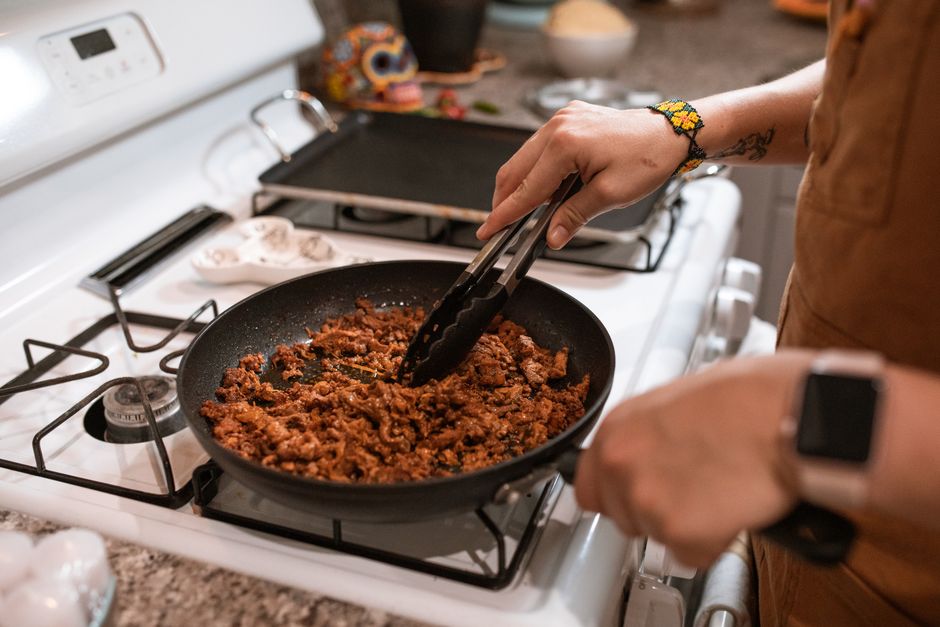
No. Ground beef left out at room temperature all night is not safe to eat. The USDA Food Safety and Inspection Service is clear on this: perishable foods, including raw and cooked ground beef, should be discarded after sitting at room temperature for more than two hours. Ground beef is especially risky because grinding mixes bacteria throughout the meat rather than leaving them on the surface, so cooking is the only reliable way to kill them — and once the meat has spent hours in the temperature danger zone, toxins and bacterial loads can reach levels that cooking may not fully fix.
Why Is Ground Beef Riskier Than a Steak?
Grinding changes the food safety math completely. On a whole cut of beef like a steak, bacteria mostly sit on the outside surface. When you sear that surface, you kill most of them, which is why a steak can safely be served medium-rare. Ground beef is different.
When beef is ground, the outside surface gets folded into the interior. Any bacteria that were on the surface are now distributed throughout the entire patty. That means every part of the ground beef needs to reach a safe internal temperature to be safe — there is no “outside” that gets cooked first.
This is also why the USDA recommends cooking ground beef to 160°F (71°C), while whole cuts of beef can be cooked to lower temperatures. The grinding process is the reason for the difference, not the cut of meat itself.
What Happens to Ground Beef Left Out Overnight?
Bacteria multiply fast in the temperature range between 40°F and 140°F (4°C to 60°C). Food safety professionals call this the danger zone. In this range, bacteria can double roughly every 20 minutes under ideal conditions.
A package of ground beef left on the counter overnight — say eight hours — spends the entire time in that danger zone. Even if the meat looks and smells normal in the morning, the bacterial population could be enormous. The USDA’s two-hour rule exists because that is the point at which the risk becomes unacceptable, not because two hours is a magic number where bacteria suddenly appear.
Some bacteria, like Staphylococcus aureus, produce toxins as they grow. These toxins are heat-stable, meaning cooking does not destroy them. So even thoroughly cooked ground beef that sat out overnight could still make you sick. That is one of the most important and least understood points in food safety: cooking kills bacteria, but it does not always neutralize the toxins they have already produced.
Can You Just Cook It Thoroughly to Make It Safe?
No. Thorough cooking kills live bacteria, but it cannot undo everything that happened during those hours in the danger zone. Two problems remain.
- Heat-stable toxins. Some bacteria produce toxins that survive boiling and normal cooking temperatures. These can cause vomiting and diarrhea even when the bacteria themselves are dead.
- Spore-formers. Certain bacteria form heat-resistant spores that survive cooking and can germinate afterward, especially if the food cools slowly.
There is also the practical reality that most people cannot verify the internal temperature of every part of a dish, particularly in something like a casserole or meat sauce where ground beef is mixed with other ingredients. The USDA’s guidance to discard food left out over two hours is based on this cumulative risk, not on a single bacterium.
Does It Matter If the Beef Was Raw or Cooked?
Both are unsafe after a night at room temperature, but the risks differ slightly. Raw ground beef carries the highest bacterial load because it has not been heated at all. Pathogens like Salmonella, E. coli O157:H7, and Campylobacter can be present, and these are the organisms responsible for most serious foodborne illness from beef.
Cooked ground beef left out overnight is also unsafe. Cooking kills most bacteria, but it does not sterilize the food. Any surviving spores or bacteria that recontaminate the meat after cooking — from a serving spoon, a counter, or the air — can multiply rapidly at room temperature. The two-hour rule applies to cooked ground beef just as it does to raw.
One practical clarification: the two-hour clock is cumulative. If ground beef sits out for 30 minutes while you prep, goes back in the fridge, then comes out again for another 90 minutes, that counts as two hours total. The clock does not reset.
What About the “Smell Test” or Looking at It?
You cannot rely on sight or smell to judge whether ground beef is safe. This is one of the most common food safety myths. Pathogens like Salmonella and E. coli do not change the color, texture, or smell of meat. Meat that looks and smells perfectly fine can still be teeming with harmful bacteria.
Color is also unreliable for a different reason. Ground beef can turn brown in the refrigerator due to oxidation — a normal chemical reaction — while still being fresh. Conversely, meat treated with certain packaging gases can stay bright red well past its safe window. Neither color nor odor is a valid safety test.
The only reliable indicators are time and temperature. If you do not know how long the meat sat out, treat it as unsafe. That is the conservative and correct approach.
How Should You Store and Handle Ground Beef to Avoid This?
The core rules are straightforward and well established. Keep ground beef refrigerated at 40°F (4°C) or below. Use or freeze raw ground beef within one to two days of purchase, according to USDA guidance. Cooked ground beef should be refrigerated within two hours of cooking — or within one hour if the ambient temperature is above 90°F (32°C).
When thawing ground beef, do it in the refrigerator, in cold water changed every 30 minutes, or in the microwave followed by immediate cooking. Never thaw it on the counter.
If you are transporting ground beef home from the store, keep it cold. A cooler with ice packs is the standard recommendation for trips longer than about an hour, particularly in warm weather. Once home, refrigerate or freeze it promptly.
What Should You Do If Someone Already Ate It?
If someone ate ground beef that sat out overnight, watch for symptoms of foodborne illness. The most common are nausea, vomiting, diarrhea, and stomach cramps. Symptoms can begin within hours or take up to several days to appear, depending on the organism involved.
Most healthy adults recover from foodborne illness without medical treatment, but dehydration is the main concern. Seek medical care promptly if symptoms are severe, if there is blood in the stool, if there is a high fever, or if the person is very young, elderly, pregnant, or immunocompromised. These groups face higher risk of serious complications.
This is general information, not medical advice. If you are unsure whether someone needs care, contact a healthcare provider or a poison control center.
Is There Any Situation Where It Is Safe?
No. There is no safe scenario for ground beef left out at room temperature all night. The two-hour rule is not a guideline with wiggle room — it is the threshold beyond which the USDA and food safety authorities consistently say to discard the food. The cost of throwing out a package of ground beef is small compared with the cost of a serious foodborne illness.
Some people report having eaten left-out ground beef without getting sick. That is possible — foodborne illness is probabilistic, not guaranteed. But the absence of illness in one instance does not make the practice safe. The risk is real and well documented, and the safe choice is to discard the meat.
Frequently Asked Questions
Can you eat ground beef that sat out all night if you cook it thoroughly?
No. Cooking kills live bacteria but does not destroy heat-stable toxins that some bacteria produce during hours in the danger zone. The USDA recommends discarding any perishable food left out more than two hours.
How long can ground beef sit out before it is unsafe?
Two hours at room temperature is the limit set by the USDA Food Safety and Inspection Service. If the room is above 90°F (32°C), the limit drops to one hour.
Can you tell if ground beef is bad by smelling it?
No. Harmful bacteria like Salmonella and E. coli do not change the smell, color, or texture of meat. Time and temperature are the only reliable safety indicators.
What happens if you eat ground beef that sat out overnight?
You may develop nausea, vomiting, diarrhea, or stomach cramps, though illness is not guaranteed. Symptoms can appear within hours or take several days, and severe cases — especially with blood in the stool or high fever — need medical attention.
