
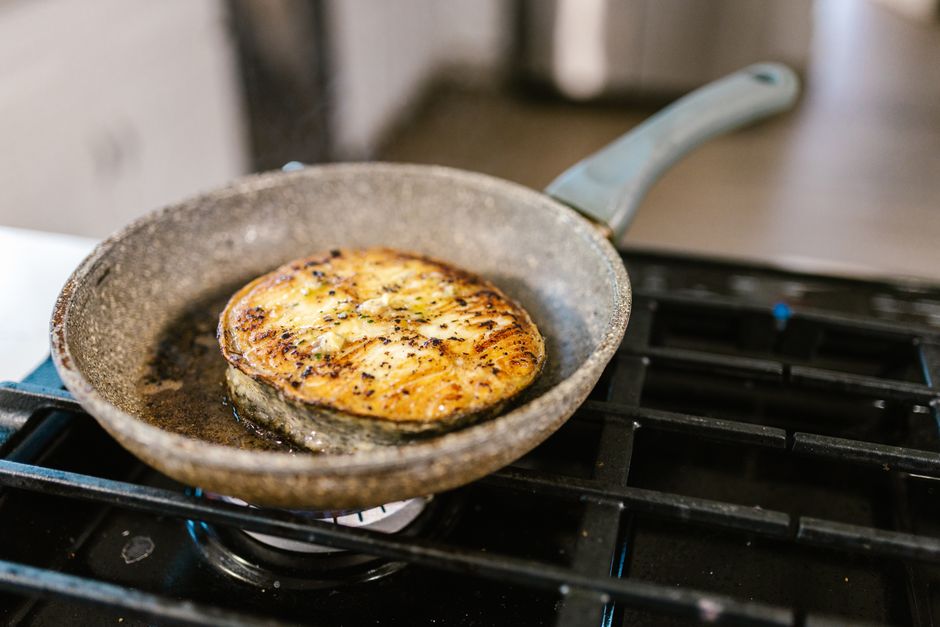
You can eat farm-raised salmon raw, but only if it has been handled and treated to make it safe. Raw salmon carries a real risk of parasites and bacteria. That risk does not disappear just because the fish was raised on a farm instead of caught in the wild.
The key detail is not the word “farm.” It is whether the fish went through a specific safety step, like commercial freezing or an approved heat treatment, that kills parasites. Fresh farm-raised salmon from a grocery counter usually has not. That matters, because the bacteria and parasites that can make you sick do not care where the fish grew up.
Can You Eat Farm Raised Salmon Raw?
Yes, but the salmon must be “sushi-grade” or otherwise treated for parasites. Farm-raised salmon sold as fresh fillets at a regular seafood counter typically has not been through that treatment.
This is where most people get confused. The term “sushi-grade” gets used loosely. It is not a regulated label with a legal definition. In practice, fish sold for raw consumption has usually been frozen under conditions designed to kill parasites. That freezing step, not the farming method, is what makes raw salmon safer to eat.
So the real question is not “farm-raised or wild?” It is “has this fish been frozen or treated in a way that kills parasites?” If you cannot answer that, the safe assumption is that it has not been.
Does Farm-Raised Salmon Have Fewer Parasites Than Wild?
Farm-raised salmon generally has a lower parasite risk than wild salmon, but “lower” is not “zero.”
Wild salmon eat other fish and can pick up parasites through the food chain. Farmed salmon are typically raised on formulated feed, which reduces their exposure to the prey that carry some parasites. This is a genuine difference, and it is why some people assume farmed salmon is automatically safe to eat raw.
But farmed fish can still carry parasites. Feed and water are not sterile. More importantly, the parasites that matter here are not only the ones living in the fish when it is alive. Contamination can happen during processing, handling, and storage. A farm-raised fillet that sits in a display case can pick up bacteria from surfaces, hands, or cross-contamination.
Lower parasite prevalence is a real advantage. It is not a guarantee.
What Is the Actual Risk of Eating Raw Salmon?
The main concerns with raw salmon are parasites and bacteria. These are two different problems with two different fixes.
Parasites: The parasite most associated with raw salmon is a type of roundworm. In humans, swallowing these larvae can lead to digestive symptoms. The infection is treatable, but it is not something to shrug off.
Bacteria: Raw fish can carry Listeria, Vibrio, Salmonella, and other bacteria. These can cause foodborne illness ranging from mild to serious. Freezing kills parasites but does not reliably kill bacteria. That is an important distinction people often miss. Freezing protects against parasites. It does not sterilize the fish.
This is why raw fish safety depends on more than one control. You need parasite treatment plus clean handling plus cold storage plus eating it fresh.
Some groups face higher risk from foodborne illness and should be more careful with raw fish. This includes pregnant women, older adults, young children, and people with weakened immune systems. For these groups, the consequences of an infection can be more serious.




How Do You Know If Salmon Is Safe to Eat Raw?
You know it is safe when the seller can confirm it was treated to kill parasites. If they cannot confirm that, treat it as not safe for raw eating.
Here is what to look for:
- Ask directly whether the fish was frozen for parasite control, and for how long. Commercial freezing standards are set for this purpose.
- Buy from a supplier that sells fish specifically intended for raw consumption, such as a reputable sushi supplier.
- Keep it cold, and eat it soon after purchase. Raw fish does not keep well.
- Do not assume “fresh” means “safe for raw.” Fresh often means never frozen, which can actually mean higher parasite risk.
That last point surprises people. A fillet labeled “fresh, never frozen” may sound premium. For raw eating, it can be the riskier choice, because it never went through the parasite-killing step.
Is Raw Farm-Raised Salmon Safe During Pregnancy?
No. If you are pregnant, the standard guidance is to avoid raw fish, including raw salmon. This is not a close call.
Pregnancy is one of the situations where the risk from Listeria and other pathogens is taken most seriously. Listeria can cross the placenta and cause serious problems, including miscarriage and stillbirth. The concern is not only parasites but bacteria that freezing does not remove.
This is a case where established clinical guidance is clear and consistent. Raw fish is on the list of foods to avoid during pregnancy. Cooked salmon is a different story and is generally considered a good source of nutrients during pregnancy.
If you are pregnant or breastfeeding and unsure about any fish, ask your doctor rather than relying on general advice. No clinical guidelines support eating raw salmon during pregnancy.
What Happens If You Eat Raw Salmon That Was Not Treated?
Often nothing happens. Sometimes you get sick. The outcome depends on whether the fish carried a parasite or harmful bacteria.
If a parasite is involved, symptoms can include stomach pain, nausea, and diarrhea, sometimes appearing days after eating. If bacteria are involved, symptoms like vomiting, diarrhea, and fever can start within hours to a few days.
Most foodborne illness passes on its own, but some cases are serious. Seek medical care if symptoms are severe, last more than a few days, or come with high fever, blood in the stool, or signs of dehydration. Tell your doctor you ate raw fish, since that detail can change what they look for.
Do not try to treat a suspected infection at home. If a parasite is confirmed, treatment typically involves prescription medication.
How Should You Handle Raw Salmon at Home?
Handle raw salmon like any raw meat: keep it cold, keep it separate, and keep it clean.
- Store it in the refrigerator and use it quickly.
- Keep it away from ready-to-eat foods to avoid cross-contamination.
- Wash hands, knives, and surfaces after contact.
- Do not leave it at room temperature.
Home freezing is not a reliable substitute for commercial parasite treatment. Home freezers often do not reach or hold the temperatures needed for the required time. Commercial freezing is done under controlled conditions for a reason. If you want raw salmon, buy it already treated rather than trying to treat it yourself.
Is Cooked Farm-Raised Salmon a Better Choice?
Cooking makes salmon safe to eat and removes the parasite and most bacterial concerns. It is the simpler, lower-risk option for most people.
Salmon is a source of protein and omega-3 fatty acids, and cooking it does not remove those benefits. For anyone in a higher-risk group, or anyone who is not certain how the fish was handled, cooking is the clear choice.
Raw salmon is not off-limits for everyone. It can be eaten safely when it comes from a trusted source and has been properly treated. The point is that safety comes from how the fish was handled, not from the word “farm” on the label.
Frequently Asked Questions
Can you eat farm raised salmon raw?
Yes, if it has been treated to kill parasites, such as through commercial freezing, and handled safely. Farm-raised salmon that has not been treated should not be eaten raw.
Is farm-raised salmon safer raw than wild salmon?
Farm-raised salmon generally has a lower parasite risk than wild salmon because of its controlled diet. That lower risk is not zero, and bacteria from handling can still be present.
Does freezing kill bacteria in raw salmon?
No. Freezing is used to kill parasites, not bacteria. Bacteria like Listeria and Salmonella can survive freezing, which is why raw fish safety depends on clean handling as well.
Can pregnant women eat raw farm-raised salmon?
No. Pregnancy guidance is to avoid raw fish, including raw salmon, because of the risk from Listeria and other pathogens. Cooked salmon is generally considered safe during pregnancy.
