
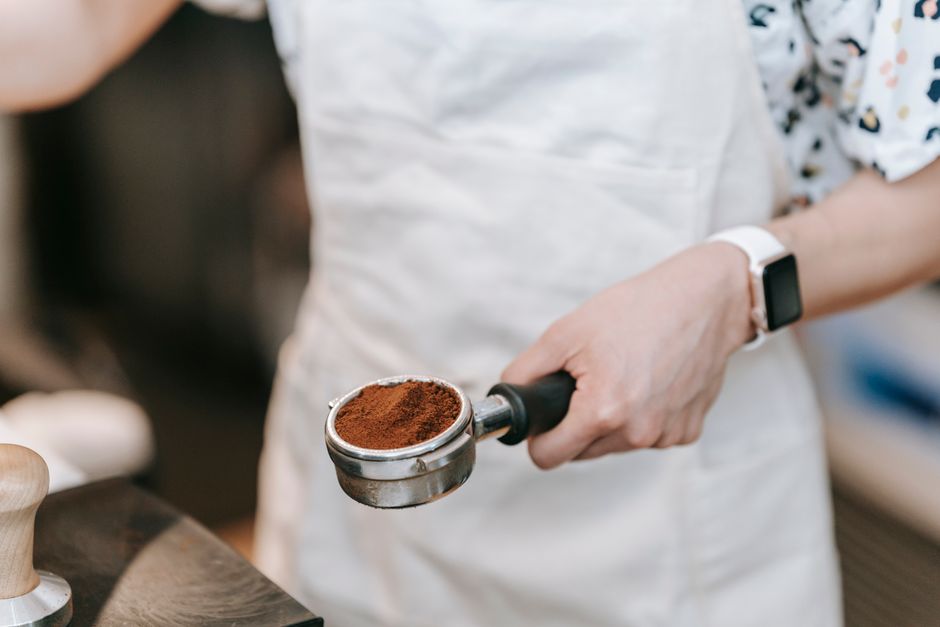
Yes, you can eat coffee grounds. They are not toxic, and small amounts are already hiding in plenty of foods you eat. The real questions are how much is safe, what they do to your body, and whether the health claims attached to them hold up. This guide separates what research supports from what is marketing noise.
Can You Eat Coffee Grounds Safely?
Used coffee grounds are edible. They are the spent remains of roasted, ground coffee beans after hot water has pulled most of the flavor and caffeine out of them. Nothing about that makes them poisonous.
What matters is how much you eat and how your gut responds. Coffee grounds are mostly insoluble fiber — the same category of fiber as wheat bran or celery strings. Your small intestine cannot break most of it down. It travels to your colon, where gut bacteria ferment some of it and the rest passes through as bulk.
That is why a spoonful in a smoothie is usually fine for most people, while several tablespoons at once can cause bloating, gas, or an urgent trip to the bathroom. The fiber is doing exactly what fiber does. The problem is dose, not danger.
One point worth clearing up: used grounds contain very little caffeine. Most of it went into your cup. Estimates vary by brewing method, but spent grounds typically retain only a small fraction of the original caffeine. If you are sensitive to caffeine, that matters less than you might think — though it is not zero.
What Happens When You Eat Coffee Grounds?
Your body treats coffee grounds as a fiber source, not a food. There is no meaningful calorie contribution, no vitamins in useful amounts, and no protein to speak of.
The fiber does have real effects. Insoluble fiber adds bulk to stool and can help with regularity in people who are constipated. It also feeds certain gut bacteria. Some studies suggest coffee grounds contain compounds called melanoidins and chlorogenic acid remnants that may support gut bacterial diversity, but this research is early and mostly done in lab settings or small groups. It is not strong enough to call coffee grounds a gut health supplement.
The more reliable effect is mechanical. Too much coarse fiber at once can cause:
- Bloating and abdominal pressure
- Gas as bacteria ferment the fiber
- Loose stools or diarrhea
- Worsening of symptoms in people with irritable bowel syndrome
People with IBS, especially the diarrhea-predominant type, often react badly to sudden fiber increases. If you have a sensitive gut, start with a very small amount or skip it entirely.
Are Coffee Grounds Toxic or Harmful?
No established evidence shows that eating used coffee grounds is toxic to humans. Coffee beans themselves are a normal food ingredient, and spent grounds are simply the leftover fiber matrix.
There are a few real cautions, though.
Choking and texture. Dry grounds are gritty and do not dissolve. Eating them dry by the spoonful is a choking risk and unpleasant. Mix them into something wet.
Unwashed or moldy grounds. Coffee grounds sitting in a warm, damp compost bin or filter basket can grow mold. Moldy grounds should never be eaten. This is a food safety issue, not a coffee issue.
Pesticide residue. Conventional coffee is a heavily sprayed crop in some regions. Whether meaningful residue survives roasting and brewing into the spent grounds is not well studied. If this concerns you, use grounds from organic coffee.
Cholesterol compounds. Coffee contains oils called cafestol and kahweol that can raise LDL cholesterol in some people. Most of these oils are removed or reduced during brewing, especially with paper filters. How much remains in spent grounds, and whether eating them delivers enough to matter, is not clearly established.
Caffeine in unused grounds. Fresh, unbrewed grounds contain substantial caffeine. Eating those is a different situation from eating spent grounds, and large amounts could deliver a meaningful caffeine dose. Stick to used grounds.
How Much Coffee Grounds Can You Eat?
No official guideline sets a safe amount of coffee grounds for human consumption. There is no FDA or USDA recommended intake, and no clinical trial has established a threshold.
What exists is general fiber guidance. Adults are advised to get roughly 25 to 34 grams of fiber per day depending on age and sex, according to federal dietary guidelines. Coffee grounds are not a tracked food in those guidelines, so there is no official number to work from.
Practical experience and common sense point to a modest approach:
- A teaspoon or two mixed into a smoothie, yogurt, or baked goods is a reasonable starting point for most people
- Larger amounts raise the odds of bloating and digestive upset
- Anyone with IBS, a history of bowel obstruction, or a fiber-restricted diet should not experiment without talking to a doctor
Because no clinical guideline exists, treat any specific number you see online — including this one — as a cautious starting point, not a recommendation.
Do Coffee Grounds Have Health Benefits?
The evidence for health benefits is thin. This is where most online claims fall apart.
You will read that coffee grounds are packed with antioxidants, boost metabolism, or support weight loss. Here is the honest picture.
Coffee beans do contain antioxidants, mainly chlorogenic acids. But the brewing process extracts much of what is water-soluble into your cup. What remains in spent grounds is a fraction of the original content, and your body absorbs even less of it from a fiber matrix. Eating grounds is not the same as drinking coffee.
Claims about weight loss or metabolism have no clinical support. No human trial has shown that eating coffee grounds causes weight loss. The biological reasoning sometimes offered — that fiber increases fullness — is plausible but unproven for this specific food.
Some research has looked at coffee grounds as a source of dietary fiber and as a substrate for gut bacteria. Results are preliminary. That is the accurate description: preliminary, not proven.
If you want fiber, whole grains, beans, vegetables, and fruit are well-studied sources with established benefits. Coffee grounds are not a superior alternative. They are simply one more way to add fiber, and not a particularly convenient one.
How Do You Eat Coffee Grounds?
The main rule is to use spent grounds and mix them into something wet. Dry grounds are gritty, hard to swallow, and a choking risk.
Common approaches people use:
- Blend a small amount into a smoothie or protein shake
- Stir into yogurt, oatmeal, or applesauce
- Add to baked goods like muffins or energy balls, where they act as a fiber boost
- Use as a rub or crust on roasted vegetables or meat before cooking
For baking, replacing part of the flour with coffee grounds changes texture and moisture. Start small — a tablespoon or two per batch — and adjust.
Flavor matters too. Spent grounds taste faintly of coffee but mostly of earthy fiber. They are not a substitute for fresh coffee flavor in recipes.
One practical note: grounds from a paper filter are finer and easier to mix in. Grounds from a French press or espresso machine tend to be coarser and grittier.
Who Should Avoid Eating Coffee Grounds?
Some people should not eat coffee grounds at all.
Anyone with a bowel obstruction, a narrowing of the intestine, or a history of either should avoid coarse fiber of any kind. This is a medical restriction, not a preference.
People with IBS, particularly diarrhea-predominant IBS, often find that insoluble fiber makes symptoms worse. Coffee grounds are almost entirely insoluble fiber.
Anyone on a low-fiber diet for a medical reason — before certain surgeries or procedures, or with conditions like active inflammatory bowel disease — should not add coffee grounds.
People who are sensitive to caffeine should remember that spent grounds are not caffeine-free, even if the amount is small.
If you are pregnant or breastfeeding, there is no established guidance on eating coffee grounds. The cautious approach is to avoid them, since no safety data exists for these groups.
For everyone else, the risk is mainly digestive discomfort, not harm.
Are Coffee Grounds the Same as Coffee Flour?
No, and this distinction trips people up.
Coffee flour is a commercial product made from the coffee cherry — the fruit surrounding the bean — not from spent brewing grounds. It is produced by drying and milling the pulp left after coffee processing. It has different nutritional content and is regulated as a food ingredient.
Spent grounds from your kitchen are not coffee flour. They are a byproduct of brewing, with a different composition. Treating them as interchangeable leads to confusion about nutrition and safety.
If you buy coffee flour, follow the package directions. If you are using your own spent grounds, treat them as a homemade fiber addition with no official nutrition data behind them.
Frequently Asked Questions
Can you eat coffee grounds raw?
You can, but eating them dry is a choking risk and hard on your stomach. Mix them into a wet food like yogurt or a smoothie instead.
Do coffee grounds have caffeine?
Used grounds contain only a small fraction of the caffeine that was in the original beans, since most of it brewed into your cup. The amount is low but not zero.
How many coffee grounds can you eat per day?
No official guideline exists for how much coffee grounds a person should eat. A teaspoon or two is a cautious starting point for most people, but this is not a clinical recommendation.
Are coffee grounds good for your gut?
They are a source of insoluble fiber, which can help with regularity but may cause bloating or gas. Claims that they improve gut health are not supported by strong human evidence.
