
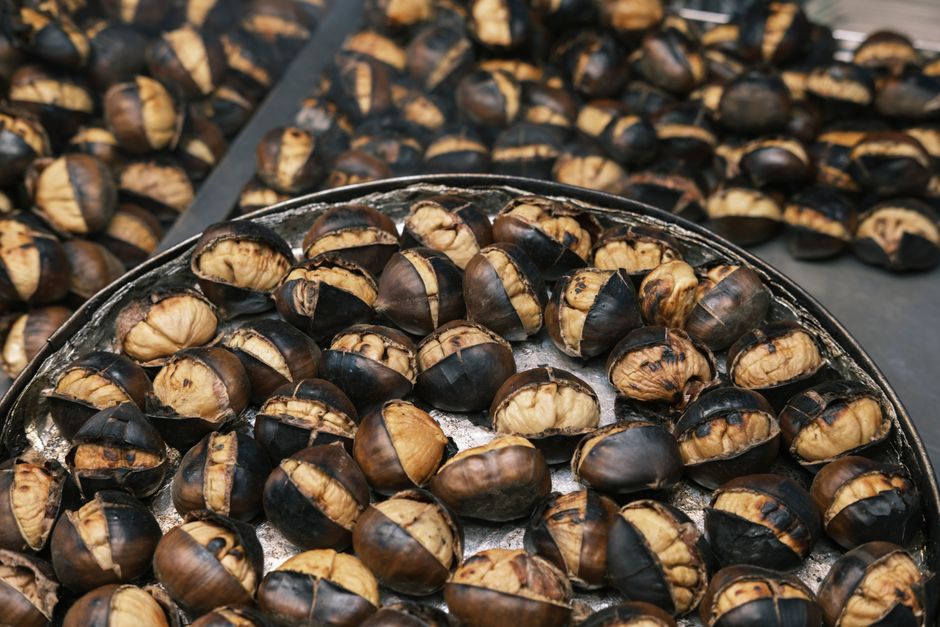
Yes, you can eat chestnuts raw, but only if they are true chestnuts — the sweet, starchy kind that grows inside a spiky green burr. Raw chestnuts are not toxic to humans the way raw acorns or raw kidney beans are. The bigger issue is texture, flavor, and digestion, not danger.
Here is where people get into trouble: the word “chestnut” gets attached to several different nuts and seeds, and one of them — the horse chestnut — is genuinely unsafe to eat raw. Knowing which one you have matters more than knowing whether raw is technically allowed.
This guide covers what raw chestnuts actually taste like, why cooking changes them so much, how to tell a true chestnut from a horse chestnut, and what the evidence does and does not say about eating them uncooked.
What Happens When You Eat Chestnuts Raw?
Raw chestnuts are edible but unpleasant for most people. They have a firm, almost waxy texture, a bitter and astringent taste, and a high tannin content that leaves your mouth feeling dry.
The starch in chestnuts is the real story. Unlike most nuts, chestnuts are mostly carbohydrate — closer to a grain or a potato than to an almond or walnut. That starch is tightly packed and resistant to digestion in its raw state. Your gut can break some of it down, but not efficiently. The result for many people is bloating, gas, and a heavy feeling after eating more than a few.
Cooking changes the starch structure. Heat gelatinizes the starch, softening the texture and making it far more digestible. This is the same basic process that turns a raw potato into a baked one. It is not a matter of preference — it is a real chemical change.
Raw chestnuts also contain tannins, the same class of compounds that makes unripe fruit and strong tea taste astringent. Tannins bind to proteins and can interfere with how well you absorb certain nutrients from a meal. In the amounts found in a few raw chestnuts, this is unlikely to matter. In larger amounts, it can contribute to stomach upset.
How Can You Tell a True Chestnut From a Horse Chestnut?
True chestnuts and horse chestnuts look similar enough that people mix them up, and the consequences of that mistake are not trivial. Horse chestnuts — also called conkers — contain a compound called aescin that is toxic to humans.
Eating horse chestnuts raw can cause vomiting, diarrhea, abdominal pain, and in larger amounts, more serious symptoms. They are not a food. They are also not the same as the “chestnuts” sold roasted from street carts or packaged in grocery stores, which are true chestnuts.
The visual differences are reliable once you know them:
- True chestnut: A pointed tuft at the top, often called a “flame.” The nut has a flat side and a rounded side. The shell is brown with a lighter base.
- Horse chestnut: Round and smooth with no point or tuft. The shell is glossy, dark brown, and often has a pale circular scar on one side.
- The burr: True chestnut burrs are densely spiky and contain two or three nuts. Horse chestnut burrs are bumpier and less uniformly spiky, and usually contain one large nut.
If you are foraging and you are not certain, do not eat it. The distinction requires care, and a mistake is not worth the risk.
One more source of confusion: water chestnuts and Chinese chestnuts are unrelated to either. Water chestnuts are aquatic vegetables, not tree nuts, and are commonly eaten raw or cooked without issue.
Are Raw Chestnuts Safe to Eat?
For true chestnuts, raw consumption is not considered dangerous for healthy adults in small amounts. There is no established toxic compound in true chestnuts comparable to what makes horse chestnuts unsafe.
That said, “not toxic” is not the same as “recommended.” The evidence on raw chestnut consumption is thin. Most of what is known comes from culinary tradition and basic food chemistry rather than controlled human studies. No clinical guidelines specifically address raw chestnut consumption because it is not a common practice in most of the world.
Two practical concerns are worth naming:
Choking risk. Raw chestnuts are hard and firm. They are a choking hazard for young children and for anyone with swallowing difficulty. This is a mechanical risk, not a chemical one, but it is real.
Gastrointestinal discomfort. The resistant starch and tannins in raw chestnuts can cause meaningful bloating and cramping in some people, particularly if eaten in quantity. If you have a sensitive gut or a condition like irritable bowel syndrome, raw chestnuts are likely to be a poor choice regardless of safety.
People with a known tree nut allergy should treat chestnuts with the same caution as any other nut. Chestnut allergy is less common than peanut or tree nut allergy, but it exists and has been documented in the medical literature.



Why Are Chestnuts Usually Roasted or Boiled?
Cooking chestnuts is not just tradition. It solves three separate problems at once.
First, heat breaks down the starch and softens the nut, making it edible rather than a chore to chew. Second, it reduces the astringency by altering tannin compounds. Third, it makes the nut easier to peel — the inner skin, called the pellicle, clings tightly to raw chestnuts and releases more readily after cooking.
Roasting is the most common method because it also develops flavor. The Maillard reaction — the same browning process that gives toast and roasted coffee their aroma — creates sweetness and depth that raw chestnuts simply do not have. Boiling produces a softer, milder result often used in soups and stuffings.
Either way, the nutritional profile shifts. Cooking reduces vitamin C content, which chestnuts contain in unusual amounts for a nut. Raw chestnuts retain more vitamin C than cooked ones. This is one of the few genuine nutritional arguments for eating them raw, though it is a modest advantage and not a reason to force down something you do not enjoy.
What Do Raw Chestnuts Taste Like?
Raw chestnuts taste like a cross between a raw potato and a slightly sweet, bitter hazelnut. The sweetness is there but muted. The bitterness and dryness come through more strongly.
Most people who try them raw describe the experience as underwhelming rather than awful. The flavor is not offensive. The texture is the bigger obstacle — firm, dense, and slightly chalky.
If you want to try one raw, a small bite is a reasonable way to satisfy curiosity. Eating a handful is where the bloating and stomach discomfort tend to show up.
How Do Raw and Cooked Chestnuts Compare?
The differences are consistent and worth knowing if you are choosing between them.
| Factor | Raw Chestnut | Cooked Chestnut |
|---|---|---|
| Texture | Firm, waxy, chalky | Soft, crumbly, slightly creamy |
| Flavor | Bitter, astringent, mildly sweet | Sweet, nutty, mellow |
| Starch digestibility | Lower — resistant starch | Higher — gelatinized starch |
| Tannin effect | More astringent | Reduced |
| Vitamin C | Higher | Lower |
| Peeling ease | Difficult | Easier |
| Choking risk | Higher | Lower |
Chestnuts are also unusual among nuts for their macronutrient profile. They are low in fat and high in carbohydrate, with a water content closer to a vegetable than a typical nut. This is why they spoil faster than almonds or walnuts and why they are sometimes compared to a grain.
Can You Eat Chestnuts Raw If You Have a Nut Allergy?
Chestnut allergy is a real, documented condition, though it is less common than peanut or tree nut allergy. If you are allergic to other tree nuts, you should not assume chestnuts are safe for you without medical guidance.
There is a known cross-reactivity pattern between chestnut allergy and latex allergy, and in some cases with certain pollen allergies. This is not universal, but it is well documented enough that people with latex sensitivity should be cautious.
If you have any diagnosed nut allergy, talk to your allergist before trying chestnuts in any form — raw or cooked. This is not a situation where self-testing at home is wise.
Should You Eat Chestnuts Raw or Cooked?
Cooked is the better choice for almost everyone. It tastes better, digests more easily, and carries less choking risk. The only real advantage of raw is a higher vitamin C content, and that is a minor point in the context of an overall diet.
If you want to try raw chestnuts, start with a small amount and see how your gut responds. If you are foraging, verify your identification carefully before eating anything. And if you are unsure whether what you have is a true chestnut or a horse chestnut, throw it out. No chestnut is worth that risk.
Frequently Asked Questions
Can you eat chestnuts raw safely?
True chestnuts can be eaten raw without serious risk for most healthy adults. They are not toxic, but they are hard to digest and can cause bloating in larger amounts.
What happens if you eat a horse chestnut?
Horse chestnuts contain aescin, which is toxic to humans and can cause vomiting, diarrhea, and abdominal pain. They are not a food and should never be eaten raw or cooked.
Are raw chestnuts hard to digest?
Yes, raw chestnuts contain resistant starch and tannins that make them harder on the gut than cooked ones. Cooking gelatinizes the starch and reduces astringency, which is why roasted or boiled chestnuts are easier to tolerate.
Do raw chestnuts have more nutrients than cooked ones?
Raw chestnuts retain more vitamin C, which is lost to heat during cooking. Beyond that, the nutritional differences between raw and cooked chestnuts are modest.
